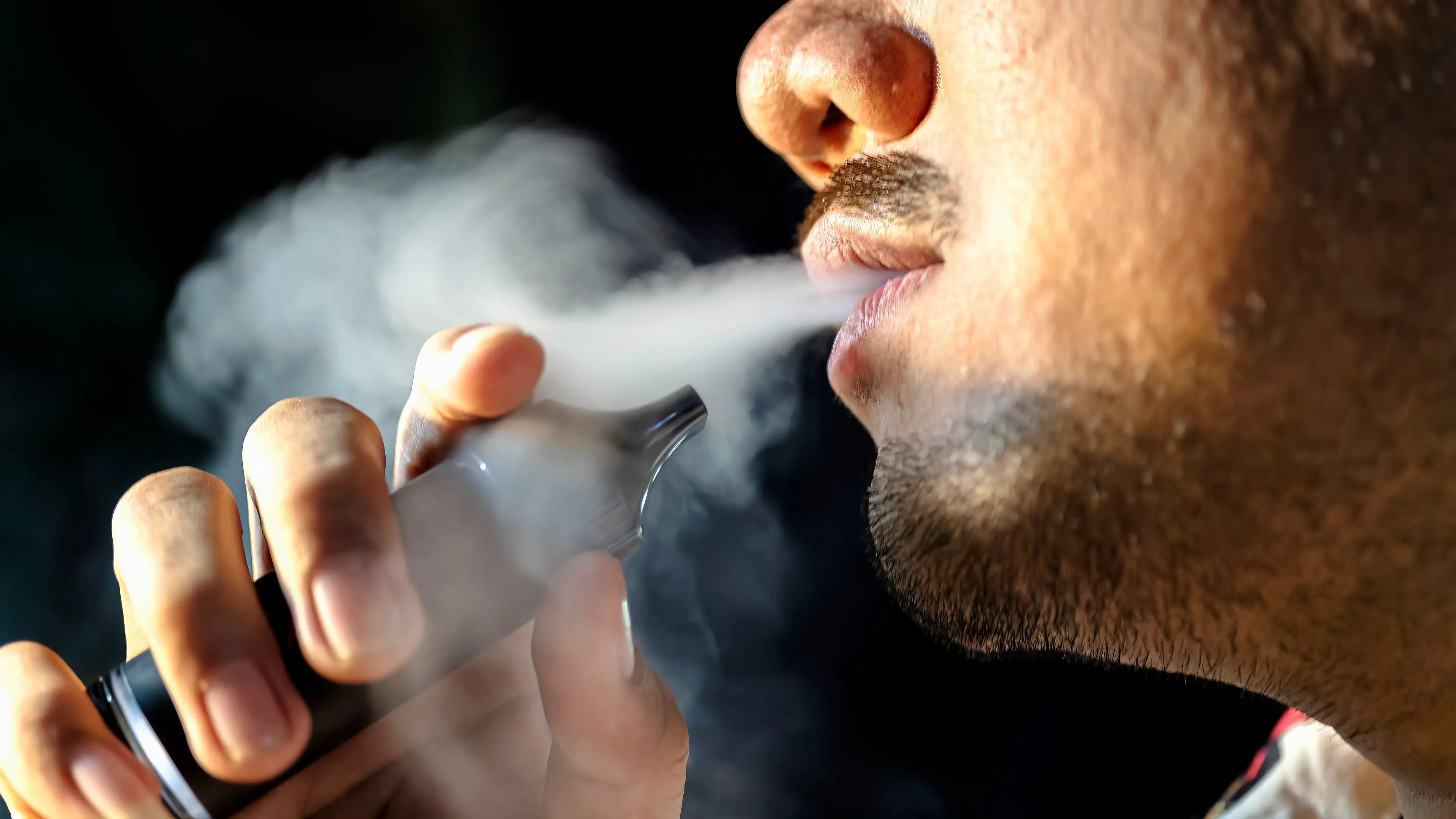
Surprising results discovered in major review into safety of vapes

A new study has discovered that using vapes is 'substantially less harmful' than smoking.
The claim may come as a surprise to some since it follows a major review into vaping that found consistent evidence linking it to 'poorer respiratory health' in young people.
Cochrane analysed 80 random controlled trials, nine of which were new to the study, involving 29,861 participants.
They found 'high certainty evidence' that nicotine e-cigarettes were the most effective method for smokers to finally ditch the cigs for good.
Advert
It was found that, on average, e-cigarettes led to about four more quitters per 100 people than alternative nicotine replacement therapy (NRT), such as nicotine patches and gum.
It also found that quit rates remained higher if a person utilised a vape regardless of whether they quit on their own or leaned on behavioural support.

“We have very strong evidence that regulated nicotine e-cigarettes are substantially less harmful than smoking,” says Dr Jamie Hartmann-Boyce, senior author of the review from University of Massachusetts Amherst. “Based on the consistency of the findings here, it’s clear that they are a proven and viable option for people wishing to quit traditional cigarettes.”
It was added that more long-term studies are still required and it was stressed the study applied only to regulated nicotine e-cigarettes, not ones from the black market or containing other substances, like THC.
However, they did not find any evidence of 'increased serious harm' from using vapes to quit smoking.
Vaping is having negative impact on young people
The Cochrane review comes six days after the Royal College of Paediatrics and Child Health (RCPCH) released their own review on August 20 detailing the health issues vaping can cause in children and young people.
It also found that vaping can lead to 'subsequent cigarette smoking.'
Examining over 14,000 published articles, 325 full-text studies and 81 studies, they found that young people who vape are more likely to report coughing, wheezing, bronchitis symptoms and asthma exacerbations.

Links to wider issues, such as poor oral and dental health, mental health problems like anxiety and depression were found, as well as evidence of impacts on sleep, eye health and allergies.
All with the added concern that it could actually lead young people to start smoking, the exact opposite of vapes' supposed purpose.
"Vaping should not be seen as a harmless part of growing up," co-author of the systematic review, Professor Will Carroll, said.
"The evidence shows clear links with respiratory symptoms, nicotine dependence and subsequent cigarette smoking, while concerns about wider impacts on young people’s health continue to grow."
Dr Mike McKean, RCPCH vice president for policy, admitted there is a lot still unknown about how vapes could impact young people, but said: "A clear and concerning picture is emerging. Continued research and monitoring essential if we are to properly understand the risks and respond to emerging evidence."
The Cochrane study did admit vaping has its own risks but they 'pale in comparison to the dangers of smoking,' stressing it should be seen as a transition to kicking nicotine addiction completely rather than the end destination.
Dr Hartmann-Boyce added: "For somebody who is already addicted to nicotine through cigarettes, having a safer alternative like an e-cigarette is something worth considering, especially when other quit aids have proven unsuccessful."
It will soon be illegal to sell vapes to under-18s

Vaping has exploded in popularity in the UK, with 5.4 million users, meaning more people vape than smoke for the first time.
Their usage has also significantly increased among young people.
As a result, a new law will come into force on October 29 making it illegal to sell any vape or nicotine product to anyone aged under 18.
That includes an adult buying one for those underage or even vaping in a car carrying anyone under the age limit, too.
While Carroll has welcomed the new measures, he doesn't think it's enough.
"If vaping is to remain a viable smoking cessation tool without attracting new users, Government must go further," he said.
"Current proposals will place restrictions on vape flavour names and packaging descriptions, moving away from enticing names inspired by sweets, desserts, and alcohol in favour of simple, factual names like 'apple'.
"As paediatricians, we call on the Government to limit the types of flavours available, as opposed to just their descriptions."
Dr McKean added: "It must not be seen as a one-and-done solution.
"We need to keep pace with a rapidly evolving market and continue to take action to protect children from nicotine products that are deliberately made and marketed to appeal to them."
 Daniel Murphy