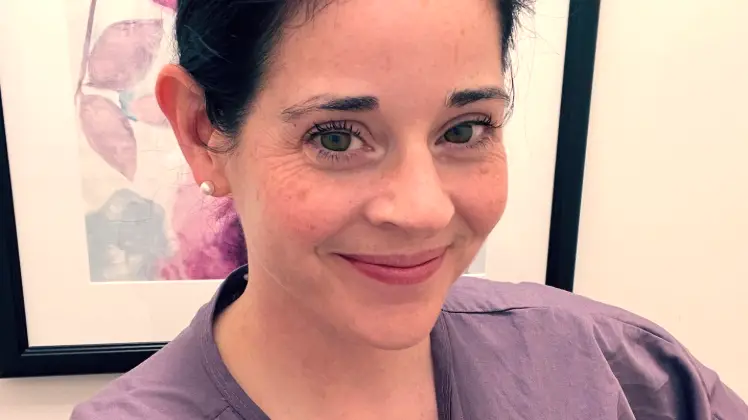
Woman who survived colon cancer three times shares key symptom she ignored at first

A 20-year cancer survivor has shared her story of resilience after being diagnosed with the disease three times over the course of her life—and an early symptom she chalked up to dietary choices.
Danielle Ripley-Burgess is a communications professional who was first diagnosed with stage three colon cancer when she was 17.
However, her symptoms began three years earlier when she first started to see suspect ‘specks of blood’ in her stool.
Instead of alerting her parents that something could be amiss, the 14-year-old ignored the symptom, believing she was eating ‘too much red food’.
Advert
“I put myself on a ‘no red foods diet’ and stopped eating anything that was red in colour: everything from candy to pizza to salsa to raspberry Popsicles,” she confessed to NBC News.
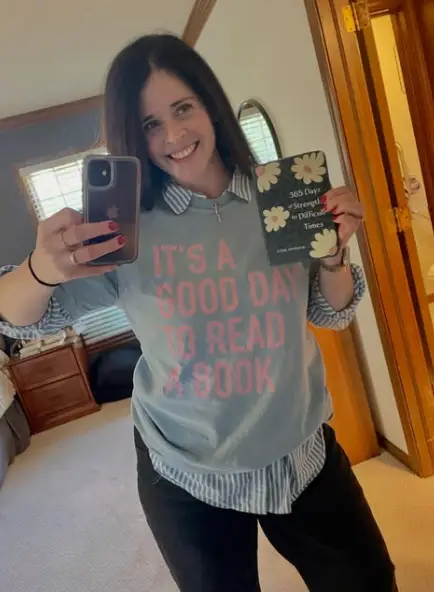
“It took me a while to accept that I was actually seeing blood, but I still hid it from just about everybody I knew.
“I was already embarrassed about puberty changes happening, so that on top of this thing was just too much. I didn’t want to be sick and I didn’t feel sick at first.’
It took around two years for her to even mention the blood to her mother, with the pair quickly concluding that she must have haemorrhoids.
However, after overhearing her daughter speaking about the blood in her stool to her boyfriend and learning that she was dealing with ‘intense stomach pains’ and fatigue, Ripley-Burgess’ mother called a gastroenterologist.
The American was diagnosed with stage three colon cancer
Weeks after turning 17, the family learned that the blood in her stool was an early indicator of stage three bowel cancer.
After undergoing chemotherapy, radiation and surgery to remove the tumour, doctors also advised Ripley-Burgess to go under the knife to move her ovaries further up into her stomach to ‘preserve hormone function’.
By elevating them, she was told that she would no longer be able to conceive naturally.
Following her first hospital stint, the Kansas City native continued to get a colonoscopy every three years.
“Mentally and emotionally, it was way harder this time”
It was after a routine inspection that Ripley-Burgess learned she had a cancerous polyp, with experts informing her that she had stage one colon cancer at 25.
“Mentally and emotionally, it was way harder this time. I got really angry at a lot of things, but deep down just angry at God — how could you let this happen to me again?
“By this point, I was married, I had a house, I was working on a career, we’d been talking about adopting a child. All of a sudden, I realised I could lose all of these things,” she wrote for NBC News.
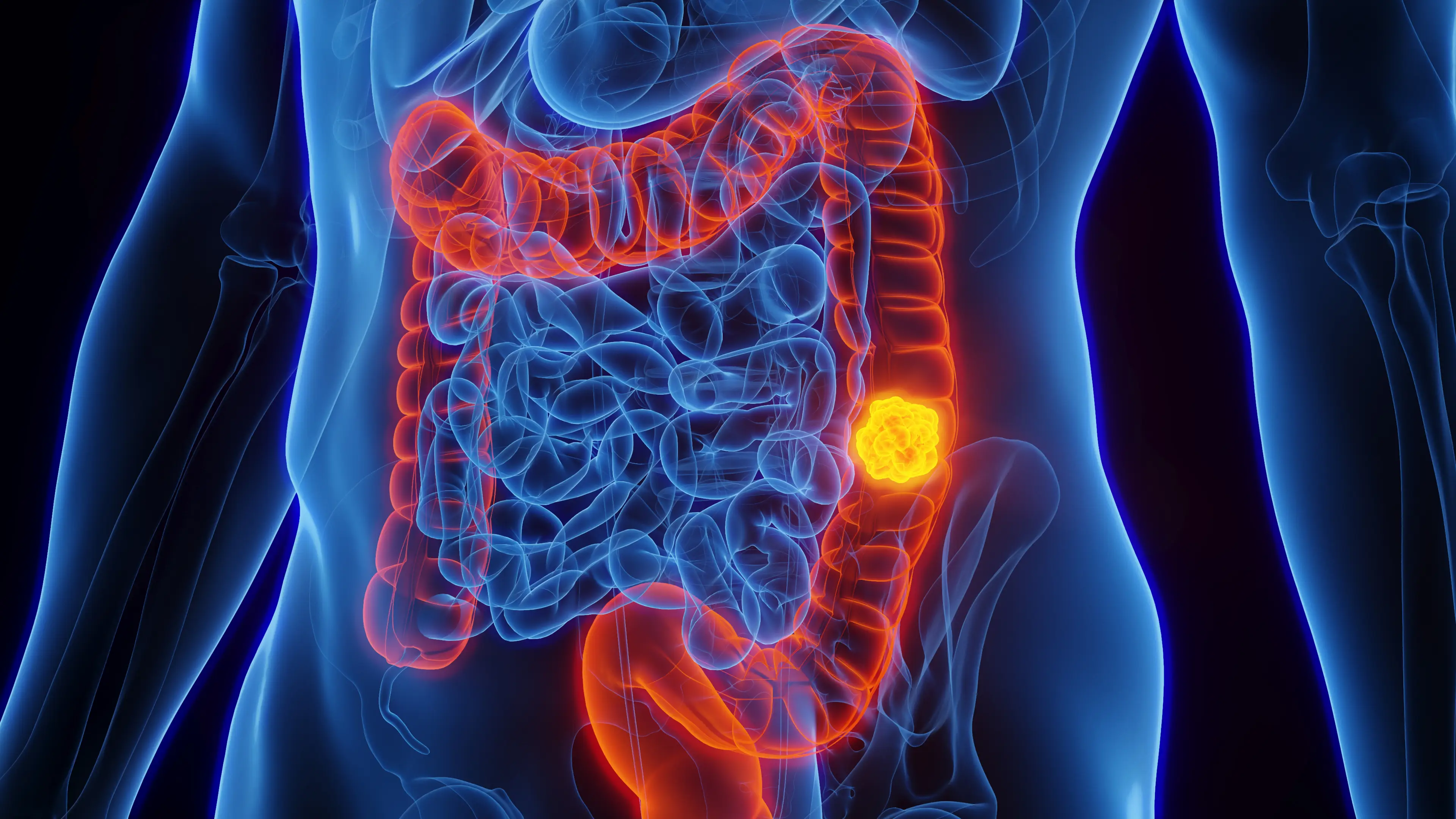
The author and inspirational speaker learned around this time that she had Lynch syndrome, an inherited genetic condition that greatly increases the risk of developing colorectal, uterine, and several other types of cancer at a young age, as per the Mayo Clinic.
Despite having a hysterectomy, a subtotal colectomy, which took out almost all of her colon, the mother-of-two adopted children was told that doctors had discovered more polyps in 2023.
This led her to undergo a permanent ileostomy, a surgical operation to bring the end of your small bowel through an opening in your tummy to form a stoma, the NHS explained.
“Don’t downplay what you’re seeing”
Speaking about advice she would give to her younger self, the three-time cancer survivor said: “It would be: Don’t be embarrassed about your body.
“If you’re seeing something with your body that’s uncomfortable and weird, and you’re not ready yet to tell a doctor, tell somebody — a friend or family member.”
She added: “Don’t sit in that place of: something is wrong with your body, and you don’t know what it is. Don’t sit there alone. Don’t downplay what you’re seeing.”
Topics: Health, Bowel cancer, US News, Cancer
 Ella Scott