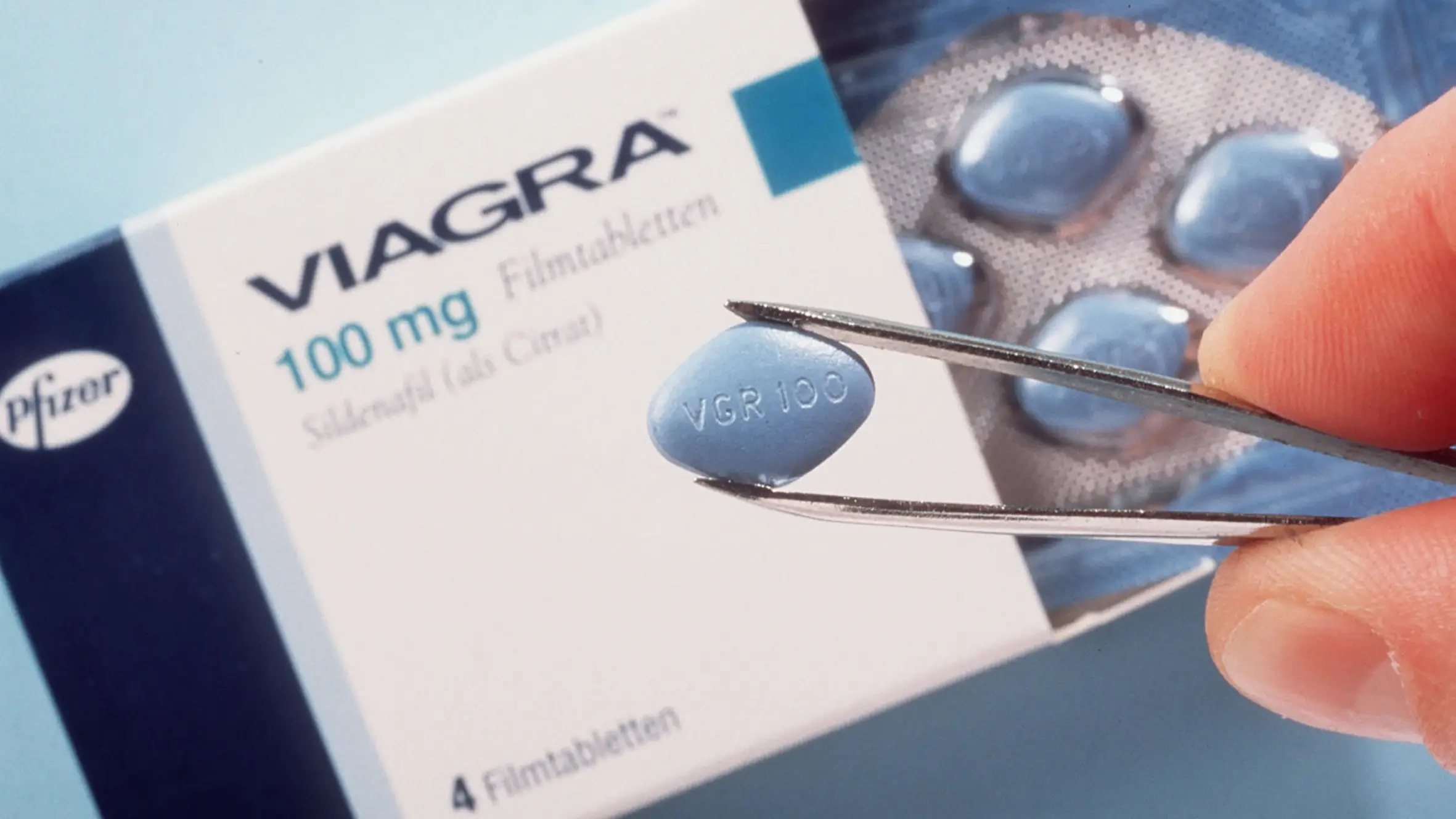
Viagra may help stop cancer spreading for reason completely unrelated to why millions take it

A new study has suggested that Viagra could one day help prevent cancer from spreading - and it’s not because of, you know, blood flow.
Instead, researchers have found that Viagra can partly stop the way cancer cells use cholesterol and that sildenafil, the active ingredient, is able to trap cholesterol inside tiny compartments called lysosomes.
This prevents cancer cells from grabbing onto the cholesterol they need to move, grow and spread to other parts of the body.
In experiments using several types of human and mouse cancer cells, including breast, lung and colon cancer, Viagra reduced the ability of cancer cells to migrate.
Advert
In mice, it also lowered the number of secondary tumours that formed in the lungs, suggesting it may help prevent metastasis cancer (stage 4) – the spread of cancer that causes most cancer deaths.

“We evaluated the association between pre-cancer diagnosis use and overall survival across a large cohort of cancer patients rather within specific cancer types,” Samah Hayek, MD, senior epidemiologist at the Clalit Research Institute in Israel and a co-author of the study, told Healthline. “Therefore, we cannot conclude whether the association is stronger for one cancer than another.”
The team discovered that Viagra works by blocking a protein called NPC1, which normally moves cholesterol out of lysosomes.
When this process is disrupted, cancer cells struggle to make energy and lose the flexibility they need to invade new tissues.
“Our retrospective analysis included mainly men because sildenafil is predominantly prescribed to men,” Hayek added. “As a result, we cannot determine from our clinical data whether a similar association would be observed in women.”
The researchers also found that combining Viagra with statins, which reduce cholesterol production, produced an even stronger anti-cancer effect in laboratory studies.

To see whether this might translate to people, the team analysed health records and found cancer patients who had taken Viagra before their diagnosis tended to live longer than those who had not. The benefit appeared greater in patients who were also taking statins.
However, this was an observational finding and does not prove the drug was responsible for the improved survival. Clinical trials are still needed before the drug could be used as a cancer treatment.
“This is an interesting study, and it was well-designed,” S. Adam Ramin, MD, a urologist, urologic oncologist, and medical director of Urology Cancer Specialists in Los Angeles also told the outlet.
“It appears to have real applications in real-world situations, so it shows promise.”
Researchers from the Weizmann Institute of Science in Israel and scientists from Israel’s largest health organization, Clalit Health Services, were largely responsible for the study’s findings.
“This study bridges two worlds,” Hayek adds. “The laboratory identified a promising biological mechanism while Clalit’s real-world data showed that the same signal may also be reflected in patient outcomes.
“Our study did not examine whether giving Viagra to patients after they are diagnosed with cancer improves outcomes.
“It looked only at medication use before diagnosis and its association with survival. These findings are encouraging, but they do not mean cancer patients should start taking Viagra.”
 Anish Vij