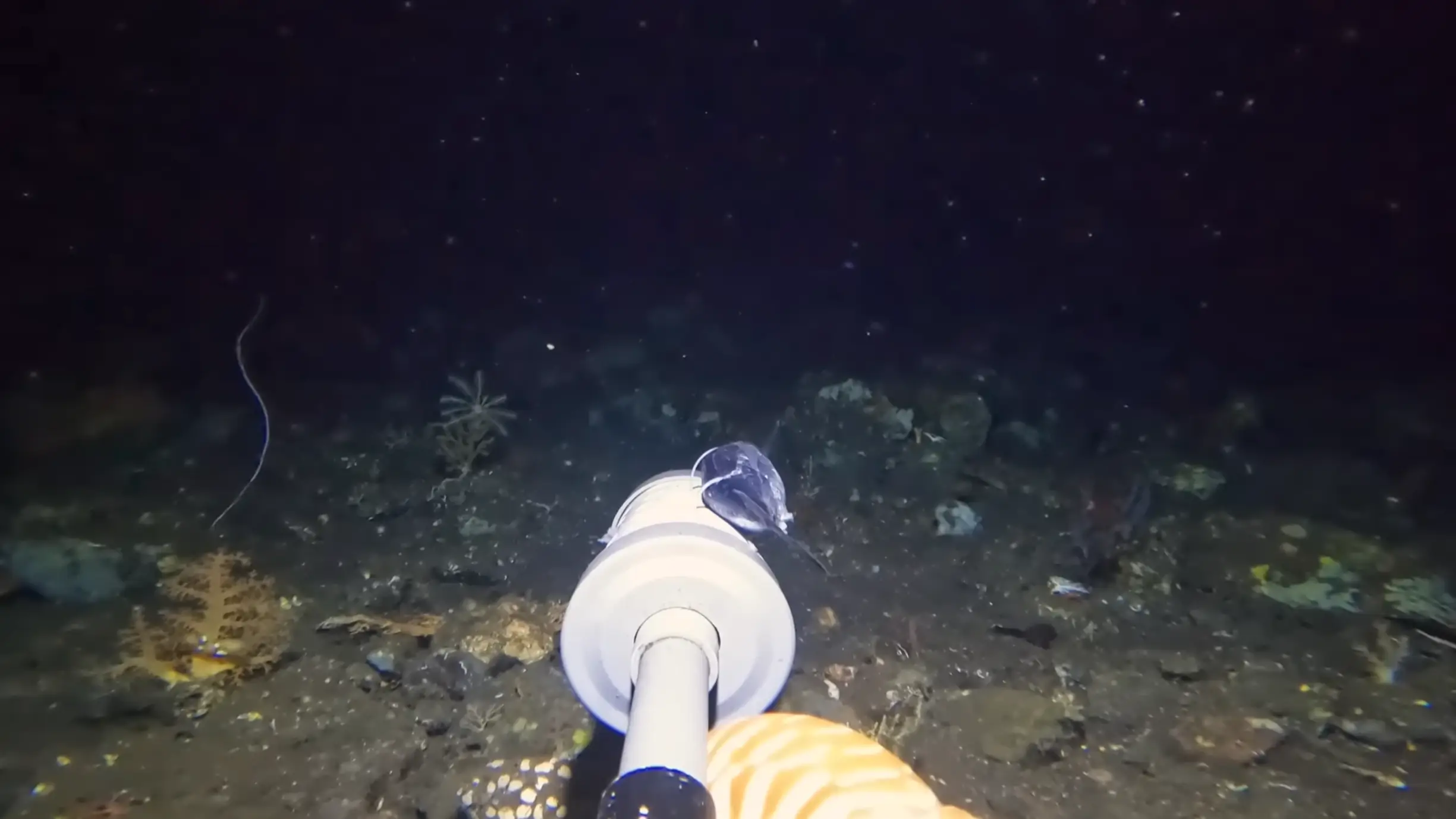
Man dropped GoPro to bottom of the ocean and found creature even experts can't identify

Around 70 percent of our planet is covered in water, most of which remains a complete mystery to us.
According to statistics from the National Oceanic and Atmospheric Association (NOAA), a mere 27 percent of the seafloor has been successfully mapped while just 0.001 percent of the deep sea floor has been seen by human eyes.
Every now and again, footage from such excursions makes its way onto the internet, providing 'terrifying' glimpses of the species which have likely never seen the light of day.
However, there's still much more to know when it comes to understanding our oceans and the creatures which inhabit the deep, with a recent video from content creator Barny Dillarstone uncovering a fish, which experts were unable to identify.
Advert
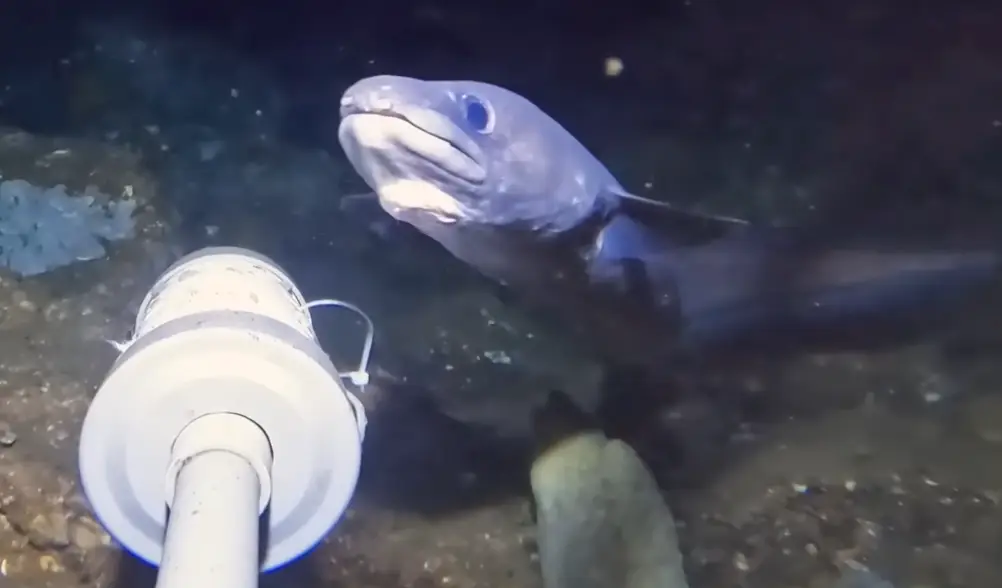
The video, which Dillarstone shared online earlier this year, was captured at 200m underneath the surface of the Bali sea and is part of his goal to discover a species which is 'new to science'.
Like other content shared by the scuba diver, this journey to the bottom of the ocean involved sending a camera attached to a bait ball in order to capture the 'strange nocturnal creatures' which call the deep sea home.
And Dillarstone's video certainly lived up to its promise as we were treated to critters such as vicious conger eels, spider crabs and the rather ominously named bearded fireworm.
However, there was one creature in particular which stood out to Dillarstone.
Towards the end of the video, he reveals the camera captured a type of deep water ray known as a stingaree.
Part of the wider stingray family, stingarees are believed to live in the Indo-Pacific region, with the common stingaree which lives off the shores of eastern Australia.
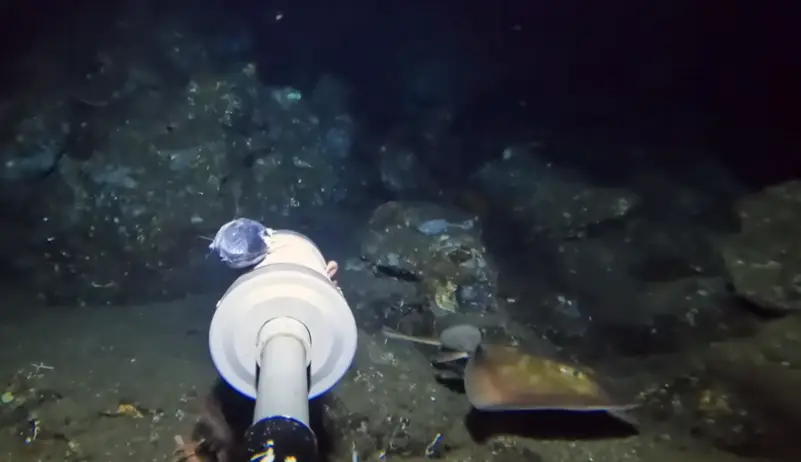
Which is what makes Dillarstone's discovery so fascinating.
"Stingarees aren't really supposed to be in Indonesia," he explained in the video, noting that the Java stingaree is now considered extinct, while the Kai stingaree is only known after two juveniles were caught off the coast of eastern Indonesia.
"So what species is this one?" Dillarstone wondered, before revealing that subsequent discussions with marine experts yielded no answers.
"The answer is we have no idea," he added. "Perhaps it's a species new to science. It's not everyday that you capture a creature that might rewrite part of the regional species record."
The idea that deep sea creatures currently unknown to man exist isn't an unusual argument either, as roughly two-thirds of the ocean's critters are yet to be identified or properly classified.
This means Dillarstone's prospective discovery may very well be the tip of a massive iceberg.
Topics: Environment, Animals, Ocean
 Brenna Cooper