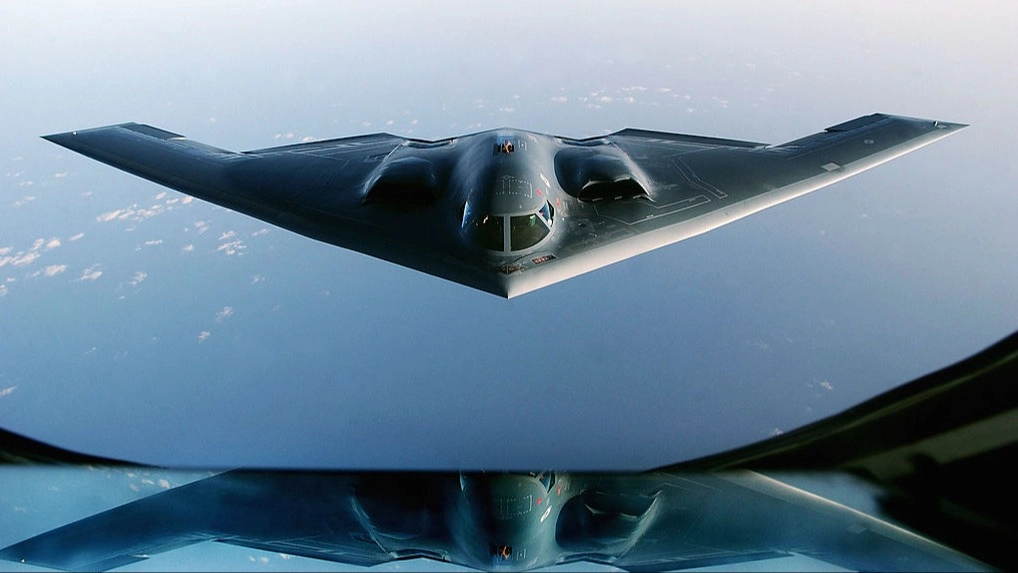
Animation shows how bunker busters work as US stealth bombers target Iran's underground nuclear facilities

An animation showing how bunker bombers work has revealed how the US military has targeted underground ballistic missile facilities in Iran.
It comes after reports the US Air Force has launched the use of stealth bombers to strike Iran's underground units using four B-2 Spirit bombers.
The US is said to have launched its attack during the night on 28 February 28, flying the stealth bombers nonstop from an Air Force base in Missouri, before dropping dozens of 2,000-pound bombs over Iran and flying straight home.
The Northrop B-2 Spirit used in the mission is an American heavy, long-range strategic stealth bomber used by the US Air Force to penetrate enemy defences.
Advert
Its unique flying-wing design allows it to fly virtually undetectable, while delivering both conventional and nuclear weapons weighing up to 40,000 pounds.
Only 21 B-2 spirits were built between 1988 and 2000, with 19 or 20 believed to still be in active service. The aircrafts have been used during active warfare in Iraq, Afghanistan, Libya and Kosovo.
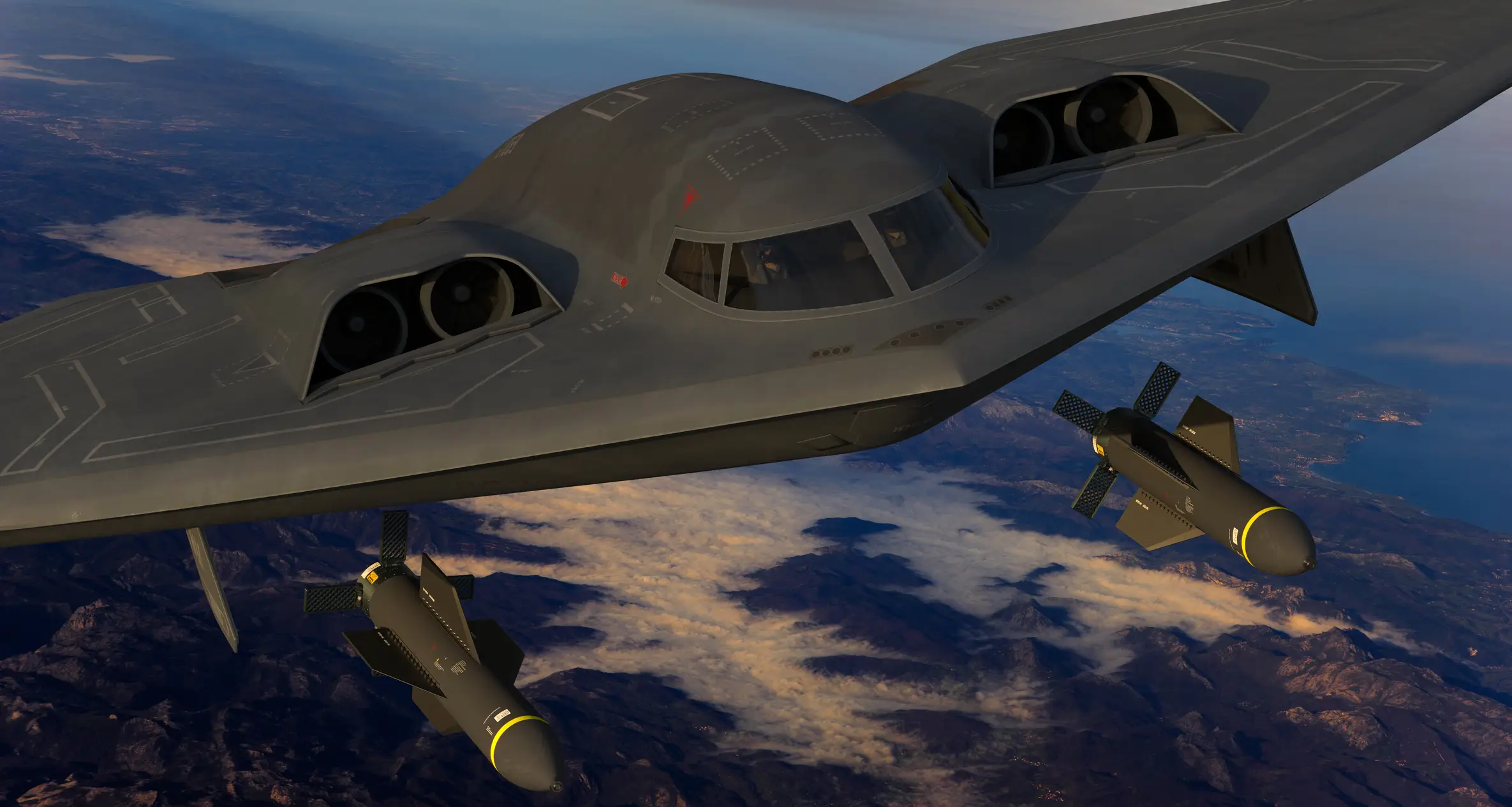
In their latest mission, the B-2s have been used to target Iranian facilities built deep under mountains, which are made up of different chambers sealed off from one another.
Because of the nature of these facilities, the mission requires complex weapons and huge volumes of specialised munitions to destroy them in their entirety.
This animated clip, shared to YouTube by LifeAda, shows how the stealth bombers are able fly at a crazy height to remain undetected.
Bunker busters are installed with GPS and an inertial navigation system, guiding it towards its target once released from the plane.
Batteries store data and it's also fixed with a network antenna and adapting ring to establish connection.
"Most importantly, thrusters are not used inside this bomb," shares the AI narrator. "GPS and INS feed data to the motor-controlled fins at the back and these fins can be adjusted in such a way that they perfectly direct the bomb towards its target."
Due to gravity, the bomb 'absorbs tremendous kinetic energy' on its fall to the ground, allowing it to reach the speed of sound.
When the nose of the bomb strikes the bunker front side, an impact sensor generates a signal to the onboard equipment.
"From here, the signal goes to the micro-controller and digital delay fuse, which starts the timer as soon as the impact occurs."
This concurrently analyses the impact force and depth, leading to an explosion within 100 milliseconds.
"As soon as the timer has completed, this signal reaches the detonator unit and activates it, and this unit generates shock-pulse with high voltage and current."
The whole thing catches fire, creating immense pressure and temperature. The body breaks, yet the bomb is intact, allowing a shockwave to injure the target's structure first before detonating.
Topics: US News
 Emma Rosemurgey