
Doctors explain whether you should megadose on creatine as side effects revealed

Doctors have explained the reasoning behind using creatine, as well as outlining what is the ideal dose for someone.
Creatine is something that the body uses naturally in skeletal muscles, which are the muscles in our body that are connected to bones.
These make up a large proportion of the muscles in the human body, and are very important as they're the ones that we use to move.
But while the body uses it anyway, many people use creatine supplements as a way to enhance the impact of their workout and increase their performance.
Advert
While creatine is commonly used, there are some groups of people who shouldn't take the supplement.
Cleveland Clinic advises people to not take it if they're pregnant or breastfeeding, have a liver or kidney condition, or have diabetes.
Some people have thought that by taking more creatine they will increase the impact that it has on their performance, but just how much truth is there in this?

Well, it turns out that while creatine is beneficial, as with many things there's a law of diminishing returns that comes into effect once you get onto higher doses.
Add to that the fact that creatine is not cheap to buy, and you may have to consider whether the incrementally smaller benefits are worth the extra cost.
Richard Kreider is the director of the Exercise & Sport Nutrition Lab at Texas A&M University, and spoke to Men's Health about the benefits of creatine.
"Our current research shows greater health and cognition benefits when people take two doses of five grams of creatine spread throughout the day," he said.
He also advised that you can still get benefits from five grams, saying: "If you tolerate it well and are content there, you don't need to increase to 10 grams."
But what if you really wanted to try it?
"If you want to experiment with the higher dosages to see how you respond and how your gut tolerates it, there's no real harm in doing so," he said. "And you might get a little bone and brain boost to boot."
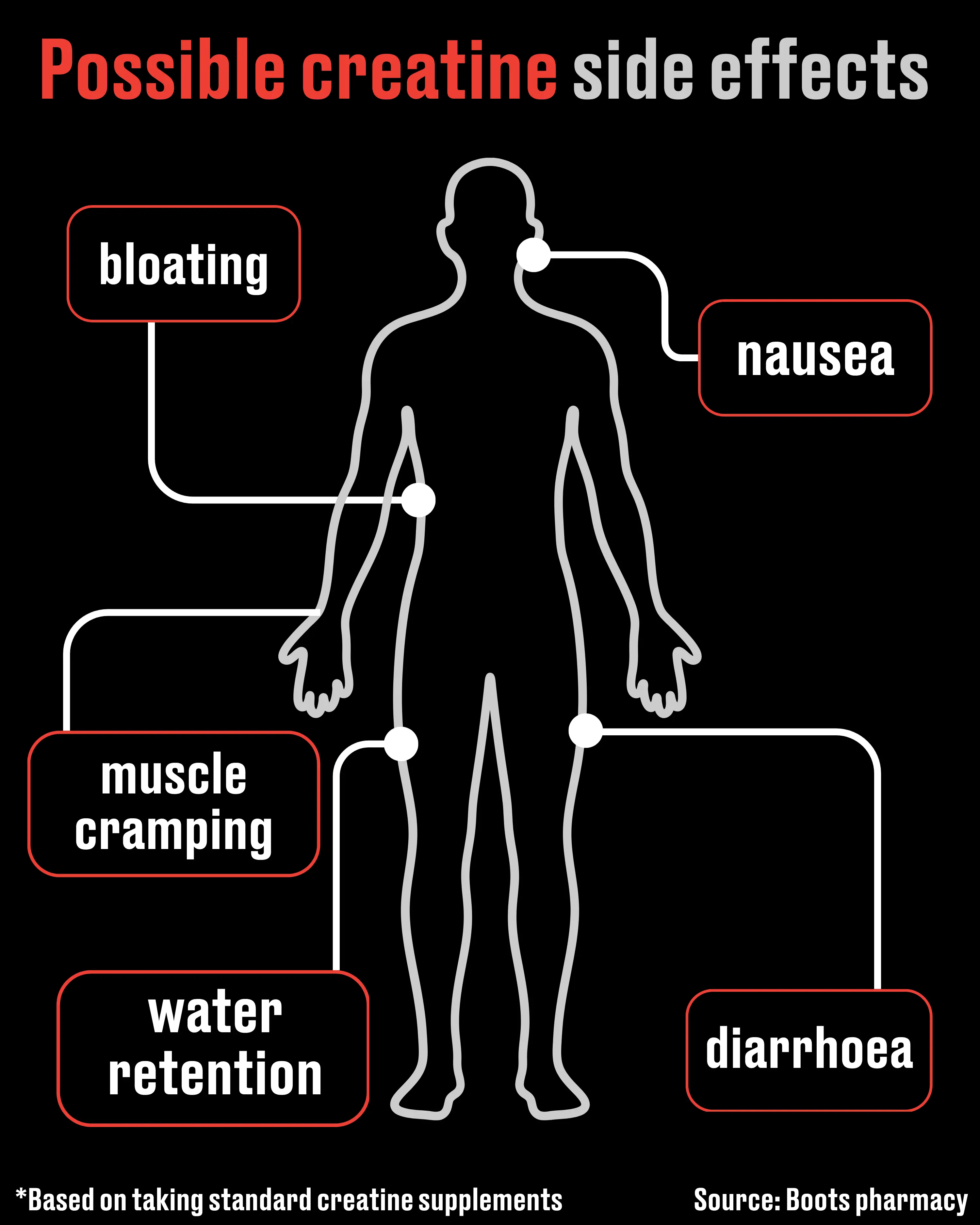
Creatine does come with some side effects as well, and if you have taken it you may have noticed these.
One is feeling some gastrointestinal distress, so nausea, an upset stomach, and diarrhoea, which you may be able to mitigate by mixing it with more liquid or spreading it through the day.
You body might also retain more water meaning that you see some water weight increase at first, with water being drawn into the muscle cells rather than your body gaining fat.
Finally, some users have said that they've experienced cramps, however it's possible that this is due to a higher intensity workout rather than a direct effect of the creatine.
If you are concerned about side effects or whether you should take creatine, speak to a doctor first.
 Kit Roberts