Secrets of Ancient Egypt's biggest cult unearthed with latest discovery of 3,500-year-old tomb

Archaeologists examining yet another hidden tomb in Ancient Egypt have unveiled secrets belonging to the civilisation's largest cult, dating back 3,500 years in the city of Luxor.
As more and more chatter goes on about how the Great Pyramid complex was really built, as well as recent rumours about a 'second Sphinx' hidden under the sands, it's all eyes on the ancient city of Luxor after Egyptologists working in one of the city's necropolis uncovered a series of discoveries dating back to 1,500 BC.
And they relate to the renowned cult of Amun in ancient Thebes, the ancient name for the city now known as Luxor.
In Ancient Egypt, the cult of Amun had been the most powerful religious and political movement in the entire civilisation, worshipping Amun, also known as the 'King of the Gods'; an ancient god linked to immense wealth and royal succession over thousands of years.
Advert
Exploring the Abu el-Naga necropolis in the West Bank of Luxor, experts excavated the southeastern section of the tomb of Roy, which for a century and a half has been buried below the surface due to debris from other digs.
With the monster dig beginning in November last year, we've finally got inside where more has been revealed around religious life burial customs for lesser known members of Egyptian society.
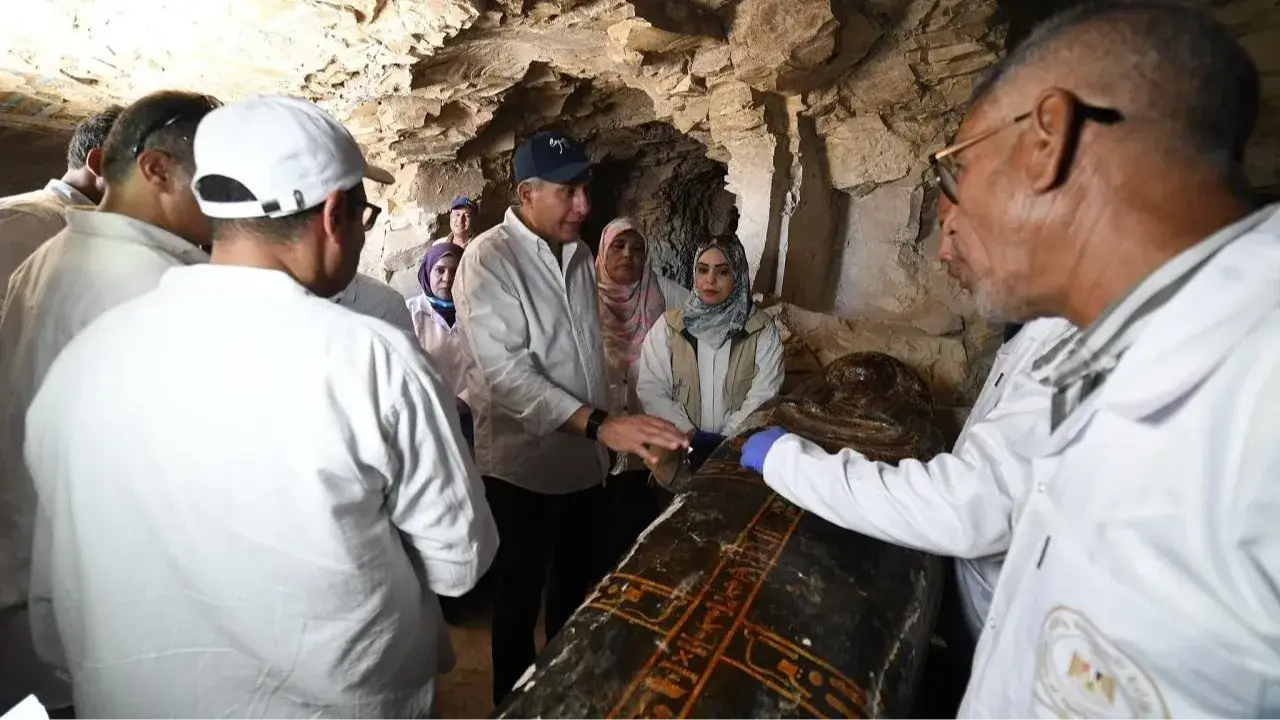
The tomb found a total of 10 wooden coffins, with them all surviving in good condition painted in hieroglyphs and inscriptions.
Further studies on the coffins showed dating back to the 18th Dynasty, which dates from 1,550 BC to 1,292 BC, as well as the 21st Dynasty (1,077 BC to 943 BC) with one belonging to a chantress of the god Amun and others the coffin for a priest.
Egypt's Supreme Council of Antiquities reports that the coffins were likely moved from their original sites during periods of unrest to avoid them from being destroyed.
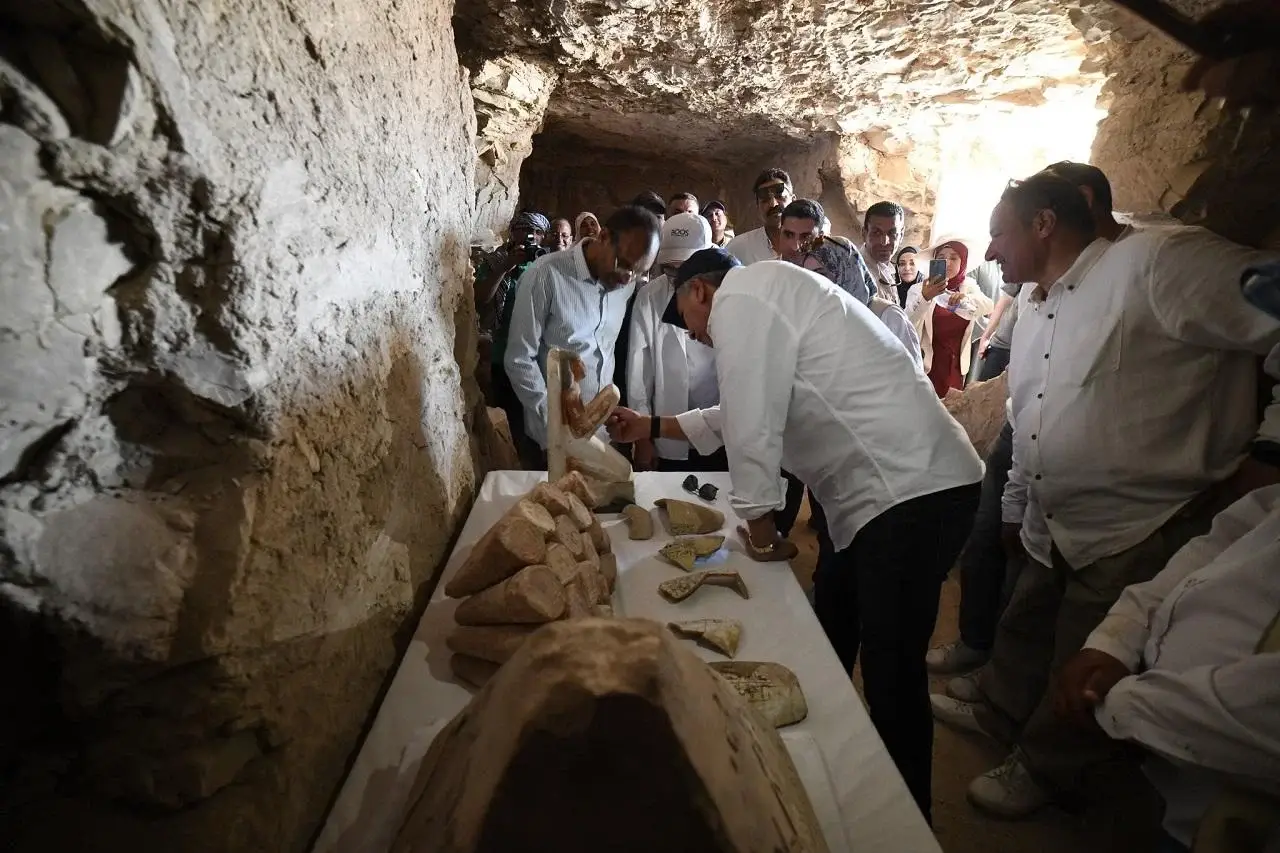
And in another small tomb, researchers found the pointed top of a sandstone pyramid - known as a pyramidion - that had been decorated with scenes of worship.
But as well as people and objects, the team found a total of 30 mummified cats.
"As the mission also succeeded in uncovering a burial of distressed animals and in the final layers of the Redim south of Baki's cemetery, a large collection of distressed animals, among them wild and pet cats, were found wrapped in linen cases and tied with linen ribbons, containing more than 30 mummies of small and large cats," The Ministry of Tourism and Antiquities said.
It is believed they were placed in there as a symbolic sacrifice for the protection of those people mummified, with this common as a religious offering during the Ptolemaic Period (332 BC to 30 BC).
Dr. Abdul Ghafar, General Director of Archaeological Luxor, explained that the mission is 'currently continuing the study and scientific documentation of the discoveries, as well as the restoration and meticulous maintenance of coffins, archaeological finds and graves discovered, in a prelude to presenting the results of the studies in an integrated scientific manner'.
He added that the owners of the discovered tombs were 'figures that had never been mentioned in any known historical sources... the patterns discovered inside also resulted in the documentation of new titles and jobs being mentioned for the first time'.
For now detailed, scientific studies are under way on the coffins, artefacts and tombs to see what other secrets can be uncovered.
Topics: Ancient Egypt, Archaeology, World News
 Tom Earnshaw