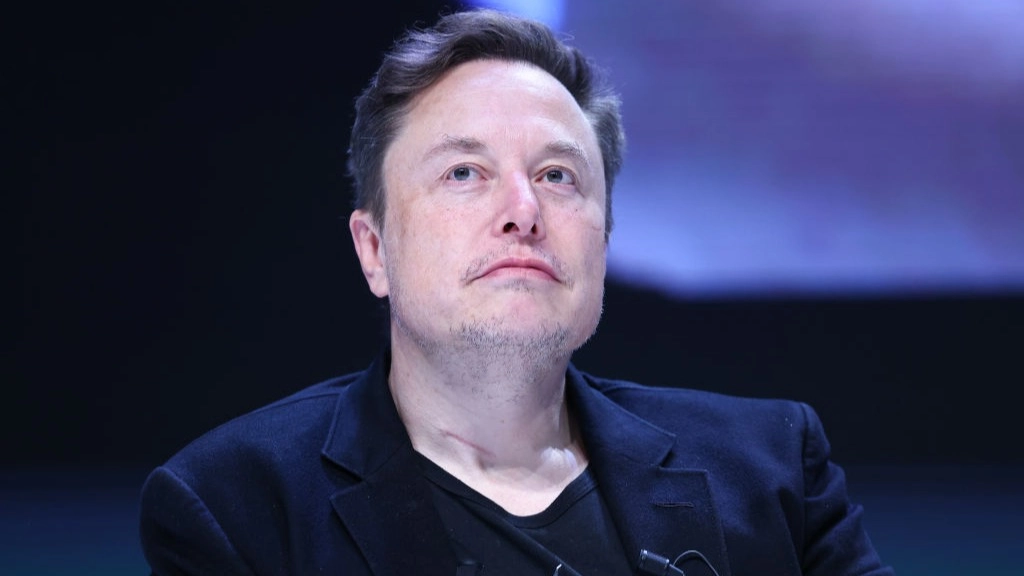
Elon Musk issues worrying prediction about 'living forever' as he says reverse ageing 'is highly likely'

Elon Musk has given his thoughts on whether humans will be able to extend their lives indefinitely.
On Thursday (22 January), Musk was speaking at the World Economic Forum in Davos, where President Donald Trump delivered an update on Greenland and issued a U-turn on future tariff plans just hours later.
"I heard about the formation of the Peace Summit, and I thought is that piece or... a little piece of Greenland, a little piece of Venezuela," the former DOGE head said of the US president's plans.
Away from politics, however, Musk began speaking about the future of humanity and explained why he thinks it is 'highly likely' that humans will figure out how to extend life during a conversation with BlackRock CEO Larry Fink, though reverse ageing isn’t something that the Tesla CEO has put a lot of thought into figuring out himself.
Advert
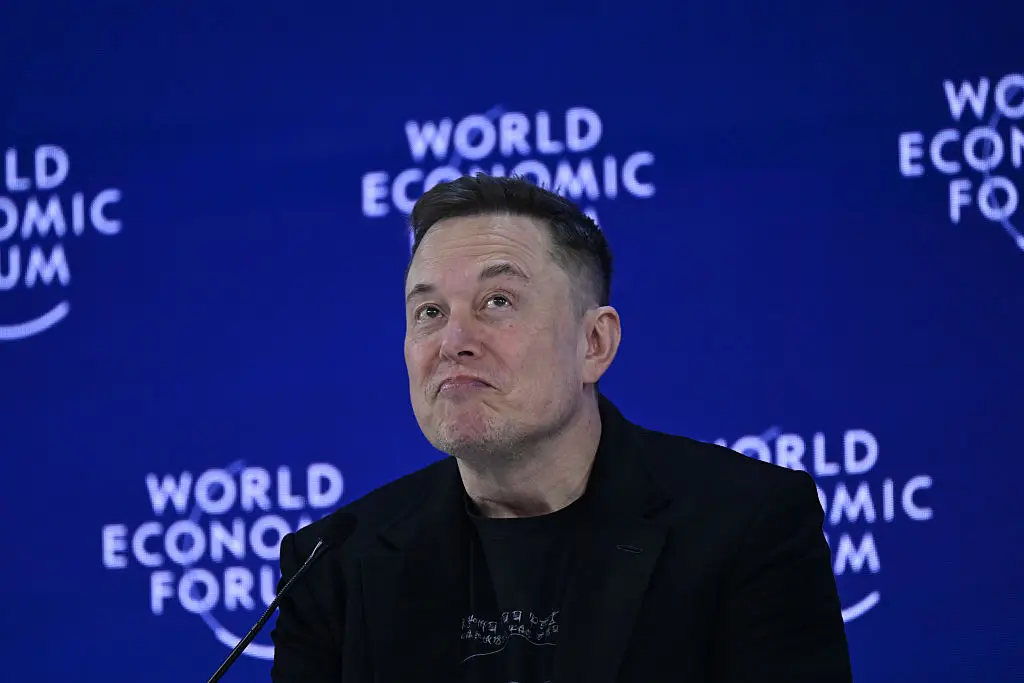
"I haven’t put much time into ageing stuff. I do think it is a very solvable problem when we figure out what causes ageing, I think we’ll find it’s incredibly obvious, not a subtle thing," he said.
"The reason why I say it’s not a subtle thing is that all the cells in your body pretty much age at the same rate, I’ve never seen someone with an old left arm and a young right arm, so why is that?
"That means there must be a clock, a synchronising clock, that is synchronising across 35 trillion cells in your body."
Despite his optimism, Musk suggested that death is important for society 'because if people do live forever or a very long time then I think there is some risk of an ossification of society, of things getting locked in place'.
"It may become stultifying, lacking vibrancy," he continued. "That said, do I think we will figure out ways to extend life and maybe even reverse ageing - I think that is highly likely."
Well, one man is trying to achieve 'immortality' in the next 15 years.
Bryan Johnson spends about $2 million (£1.4 million) a year to 'stay young' forever, as he's gone as far as injecting himself with his teenage son's blood, as well as his five-hour 'longevity routine'.

"We currently do not know how 2039 immortality will be achieved. There are new, promising therapies that can turn back the clock decades, but they’re buggy," he said on X.
"Sometimes they mistakenly cause cancer. We gotta fix that. But we know immortality is possible because nature has already solved it.
"This isn’t a physics problem like trying to travel faster than the speed of light, it’s a biological engineering problem that evolution has cracked multiple times."
"This is what I’ve been doing for six years," he said of biohacking, adding: "As crude as longevity technology is today, the improvements I’ve personally seen are stunning."
 Anish Vij