
Dermatologist shares everything that changed after taking collagen for one year

A dermatologist who took collagen for a year explained what it did to her and the things that didn't happen.
Collagen is a protein our body naturally makes but from our late 20s onwards production begins to tail off and slowly declines as our naturally produced supply drops by around one percent a year.
Smoking and sunburn will accelerate this decline, and some people take collagen because they think it'll keep their skin younger and healthier.
YouTubing dermatologist Dr Sarah Sheu explained in a video that she'd taken collagen peptides for a year and recounted the results on her body, saying she'd noticed 'a clear difference in her nails' as her 'hands take a beating' in her line of work needing to sanitise them all the time.
Advert
"Since starting to take collagen peptides a year ago, I notice a clear difference in my nails. They grow faster and feel thicker and stronger," she said.

"It's actually kind of annoying since I feel like I have to trim my nails more frequently now. Also, my joints feel better. I just have normal age- related aches and pains of someone approaching 40. Nothing out of the ordinary.
"But feeling a little bit less achy has been a nice unexpected side effect since starting to take collagen peptides for anti-aging."
However, when she talked about the change to her skin she said there'd been 'nothing', explaining it was nice to get 'unexpected benefits in her nails and joints' but she'd had 'zero improvement' for her skin.
She explained she was continuing to take collagen for the other benefits even if it wasn't helping her skin and said others might have a different experience as 'the human data is mixed'.
A recent study into collagen supplements found it produced 'consistent and clinically meaningful benefits for dermal, bone, and muscular health'.
Professor Lee Smith told the BBC: "This study brings together the strongest evidence to date on collagen supplementation.
"Collagen is not a cure-all, but it does have credible benefits when used consistently over time, particularly for skin and osteoarthritis. Our findings show clear benefits in key areas of healthy ageing, while also dispelling some of the myths surrounding its use."
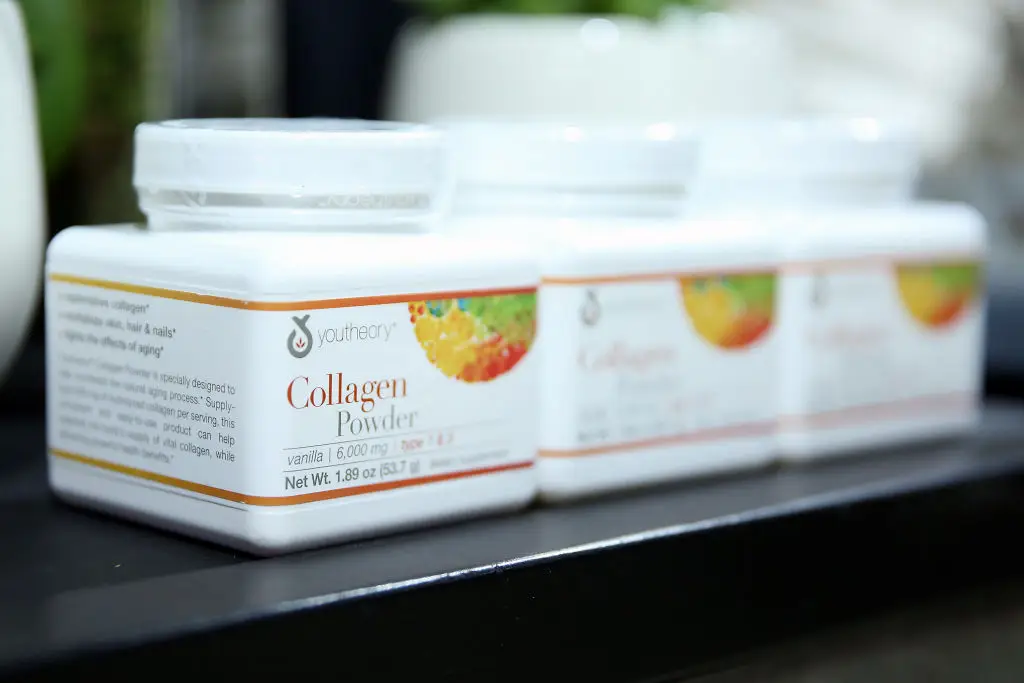
Responding to the study, Dr Tamara Griffiths, President of the British Association of Dermatologists said the findings were 'welcomed' but had things to say about the results.
She said: "As indicated in the paper, a number of critical variables which significantly impact skin ageing, including UV exposure, smoking, sleep, environment and hormonal status, are not accounted for with any consistency in the existing literature.
"This creates difficulty in the systematic interpretation of the available evidence."
Collagen isn't considered a medical treatment on the NHS as Lloyds Pharmacy explains there is 'little clinical evidence' supporting the claims that it's good for your skin and joints, which also means there's less information about side effects and long term health impacts.
You certainly shouldn't use it as a replacement for prescribed medication, and you should talk to a healthcare professional before you start taking supplements.
Topics: Health
 Joe Harker