Disturbing truth behind why your skin goes red when you drink alcohol

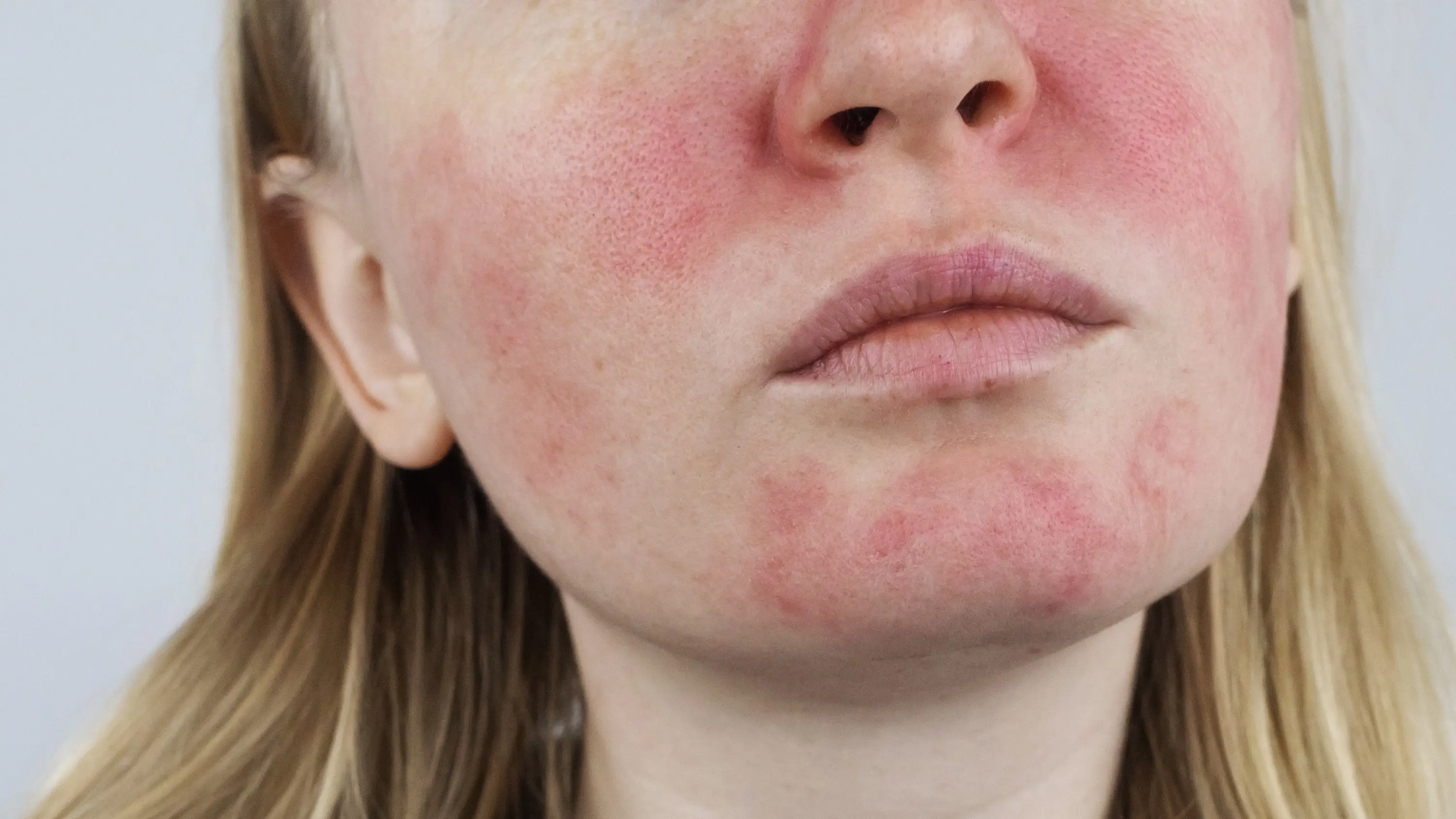
Health experts has revealed the disturbing truth behind why your skin goes red after a few drinks on a night out.
According to the National Institutes of Health, 'people like to drink alcohol because of its ability to alter emotional states'.
They say that alcohol 'induces euphoria, relaxation, and disinhibition while reducing stress and anxiety'.
The NHS, however, advises Brits to not go over 14 units a week.
Advert
That's the equivalent of seven pints with four percent alcohol, or one and a half bottles of wine with 12 percent alcohol by volume.
But if your face goes red after drinking alcohol, Dr Karan Raja warns that you could have something called 'alcohol flush reaction'.
He said in a video for Bupa UK that 'around eight percent of the world has this software glitch with the vast majority being of East Asian descent'.
What is 'alcohol flush reaction'?

"Do you ever get red in the face when drinking alcohol? This is a genetic software glitch called the alcohol flush reaction, and it's a warning sign for your health," the NHS surgeon says.
Dr Raja said it's when 'your DNA starter pack forgot to include enough of the enzyme that helps the body break down alcohol - aldehyde dehydrogenase 2 (ALDH2)'.
"When you drink alcohol, the body converts it into acetaldehyde, which is actually more toxic than the alcohol itself," Dr Raja explains.
"This toxic acetaldehyde is then converted to the safer acetate by the enzyme.
"If you have the mutation and you drink, you get a buildup of the toxic acetaldehyde in your blood.
"This is the substance that increases your risk of cancer as well as giving you facial flush and an increased heart rate."
He warned that even if someone with the mutation has just four units a week, it could increase their risk 'of esophageal cancer forty to eighty times higher than someone without the mutation'.
Symptoms of 'alcohol flush reaction'
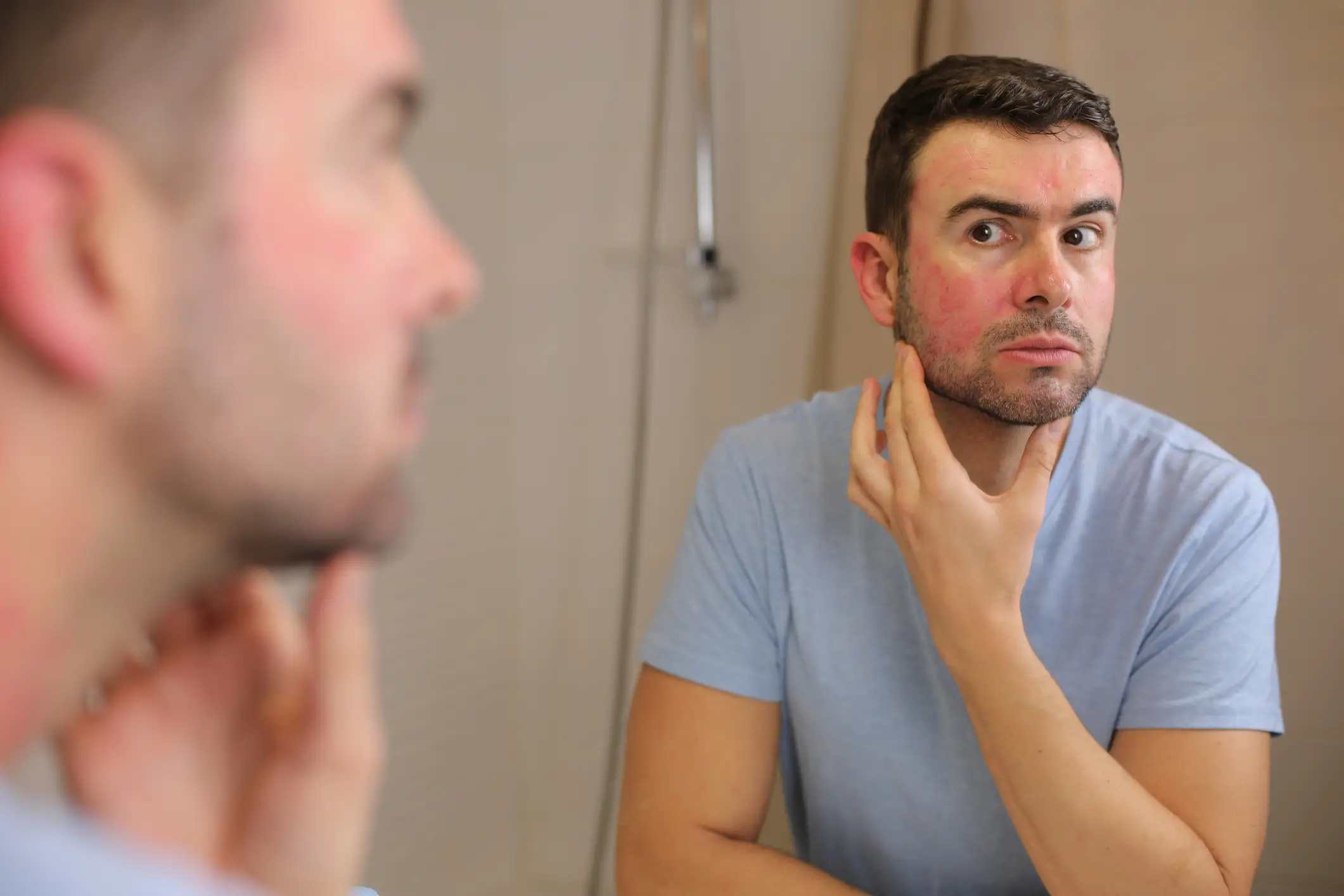
Alcohol intolerance 'is an inherited metabolic disorder'. "Metabolic disorders affect your metabolism, the way your body converts and uses energy," says Cleveland Clinic.
Symptoms include:
• Face, neck and chest become warm and pink or red right after you drink alcohol.
• Nausea and vomiting.
• Rapid heartbeat (tachycardia) or heart palpitations.
• Hypotension (low blood pressure).
• Throbbing headache, fatigue and other hangover-like symptoms.
• Stuffy nose.
• Diarrhea.
• Worsening asthma.

Shinya Ohashi, an associate professor at Kyoto University Hospital and colleague of M Muto, told Nature that 'measuring acetaldehyde is a more direct way of assessing risk'.
Muto's team have developed a device that can measure the level of acetaldehyde that can be measured in exhaled breath.
This test 'enables people to gauge their alcohol metabolism — something that has been impossible until now', says Muto.
“Our hope is that providing an easy way to visualize the risk will help lead to behavioural change.”
Akira Yokoyama, a medicine senior lecturer at Kyoto University, is also exploring the link between alcohol and cancer, adding that early detection is vital.
“About 80% of the world’s esophageal cancers occur in Asia, and the number of cases of esophageal cancer among Asians is predicted to increase by 63 percent by 2040 due to increasing rates of alcohol consumption and ageing populations,” Yokoyama says.
Topics: Alcohol, Health, Cancer, Science, World News
 Anish Vij