Difference between drug resistant ‘Super fungus’ and eczema as it rapidly spreads across UK

The 'super fungus' spreading across the UK was recently unknown, but experts have now warned that it's fast 'becoming a really big problem'.
Known scientifically as Trichophyton (T.) indotineae, the troublesome infection specifically targets private regions such as the thighs, bum, and groin area.
It originates from the Indian subcontinent, with the 'newly identified dermatophyte species' finding a near-epidemic form here, as infections in the UK have risen by almost 500 percent in the last three years, according to reports.
Accounting for 38 percent of dermatophyte isolates in the country according to the UK National Mycology Reference Laboratory, it's said that several isolates in vitro are resistant to terbinafine, a medicine available through the NHS which is commonly used to treat fungal skin infections.
Advert
The health condition is expected to become more widespread, despite the majority of cases being reported in people of SOuth Asian heritage, though medical experts are worried about how it can spread from person to person.
T. indotineae can often be mistaken for ezcema though, so here's how you can tell the difference between the fungal infection and the skin condition.
What is T. indotineae?
The fungus is a type of ringworm which has mutated over the years to withstand medicines commonly used for regular cases of fungus, resulting in the 'super fungus' nickname being given.
Patients can often end up needing months of treatment in hospital with itraconazole as a result, though this drug can cause liver damage or heart problems.
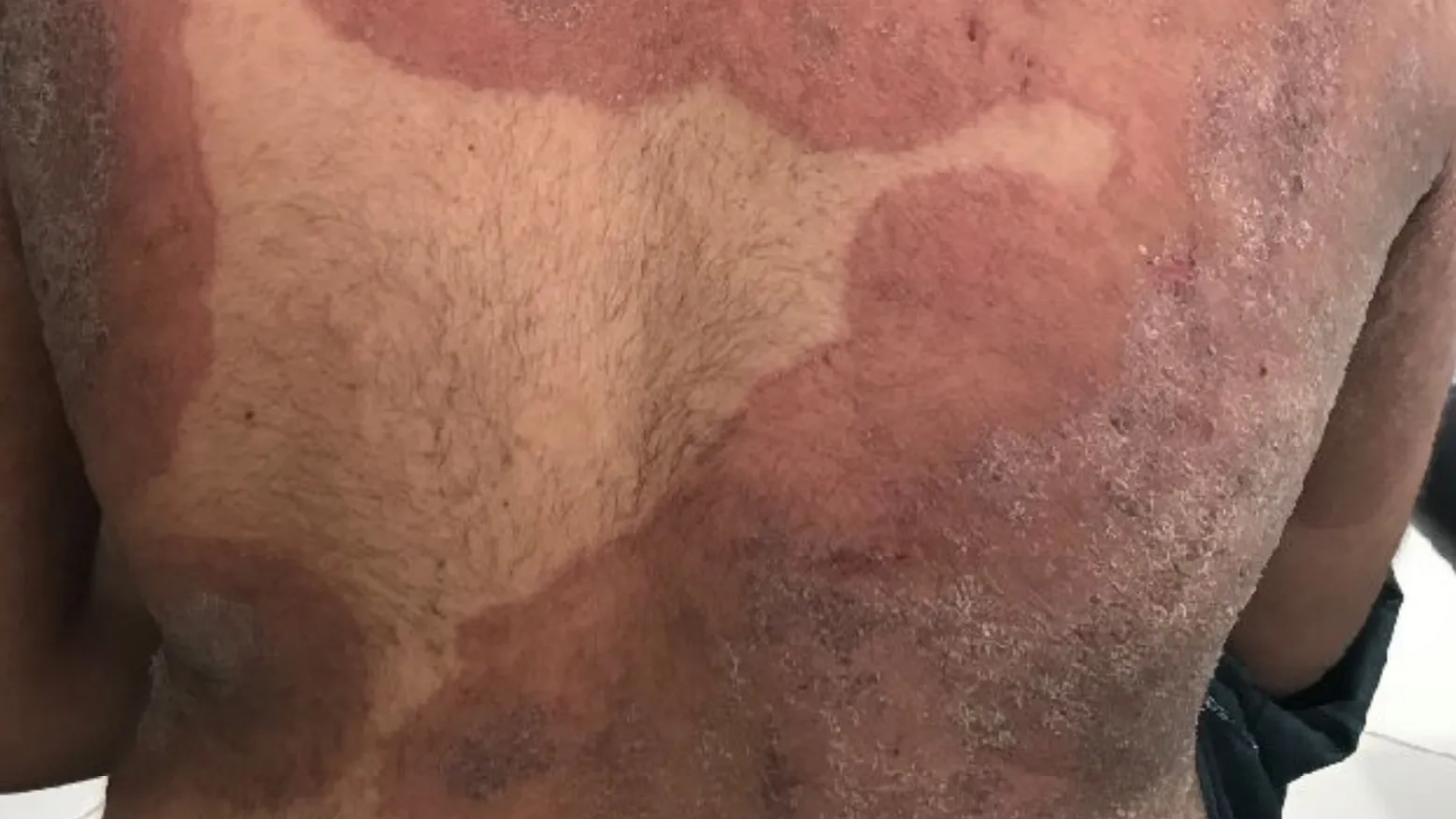
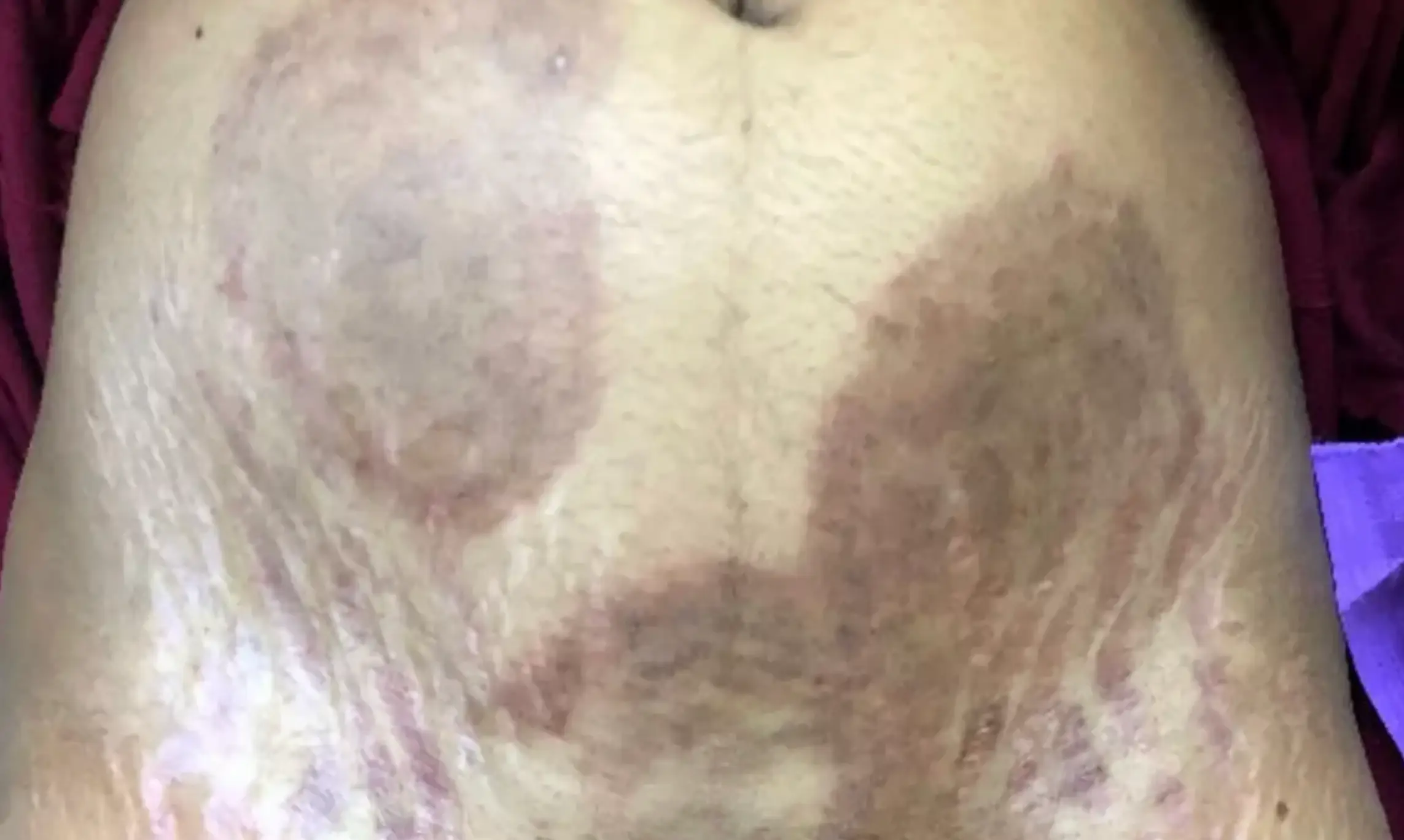
The condition has emerged in the last decade or so, says the American Academy of Dematology Association (AADA), and while it can result in 'angry' red itchy rashes in the nether regions, it can spread to parts of the body such as the back and face, causing inflamed rashes. It can even leave people with permanent scarring.
Megha Pancholi, GP at Boots Online Doctor, told LADbible: "There has been a growth in the number of cases in the UK in recent years of antifungal-resistant trichophyton indotineae skin infections – although overall case numbers remain relatively low.
"The antifungal resistant fungus is more common in South Asia, due in part to it thriving in warm moist areas."
What is the difference between T. indotineae and eczema?
Megha Pancholi, GP at Boots Online Doctor, told LADbible that there is are a number of differences between the fungal infection and eczema, with one being how skin-to-skin contact with the infected person or contaminated surfaces can pass T. indotineae on.
She went on: “Trichophyton indotineae can be identified by its appearance which is often ring shaped, with a scale raised border. Typically appear as red, scaly inflamed patches on the skin with persistent itching or discomfort.”
The GP explained that eczema on the other hand, is 'a long-term atopic skin condition that can make skin red, itchy, dry and cracked'.
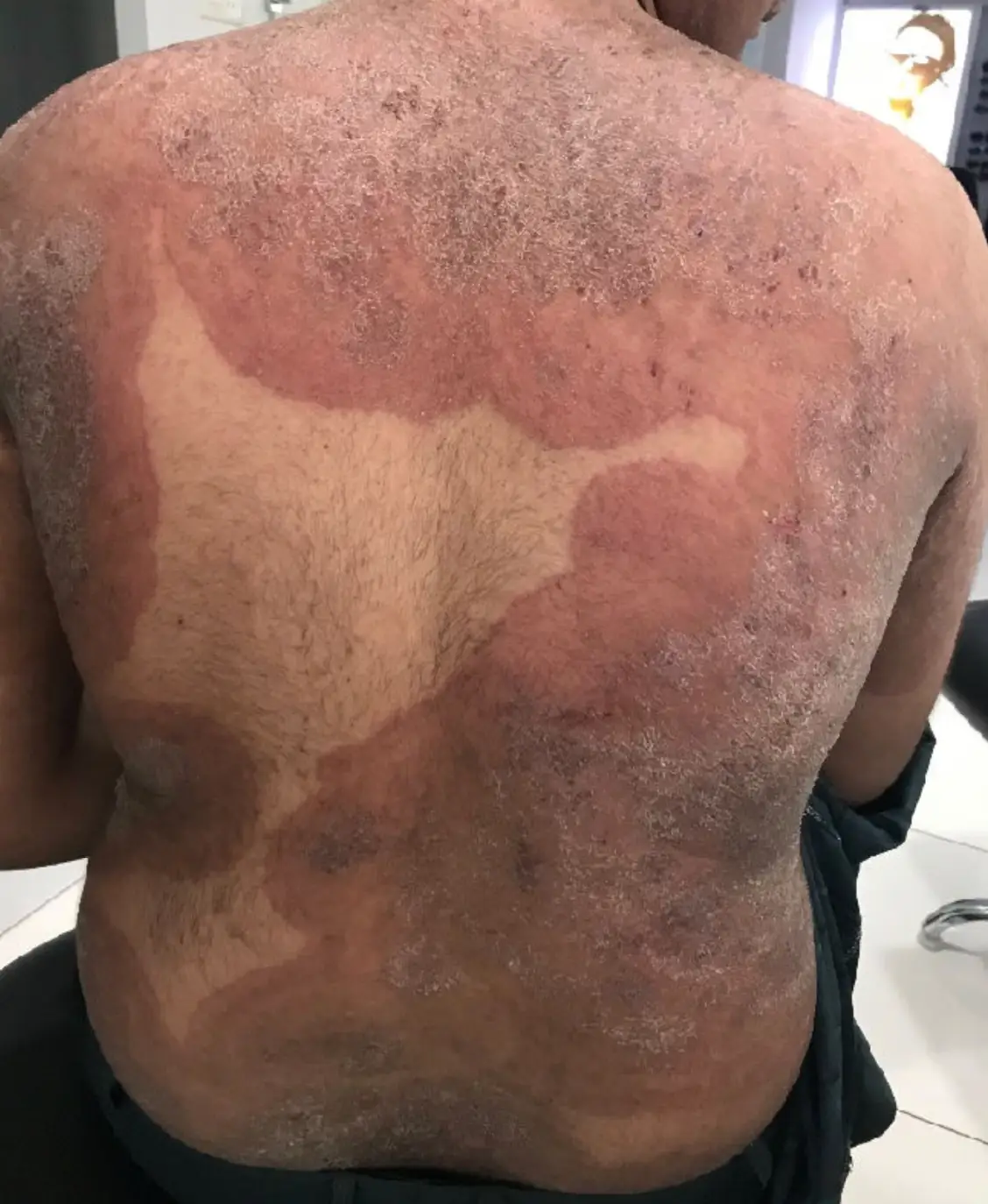
"Unlike with eczema, a trichophyton indotineae infection will not respond to treatment with a corticosteroid cream and using a corticosteroid cream may in fact worsen symptoms," the doctor highlighted.
She explained that eczema is not infectious, so it can't be passed from person to person like T. indotineae can.
What to do if you experience symptoms of T. indotineae
If you were to notice burning rashes appearing across your body, especially your groin, thighs and buttoms, Dr Pancholi says to see a GP immefiately, though symptoms will likely fail to improve with over-the-counter prescriptions.
Advising that people take the full course of any prescribed antifungal treatment, the expert explained: “To avoid spreading the infection, avoid sharing personal items such as towels, clothing or bedding and wash these items at high temperatures – ideally above 60°C – to kill fungal spores.
"Keep lesions covered to reduce the risk of transmission via skin-to-skin contact and maintain good personal hygiene, including regular handwashing," she concluded.
 Joshua Nair