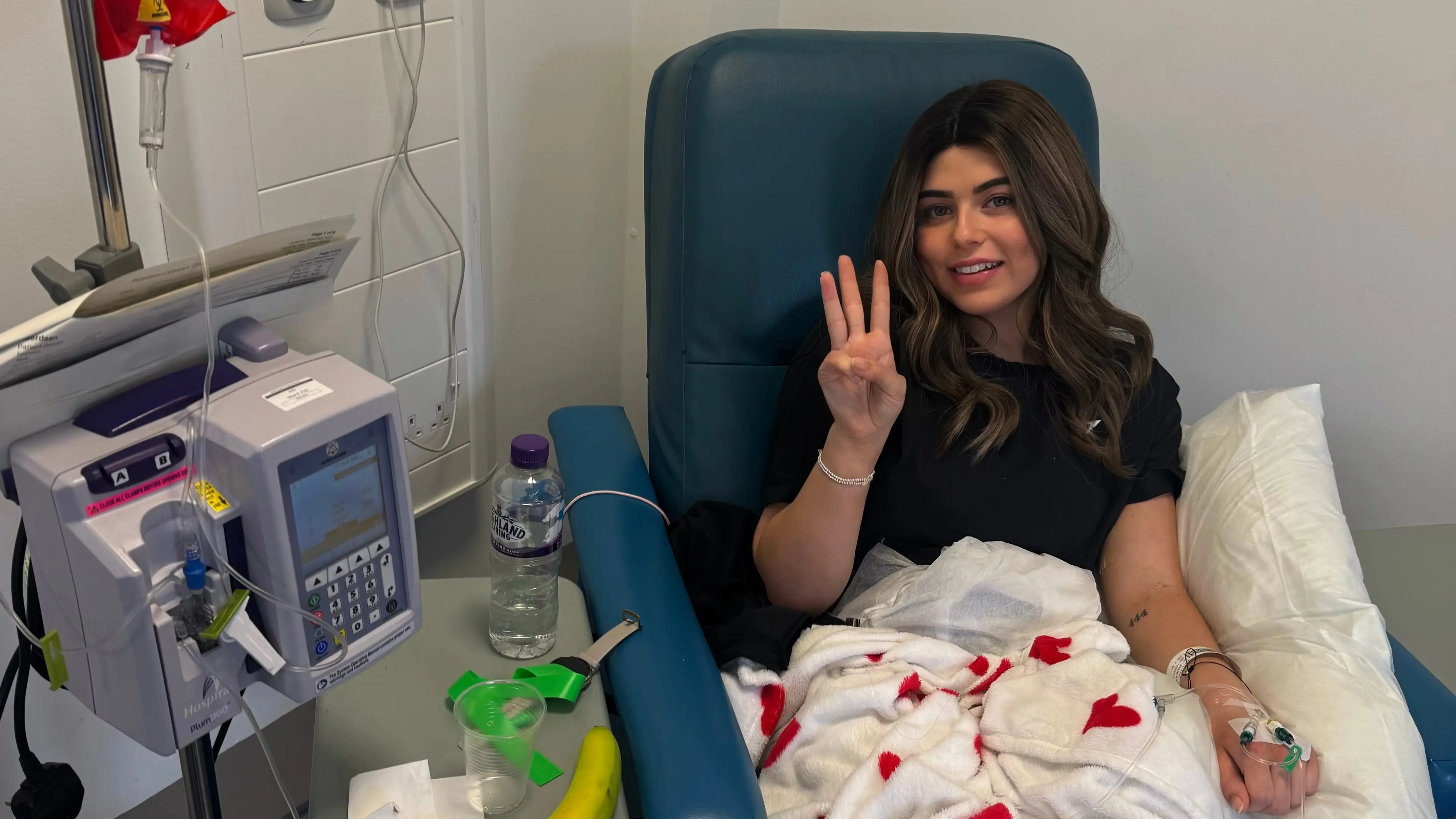
Ambulance worker left 'scared of falling asleep' after rare cancer was misdiagnosed as allergy

In February 2025, ambulance technician Kayla Esson woke up to find that her entire face and neck had swollen up.
At first, the then 21-year-old thought she just had a bad case of morning puffiness, but when the swelling persisted, extending past her face and down to her collarbones, she started to realise something was wrong.
"I just woke up one morning, and my face was swollen," Kayla tells LADbible.
"There were no thoughts of me thinking 'God, this is something bad', I just thought that it was normal, that it was an allergic reaction or something."
Advert
With doctors initially believing she was suffering from an allergic reaction, Kayla was prescribed steroids by her local GP, which did little to ease the symptoms.
By March, she was sent to hospital for further testing, which revealed she'd developed a rare form of aggressive cancer known as Primary Mediastinal B-cell Lymphoma (PMBCL).

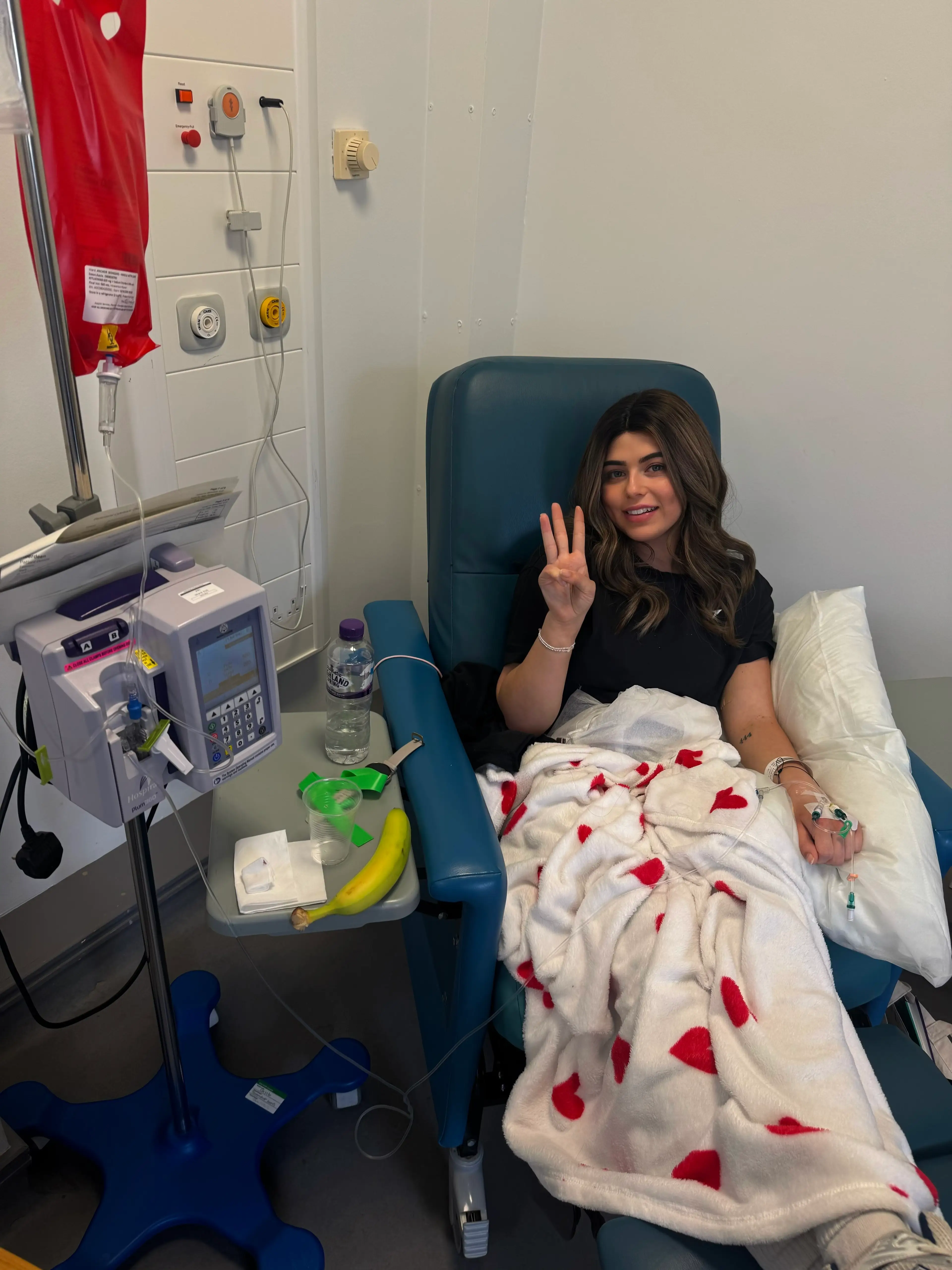
Kayla's tumour measured around 12cm x 9cm and was also crushing her vena cava, a large vein that delivers blood to the heart, causing uncomfortable breathlessness. After diagnosis, the ambulance technician underwent several cycles of chemotherapy, which started in March.
The experience was a gruelling one for Kayla, who found herself too scared to fall asleep during her chemotherapy sessions in case she didn't wake up.
"I think it starts terrifying because you don't know how you're going to react," she recalls. "Your body could react in any way.
"The first time definitely was so scary, but I had my family around me."
Her age was another factor which made the diagnosis more difficult for Kayla. According to Cancer Research UK, the highest rates of cancer are in people aged 50 and over. However, this does not mean that young people cannot get cancer, with Kayla's story being an example of this.
The shock diagnosis meant Kayla's social life came to a standstill, as she was no longer able to go out and socialise; and while her friends made sure they saw her every day, the ambulance technician still struggled with the loneliness that comes with chemotherapy isolation.
"Most people at 21, they go out to the pubs, they go out with their friends, and have relationships," she tells us. "They're making out like making plans for the future, but my whole life was on pause [and] I couldn't do any of that. It was quite difficult."
Kayla received chemotherapy until July, with doctors informing her that she was in remission at the end of the month.
'I don't take things for granted anymore'
Now cancer-free, Kayla says she now has a 'whole new lease of life' and has dedicated her spare time to fundraising, working with charities such as Teenage Cancer Trust, Blood Cancer UK, and this year she is taking part in the Aberdeen Race for Life.
"Being able to be normal again, it's kind of made me realise how important it is to enjoy life while you can," she says. "Life's too short to worry about little things."
She's also keen to raise awareness around early cancer detection for young people, adding: "A lot of young people, including me, assume that cancer is something that
happens in later life because you always hear of older people getting it, and because of that, I feel like symptoms and stuff can be ignored or brushed off."
"Early detection does save lives, and if you catch it early helps you so much more
in the long run for treatment and diagnosis."
What is Primary Mediastinal B-cell Lymphoma (PMBCL)?
According to Macmillan, PMBCL is a blood cancer which grows between a person's breastbone and lungs. Symptoms typically begin to occur when the tumour begins to press on the chest.
This includes:
- swelling in the neck, arm or face
- headaches
- breathlessness
- coughing
- aching in the chest
Kayla is supporting Cancer Research UK’s Race for Life. Go All In against cancer. All in to help fund life-saving research. To sign up, visit raceforlife.org
 Brenna Cooper