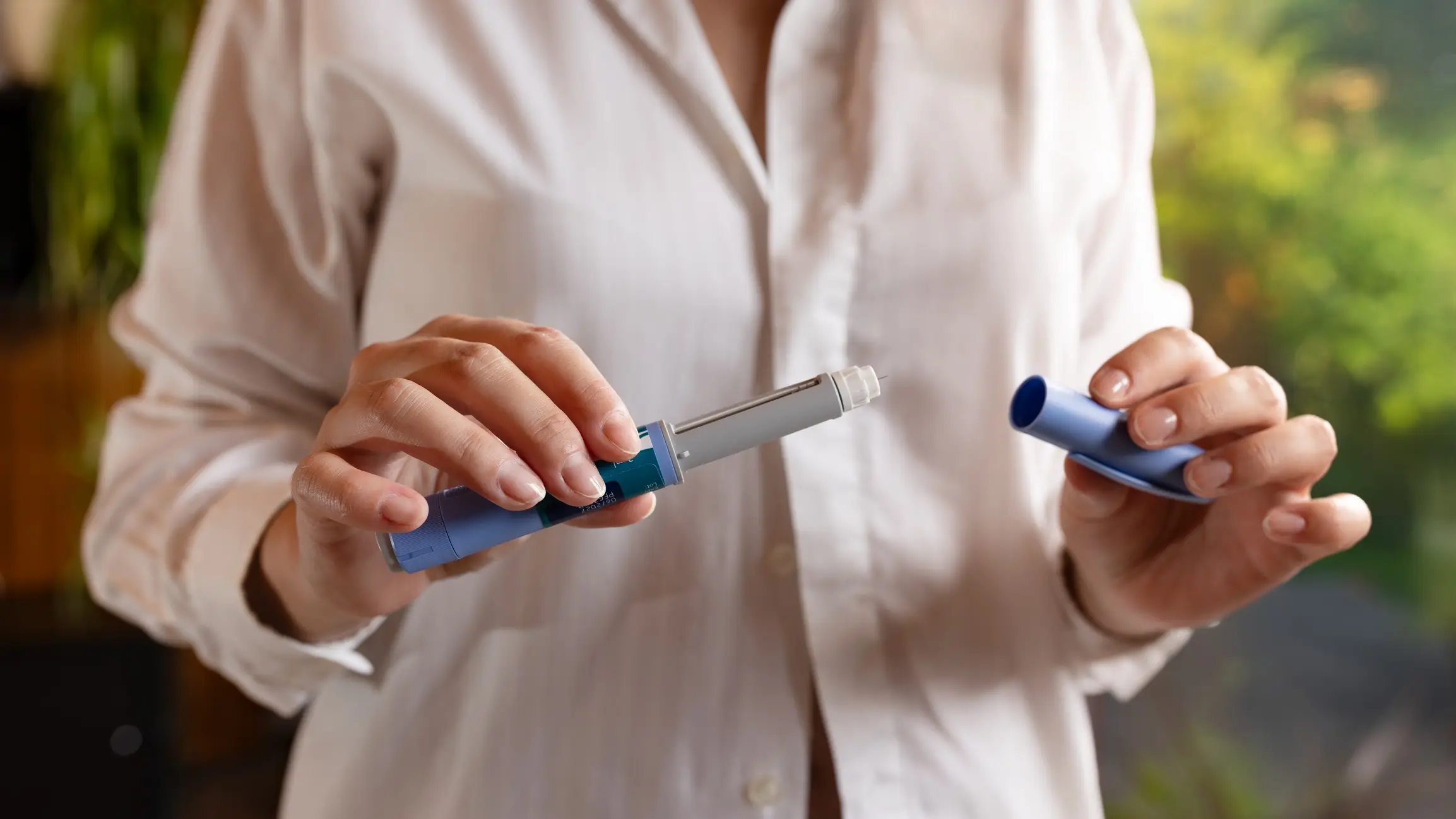
Woman 'completely horrified' over what happened after she stopped taking weight loss jab

A woman who lost six stone with the help of weight loss jabs has revealed what happened to her when she weaned herself off them.
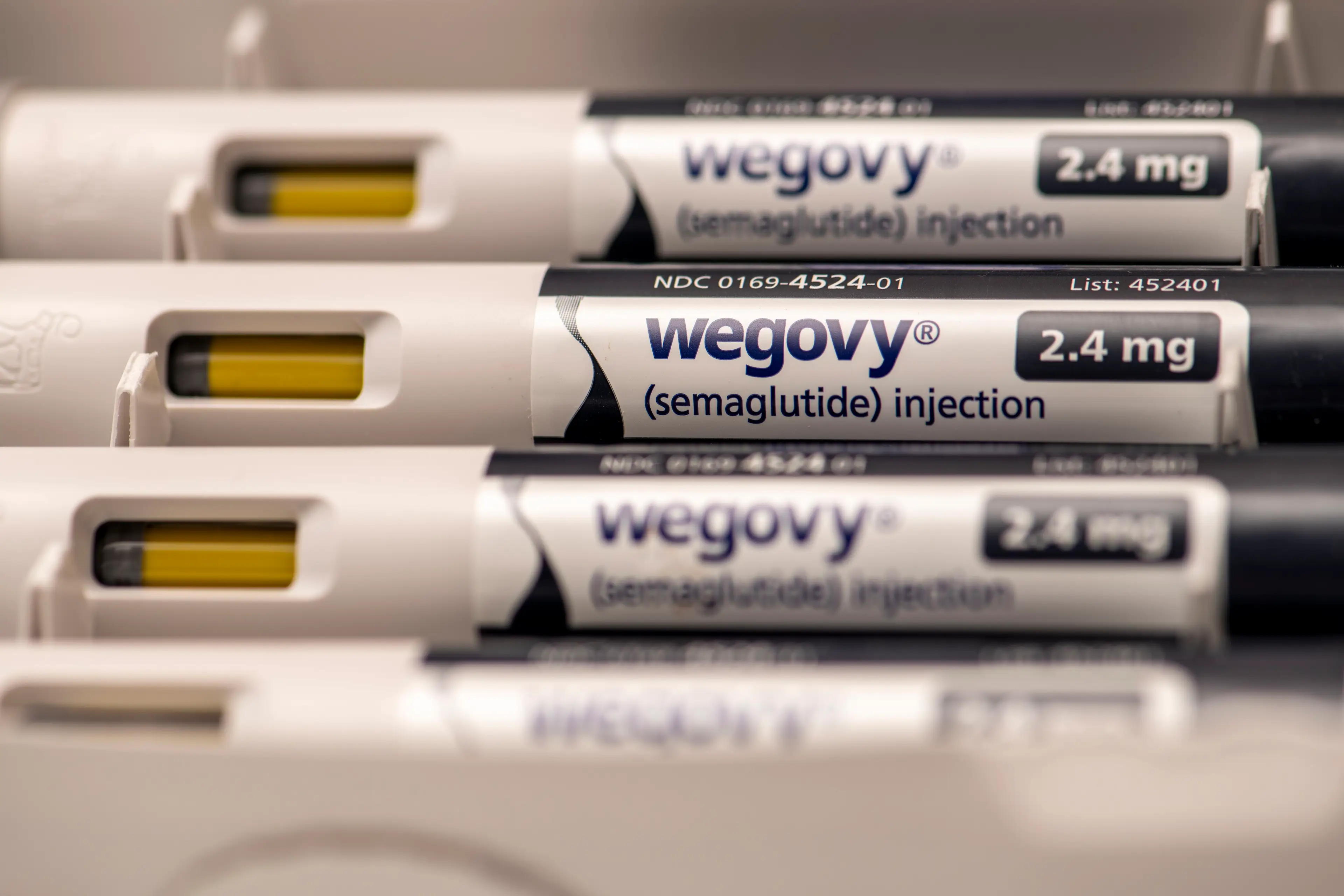
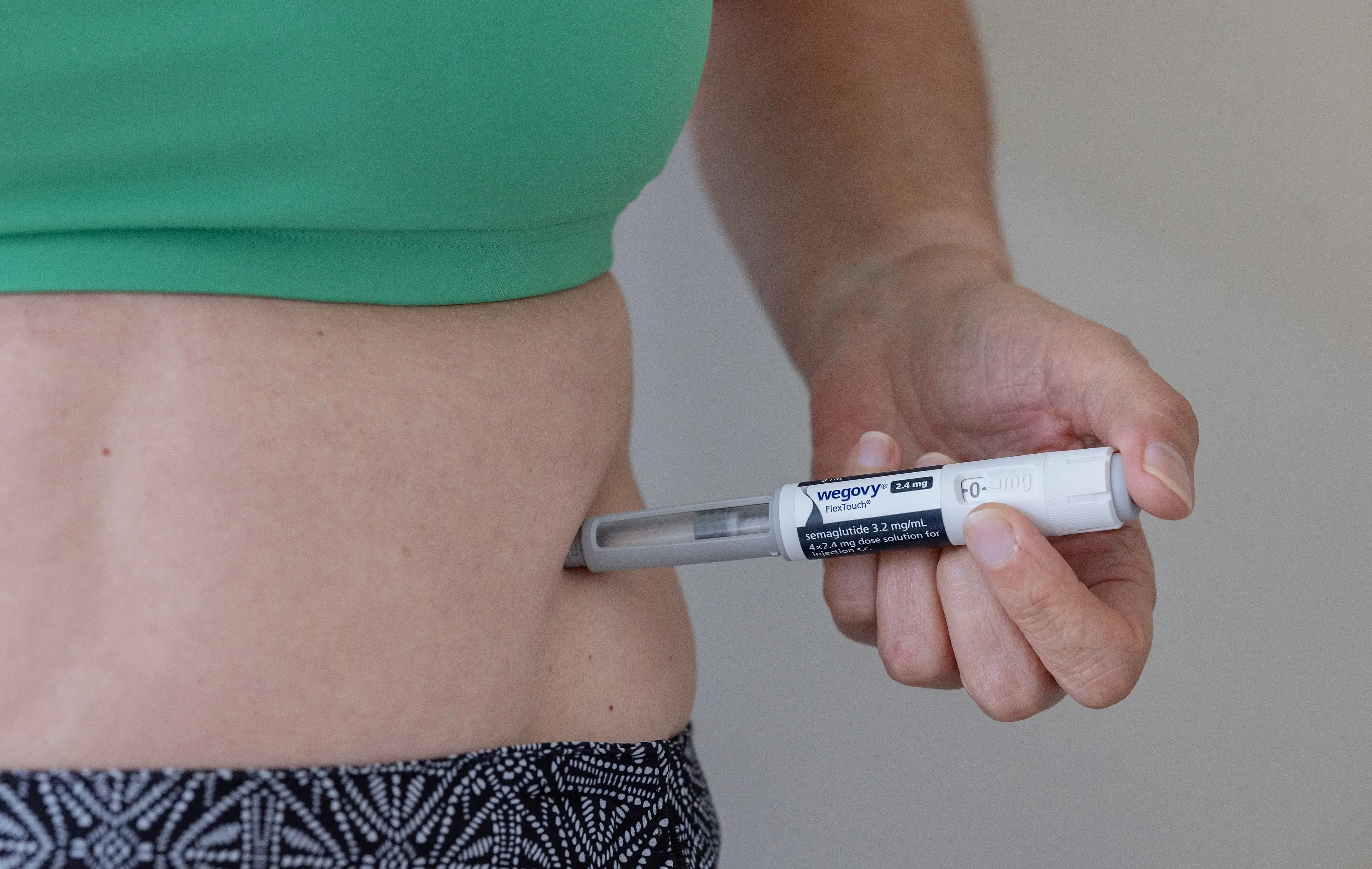
Tanya Hall started taking Wegovy, an appetite-suppressing drug, more than 18 months ago - and she's slimmed down significantly in that time.
The weight-loss medication is manufactured by Novo Nordisk, the Danish pharmaceutical company that also produces Ozempic.
Wegovy, the brand name for a drug called semaglutide, works by mimicking a hormone known as GLP-1, which helps signal to the brain that you feel full and have had enough to eat.
Advert
Given that users end up feeling stuffed despite only consuming a small amount of food, over time, they end up losing weight. The medication is currently licensed for weight management on the NHS.
Doctors in the UK don't just hand it out willy-nilly, though, as there is a strict criteria that patients have to meet before they can be prescribed Wegovy.
According to the NHS, Brits 'have a review' after six months on the medication to see where they are up to.
"You'll then usually only carry on taking the medicine if you've lost at least 5 percent of your body weight," the NHS explains. "A specialist weight management service can prescribe semaglutide for obesity for a maximum of 2 years."
Tanya is just shy of hitting that 2-year mark, and she explained that she has tried to come off Wegovy several times before.
"For the first 38 years of my life, I was overweight - now I'm six stone lighter," she said.
However, she claims that she has been left 'completely horrified' by the insatiable hunger that overwhelms her when she stops injecting herself with the weight loss jab.
"It was like something opened up in my mind and said: 'Eat everything, go on, you deserve it because you haven't eaten anything for so long'," she told the BBC.
Although the weight loss medication helped her to lose six stone (38kg), she explained that her first few months on Wegovy were quite the rollercoaster ride.
The Brit, who works as a sales manager for a large fitness company, claimed that she struggled to sleep, experienced headaches and felt nauseous a lot of the time.
Shockingly, her hair also started 'falling out in clumps' too - but this might have been a byproduct of her rapid weight loss, rather than a side effect from Wegovy, the BBC reports.
Previous studies have suggested that people on weight loss drugs might experience 'significant weight regain within weeks of stopping'.
According to Dr Hussain Al-Zubaidi, stopping medications like Wegovy can feel like 'jumping off a cliff' for people who have been relying on them for extended periods.
"I often see patients who will come off it when they're on the highest dose because they've reached their target and then they stop," the lifestyle GP told the BBC.
He explained that patients often feel like they're hit by an 'avalanche or a tsunami' of hunger once they stop taking weight loss medication.
"Somewhere in the region of 60 to 80% of the weight that you lost will return," Dr Al-Zubaidi added. "It's all about having an exit strategy. The question is: what are these people's experiences once they come off the injection?"
Wegovy's manufacturer, Novo Nordisk, told LADbible in a statement: "Patient safety is of the utmost importance to Novo Nordisk.
"Treatment decisions, including discontinuation of treatment, should be made together with a healthcare provider who can evaluate the appropriateness of using a GLP-1 based on assessment of a patient’s individual medical profile. "The side effects listed in the product label should be taken into account as part of this.
"Wegovy®▼ (semaglutide injection) is indicated for weight management (including weight loss and weight maintenance) therefore some level of weight regain upon discontinuation of the medicine can be expected.
"We continuously collect safety data on our marketed GLP-1 RA medicines and work closely with the authorities. We recommend that any patient experiencing side effects while taking GLP-1s, including Wegovy® (semaglutide injection), report them to their healthcare provider and via the MHRA Yellow Card scheme: https://yellowcard.mhra.gov.uk/."
Topics: Health, News, UK News, Food And Drink
 Olivia Burke