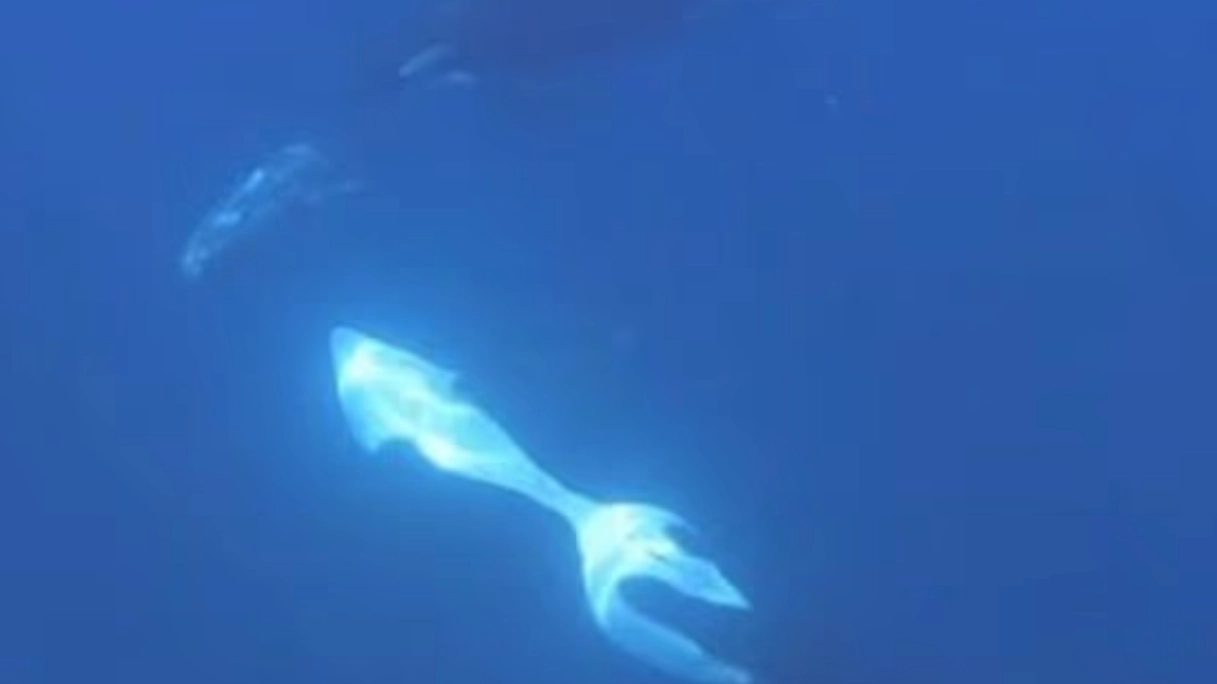
Killer whales filmed smashing huge fish to smithereens with torpedo headbutt before eating it

Orcas have stunned scientists by using a never-before-seen technique to break apart a fish before eating it.
A researcher in the Gulf of California watched on as two killer whales smashed the body of a giant ocean sunfish so hard that it burst into thousands of pieces.
The unusual behaviour was filmed on the GoPro of marine biologist Dr Kathryn Ayres, from Beneath The Waves, in 2024.
Ocean sunfish can grow up to three metres long and weigh as much as two tonnes, making them one of the biggest bony fish in the world.
Advert
They are common prey for orcas in the area, but scientists had never seen them treated this way before.
During the sighting, one orca held the dead sunfish by its tail while another swam towards it at speed and hit it with its head.
The impact caused the fish to break apart into many small pieces. Because the fish had already been killed, researchers believe the headbutt was used to process the food rather than to catch it.
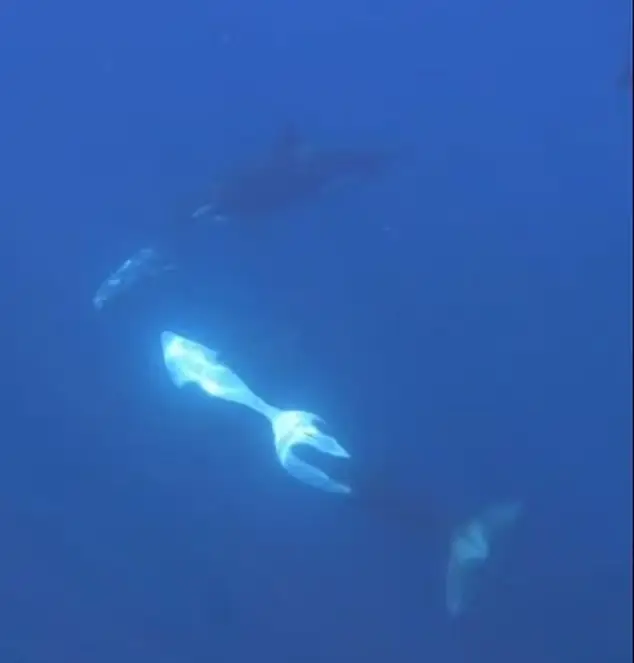
“We think this may help younger orcas feed more easily or it could also just be for fun. Orcas are known for playing with their food,” Dr Ayres suggested.
After the fish exploded into pieces, a young orca was seen eating the smaller fragments while the adults fed on the larger remains.
“When you see a multi-ton apex predator charge a massive fish at that speed right next to your boat, the sheer acoustic thud and the resulting explosion of tissue are overwhelming,” Erick Higuera, a marine biologist and wildlife cinematographer at Mexican non-profit Conexiones Terramar and co-author of the research, added.
Researchers also believe there could be other benefits.
Sunfish have a thick outer layer that contains helpful microbes. Smashing the fish apart may help release these nutrients, although this idea still needs more study.
Another possibility is that the behaviour is simply playful - although you wouldn't have thought it.
Orcas are among the most intelligent marine animals and are well known for playing with their prey.
Around the world they have been seen creating waves to knock seals off ice, hunting in teams and even throwing dead seals high into the air.
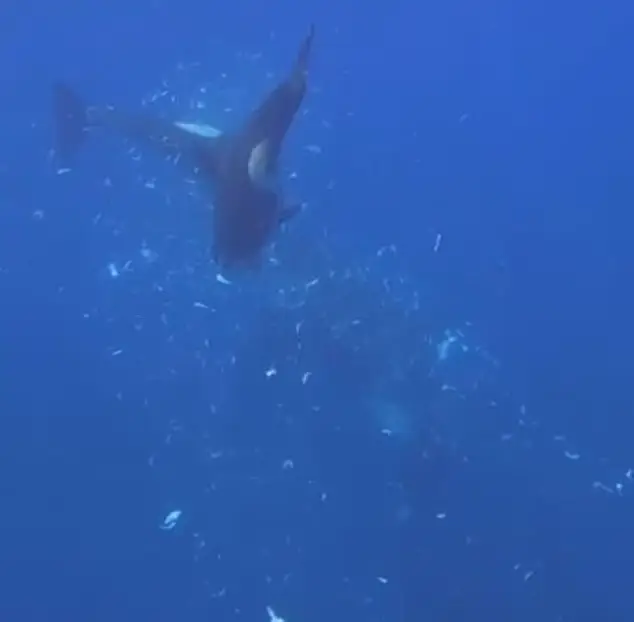
Dr Ayres hopes to collect more clear photographs and videos to identify the individual whales involved and learn whether other orcas use the same technique.
She says that despite being one of the world's best-known marine predators, killer whales continue to surprise scientists with new hunting and feeding behaviours.
The discovery shows just how intelligent and adaptable orcas are and highlights that there is still much to learn about these remarkable animals.
Orcas, also known as killer whales, are powerful apex predators and the largest members of the oceanic dolphin family.
Adult males grow 20 to 26 feet (6 to 8 meters) long and weigh 12,000 pounds or more, while females are smaller at 16 to 23 feet (5 to 7 meters) and weigh around 8,000 pounds.
 Anish Vij