Organisers slammed as dead bodies having sex put on display

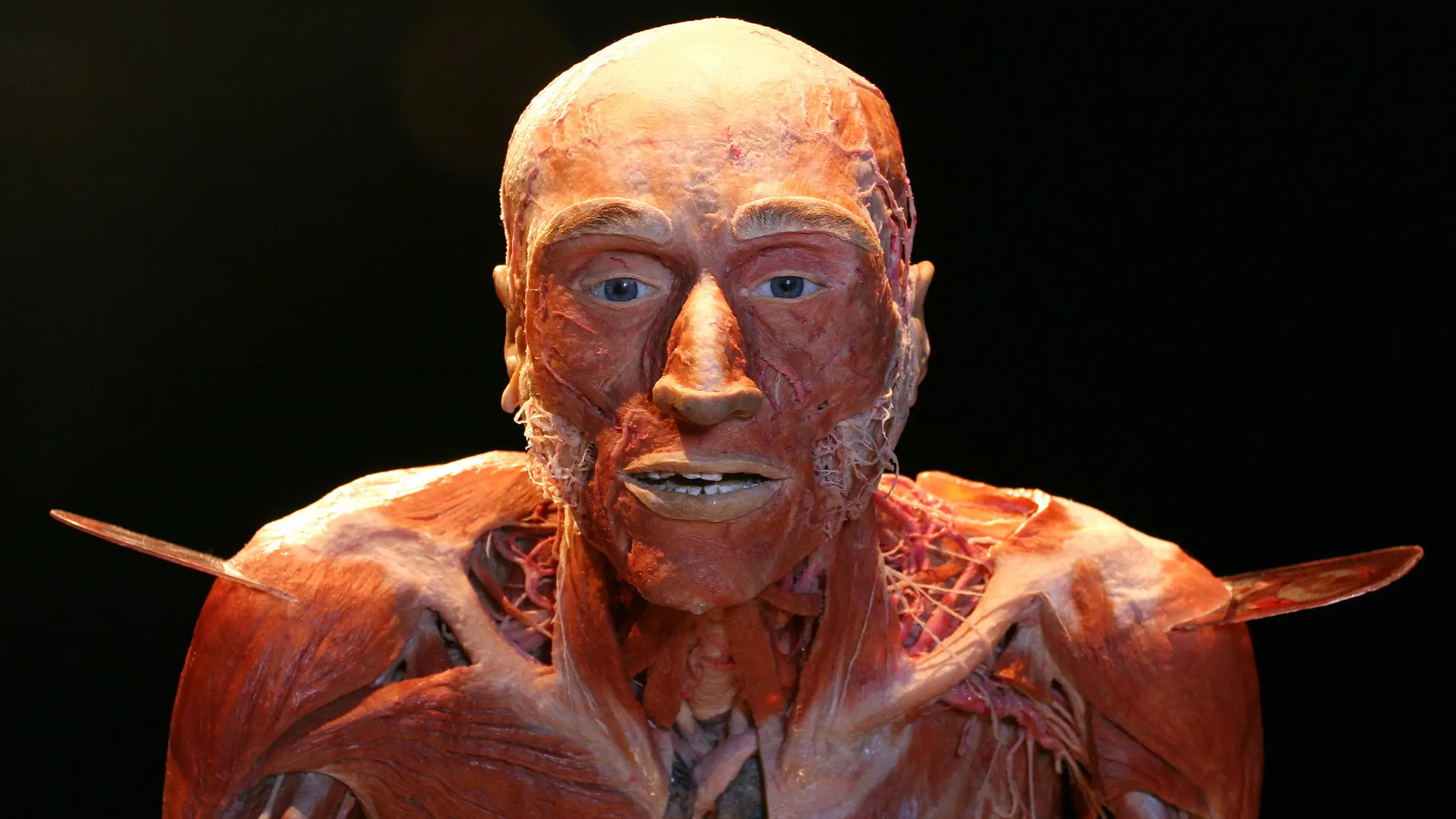
A controversial exhibition featuring dead bodies in compromising positions has come under fire.
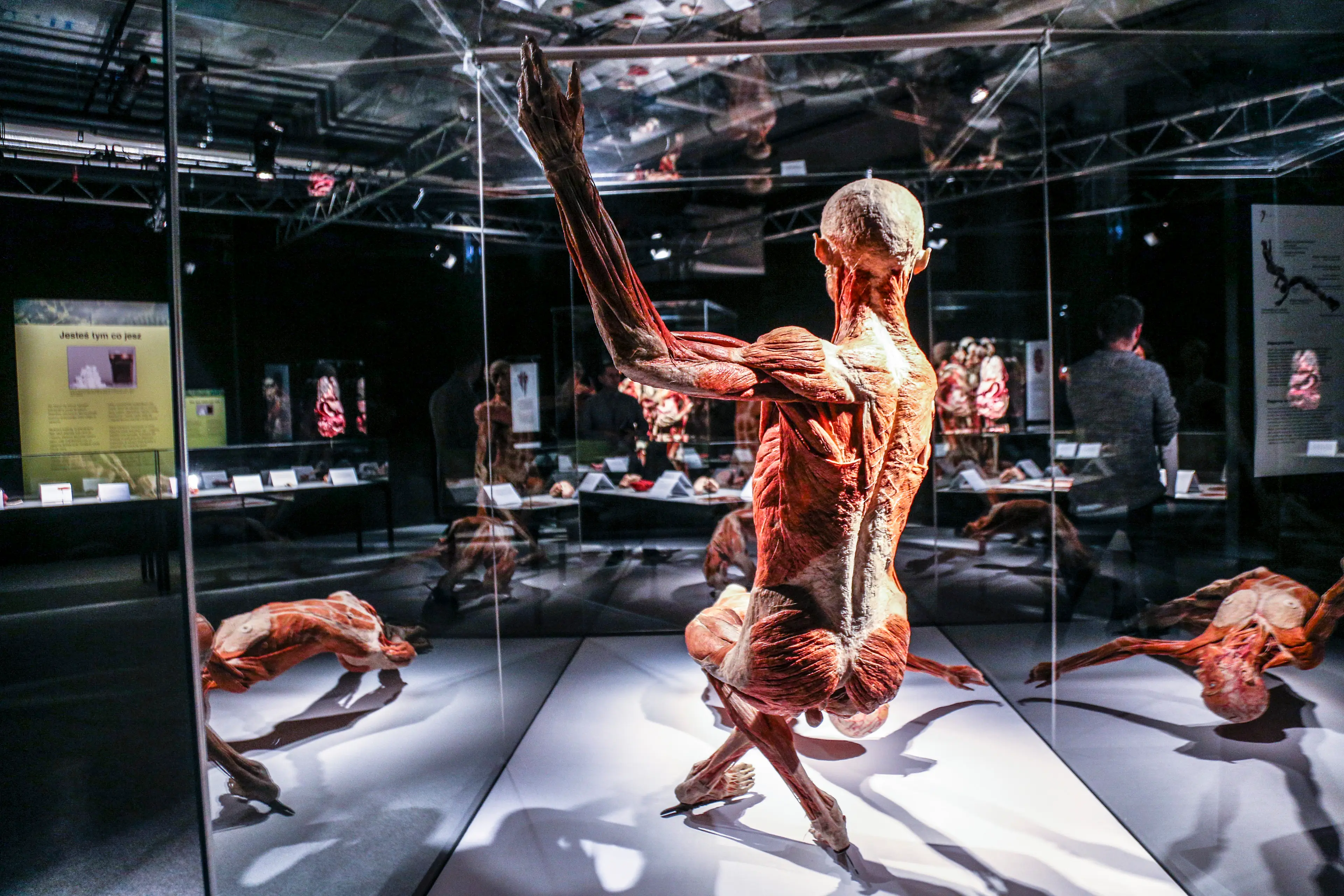
Body Worlds: The Anatomy of Happiness made its debut in Sydney, Australia, last week and is set to arrive in London on Friday (25 September).
It displays 'real specimens' that have been expertly preserved by a process known as plastination, but a clinical anatomist has now raised questions about whether it's more unethical than it is educational.
The exhibition has already toured more than 175 cities across the world and welcomed over 58 million visitors, according to its organisers.
Advert
Explaining what is on offer at Body Worlds: The Anatomy of Happiness, its website explains that it 'interprets the latest research and findings by social scientists on how happiness is determined and presents medical findings about the impact of happiness on the body and mind'.
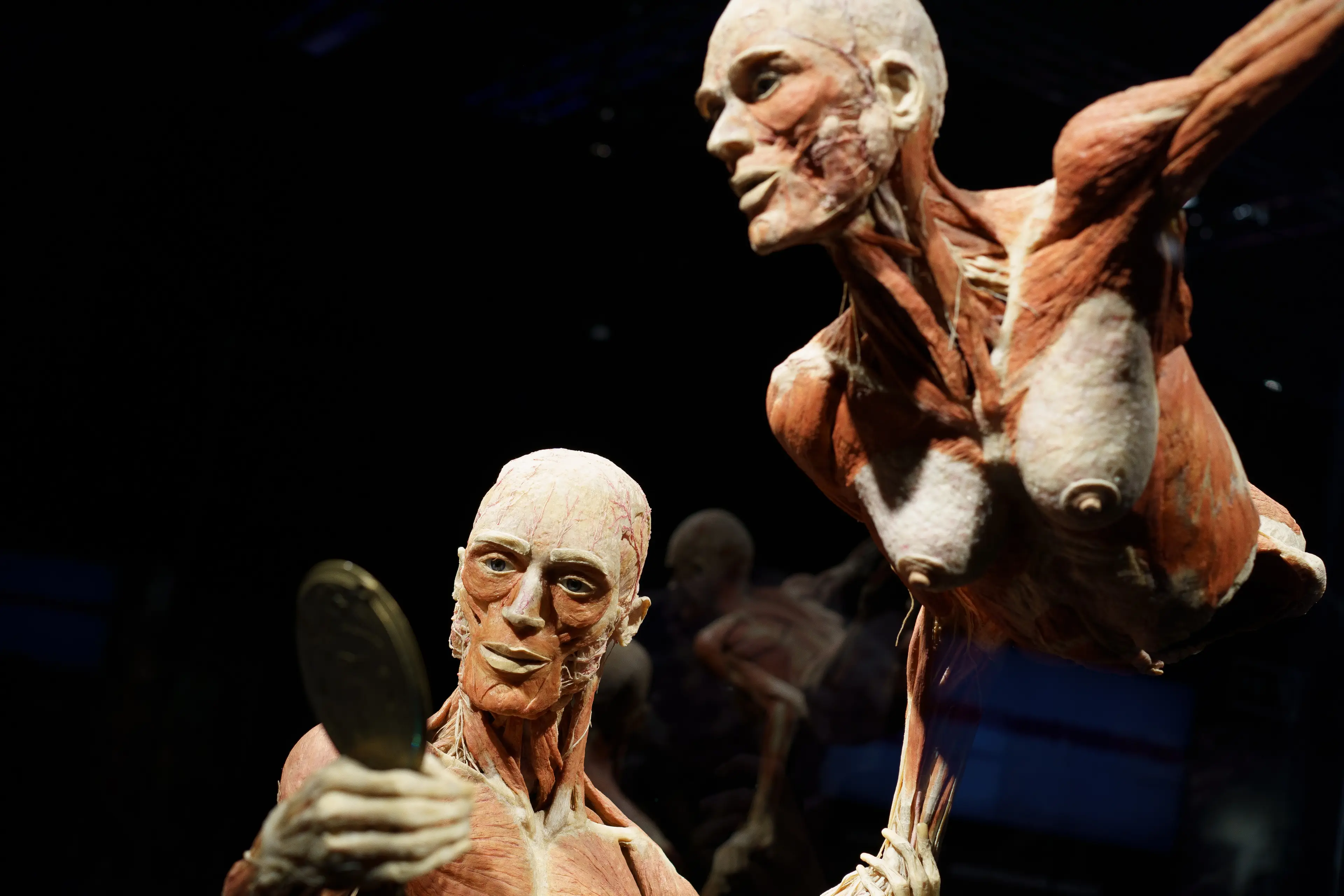
"The exhibition will teach audiences what parts of their anatomy are involved in happiness and how positive or negative emotions can affect the entire body," it adds.
"All specimens were donated specifically for plastination and are preserved by the revolutionary process invented by Dr Gunther von Hagens."
Plastination is a vacuum technique for the long-term preservation of anatomical preparations with reaction plastics specially developed for this purpose, which Dr von Hagens invented in 1977.
Body Worlds says it takes around 1,500 hours and around 12 months to prepare the specimens to go on show.
More than 21,000 people from across the world registered with the organisation's body donation programme, which has now reached full capacity.
Consent forms issued by the Institute for Plastination document how those who donate their bodies agree to offer them for 'teaching and research'.
It states: "My consent includes the preparation of permanently preserved teaching specimens from my donated body. It also extends to photographs, videos and any other images or depictions of such specimens, in any medium or format, in perpetuity.
"If I expressly authorise this in the supplementary provisions of this document, specimens created from my body may also be used for anatomical education of the public through scientific or educational exhibitions."
Donors then agree or deny permission to various requests - such as being 'used for the medical enlightenment of laypeople and, to this end, exhibited in public' and if they wish to remain anonymous.
Another question asks people to give their consent to being transformed 'an anatomical work of art'.
Although the exhibition is touted as an informative experience, Dr Joyce El-Haddad - a senior lecturer in anatomy and histology at The University of New South Wales - has raised concerns that it is immoral.
Some of the bodies on display are positioned as though they are having sex, as well as completing various other activities.
In a post shared to Instagram earlier this month, Dr El-Haddad explained she had been invited to attend the Body Worlds exhibition and initially thought it might be a 'very interesting' day out.
"The exhibition explores topics such as health, disease, exercise, stress, ageing, and wellbeing using whole-body displays (in various positions), organs, and body slices," she wrote.
"How much can you actually get out of an exhibition intended to display health, disease, ageing, and wellbeing without the stories of lived experiences and individual context to conceptualise the science in front of you?"
She suggested the lack of context leaves visitors to 'construct their own narratives and make their own assumptions' about the lifestyles of those on display.
'What did they understand they were consenting to?'
Dr El-Haddad suggested that those who donated their corpses to Body Worlds might have had no idea they would be displayed in 'penetrative sexual positions'.
She continued: "Informed consent is not a tick box exercise and we need to think about: Who donated these bodies? What did they understand they were consenting to?
"How specific was the consent process? Was every form of display consented for differently? What responsibilities remain after consent has been given?
"Respect, dignity, transparency, and context do not disappear simply because somebody signed a form."
The expert, who also describes herself as an ethicist, also questioned what 'assumptions' children might be taking away from the exhibition.
She then suggested that displaying human remains in 'cabinets of curiosity' throughout history is largely condemned, so she asked: "What shields modern day human body exhibitions from the same condemnation?"
Dr El-Haddad said she hoped her post helped those considering attending the exhibition make an 'informed decision'.
Reddit users discussed the 'unsettling' and 'fascinating' elements of the exhibition, as one person wrote: "I can’t comprehend that those people were once living and walking around like us."
Another said: "I couldn’t do a rat dissection in high school, let alone see a human like that."
A third added: "I think it gets people thinking about how complex our bodies and body systems really are."
While a fourth chimed in saying: "I love understanding how things work and are made up. I’d love my body to go there when I die."
LADbible has contacted Body Worlds for comment.
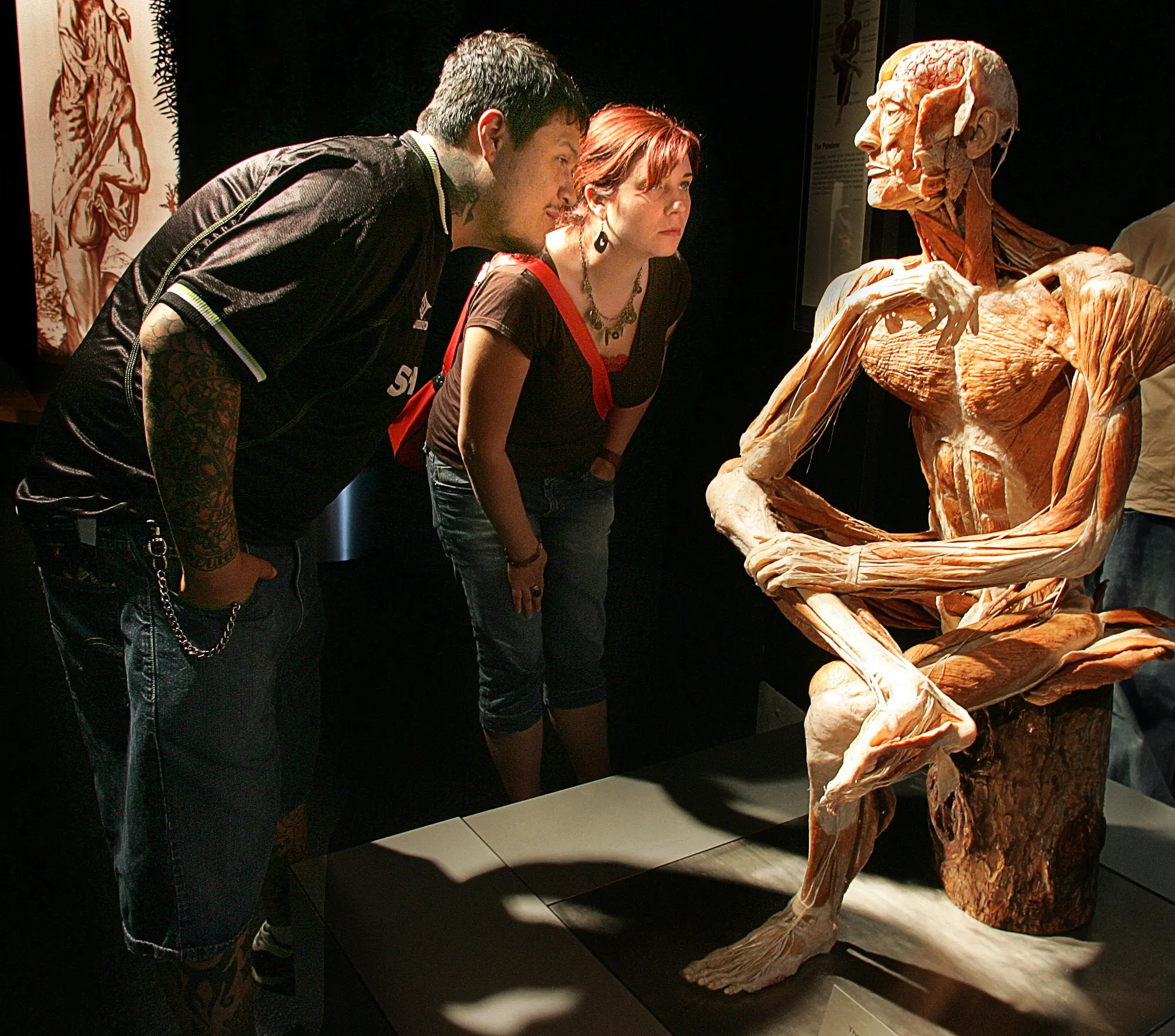
In 2018, a mum claimed that she spotted a plastinated body called the ‘Thinker’ at the Real Bodies exhibition in Las Vegas that bore a striking resemblance to her late son.
Kim Erick said it was 'so unbelievably painful to look at' her boy Chris in this way, adding: "I was actually looking at pictures of my son’s skinned, butchered body. It is gut-wrenching."
The company said that there was 'no factual basis for these allegations' and that the 'referenced specimen cannot be associated with the individual named in these claims'.
Topics: Science, Weird, Sex and Relationships, World News
 Olivia Burke