'Time travelling' telescope captures massive asteroid collision that happened two decades ago

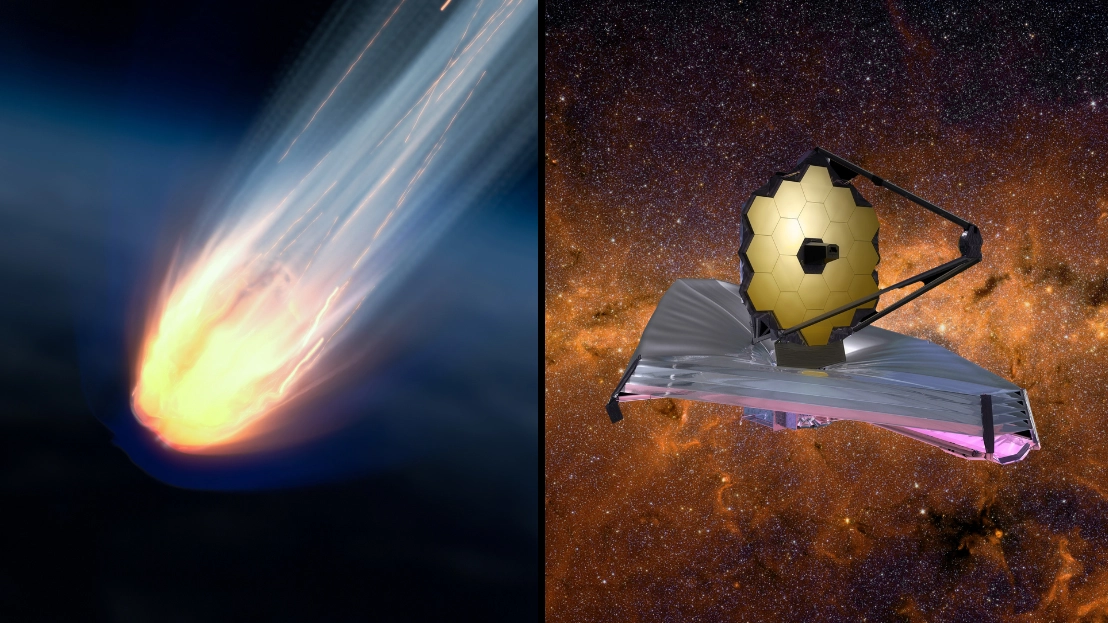
A giant 'time travelling' telescope floating through space has captured the moment two giant asteroids smashed in to each other. And the mad thing is, that the image was captured now despite happening some 20 years ago.
For almost two years now the James Webb Space Telescope (JWST or Webb to those in astronomy), which cost a cool $10 billion to make (£8 billion), has been travelling through deep space.
Advert
Serving as humanity's most advanced piece of equipment in the universe, it serves as a literal time machine looking as far as back as what happened just after the Big Bang - some 13.7 billion years ago - right up to the formation of galaxies, stars, and planets.
Okay, a little explainer. Webb acts as a real life time machine in the sense that it takes images from deep in space. And it takes these pictures at huge distances away from what is being captured by its Near Infrared Camera (NIRCam).
Because of how light travels, when we observe objects that are far away, we observe them not as they are, but as they were.
To flip it, alien life on another planet looking at Earth wouldn't necessarily see humanity, but rather what came before us. Say hi to the dinosaurs for us.
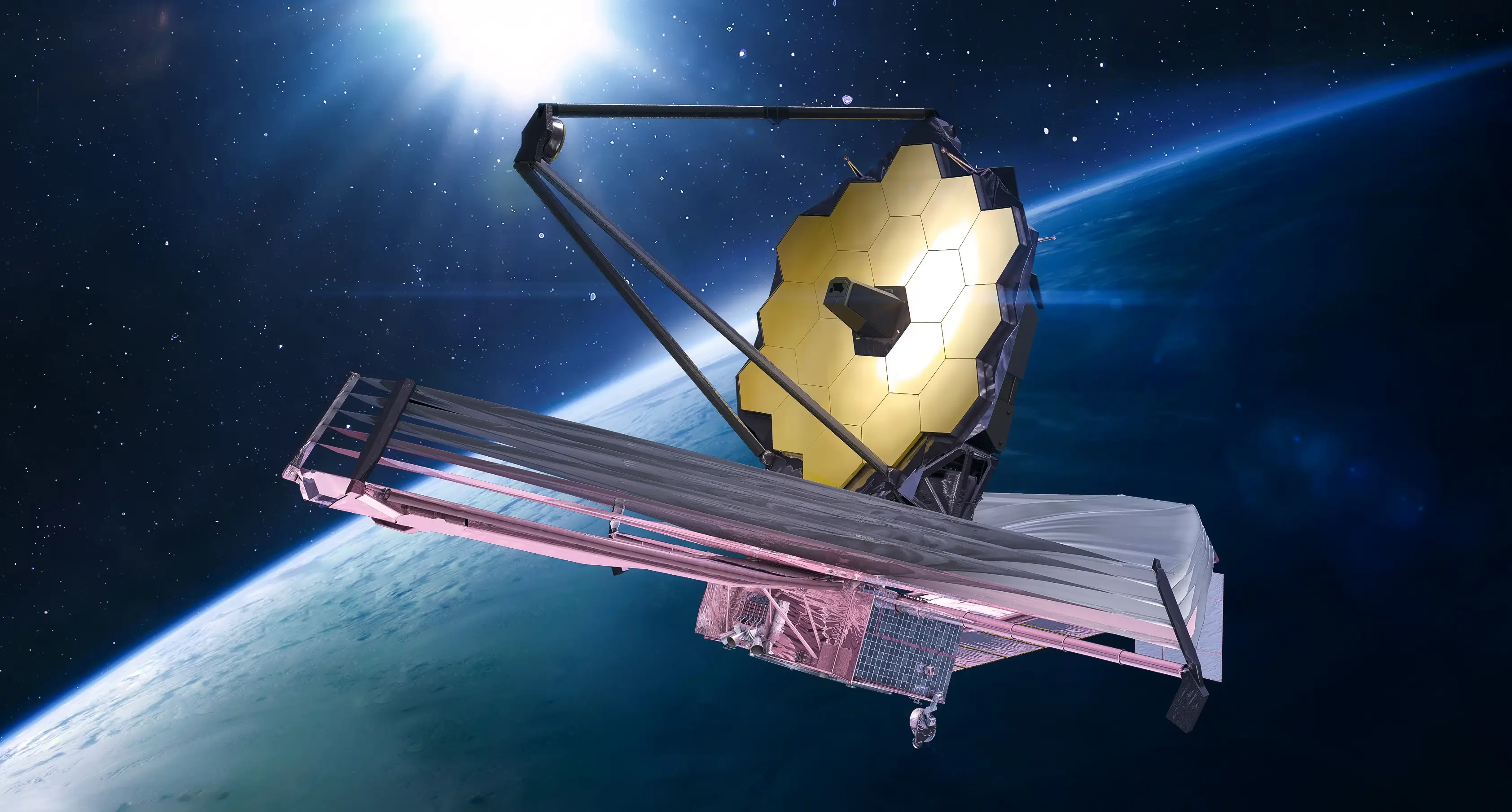
Now, astronomers have captured what appears to be a snapshot of a massive collision of giant asteroids in a neighbouring star system to our own called Beta Pictoris.
Known for its early age and tumultuous planet-forming activity, the new imagery captured by Webb shines a light on what experts at John Hopkins University call 'the volatile processes that shape star systems like our own, offering a unique glimpse into the primordial stages of planetary formation'.
Christine Chen, a Johns Hopkins University astronomer, led the research and said: "Beta Pictoris is at an age when planet formation in the terrestrial planet zone is still ongoing through giant asteroid collisions, so what we could be seeing here is basically how rocky planets and other bodies are forming in real time."
The work of Chen and her team of scientists looked at using the power of Webb to spot major changes in energy signatures emitted by dust grains around Beta Pictoris, comparing new images from the $10bn telescope with images captured in 2004 and 2005 by the Spitzer Space Telescope.
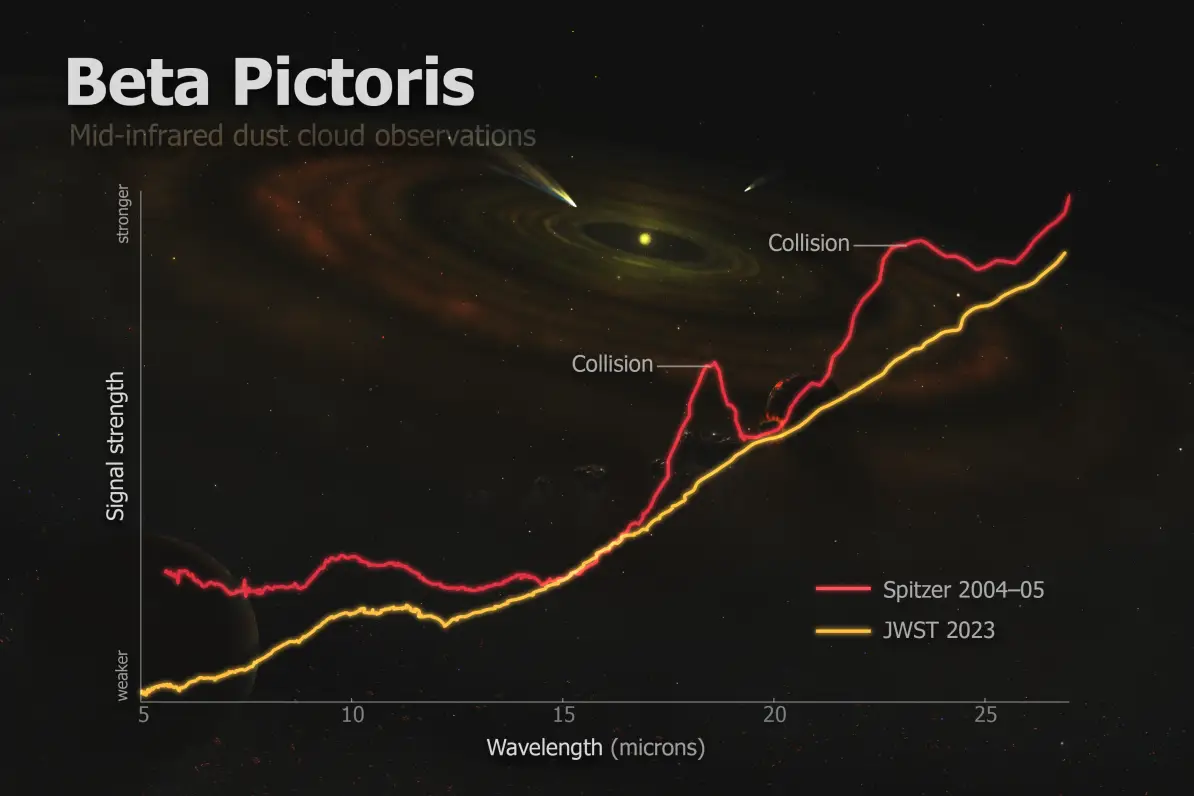
Using the new detailed measurements that the power of Webb has, the John Hopkins team tracked the dust particles' composition and size in the exact area previously analysed by Spitzer.
A focus was placed on heat emitted by something called crystalline silicates, which are minerals commonly found around young stars as well as on Earth and other celestial bodies. From there, scientists found no traces of the particles previously seen in 2004 and 2005.
This suggests a ginormous collision occurred among asteroids and other objects about 20 years ago, pulverising the bodies into fine dust particles smaller than pollen or powdered sugar, according to Chen.
"We think all that dust is what we saw initially in the Spitzer data from 2004 and 2005," Chen said, who is also an astronomer at the Space Telescope Science Institute.
"With Webb's new data, the best explanation we have is that, in fact, we witnessed the aftermath of an infrequent, cataclysmic event between large asteroid-size bodies, marking a complete change in our understanding of this star system."
Beta Pictoris, located about 63 light years from Earth, has long been a focal point for astronomers because of its proximity and random processes where collisions, space weathering, and other planet-making factors will dictate the system's fate.
"At only 20 million years—compared to our 4.5-billion-year-old solar system—Beta Pictoris is at a key age where giant planets have formed but terrestrial planets might still be developing. It has at least two known gas giants, Beta Pic b and c, which also influence the surrounding dust and debris.
Topics: NASA, James Webb Space Telescope, Science, Technology, Space
 Tom Earnshaw