Artemis II astronauts made grim discovery moments after lift off on first moon mission in 50 years

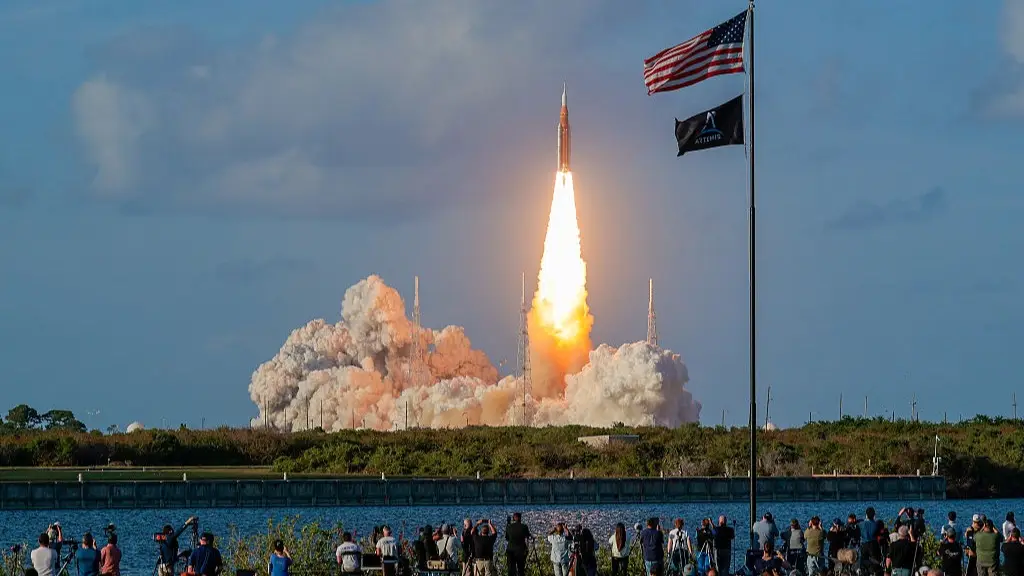
Artemis II successfully took off on Wednesday evening (1 April), with the crew now bound for the Moon - but it looks like they've already hit a bit of a technical hitch.
Unfortunately, the crew won't be setting foot on Earth's only natural satellite, as they will instead set off on a 10-day mission around the Moon.
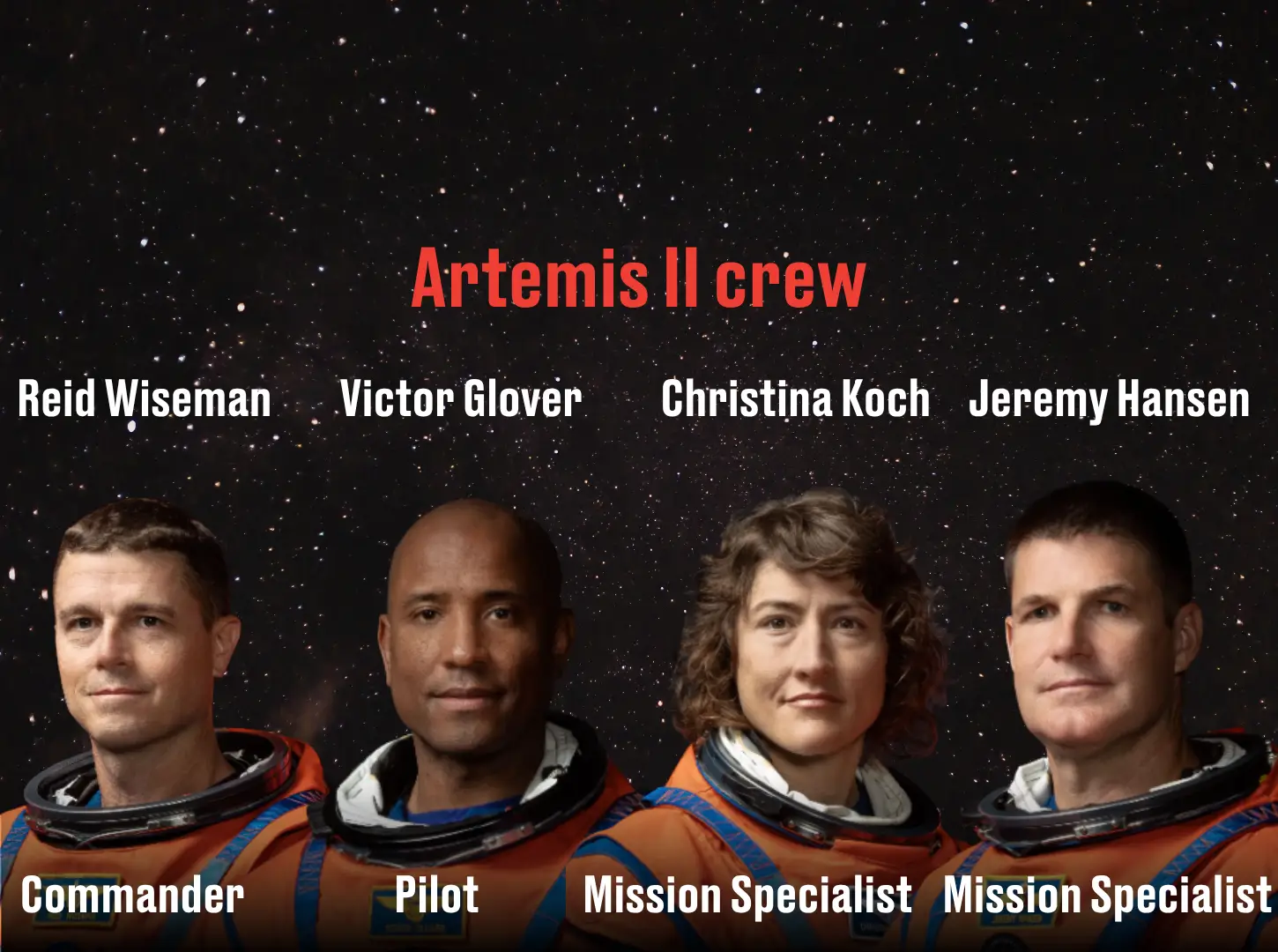
It could take the four astronauts on humanity's furthest ever journey into space, as NASA's Reid Wiseman, Victor Glover and Christina Koch are joined with Jeremy Hansen of the Canadian Space Agency to make up the Artemis crew on board the Orion craft.
The mission aims to secure the best view of the moon's dark side that's ever been recorded, if all goes to plan.
Advert
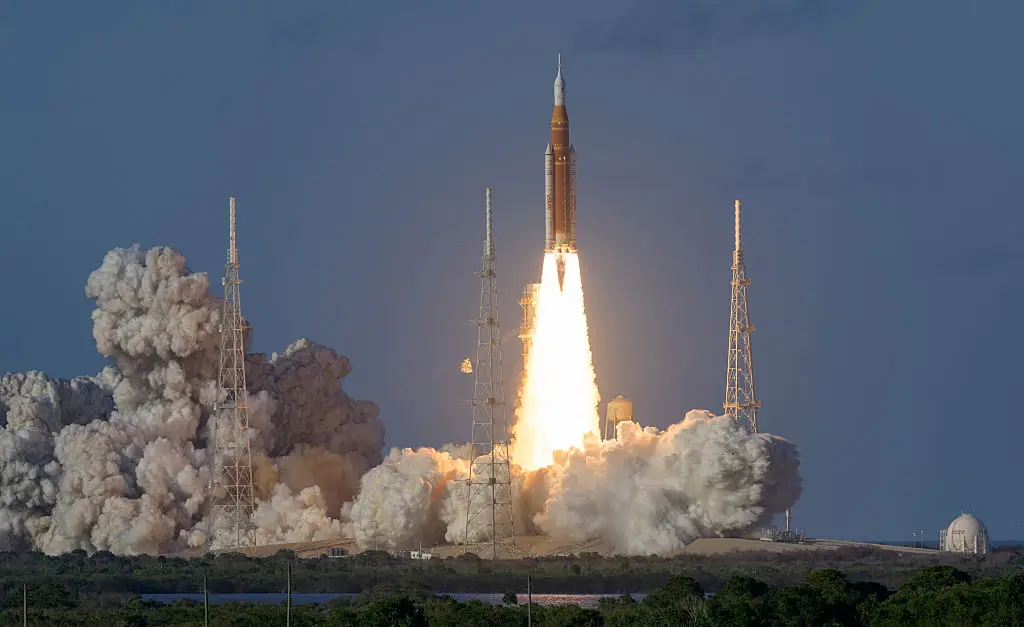
Four RS-25 engines and twin solid rocket boosters ignited a flame which helped to thrust the rocket into the Florida sky, as NASA's Space Launch System (SLS) arced out over the Atlantic Ocean into the atmosphere.
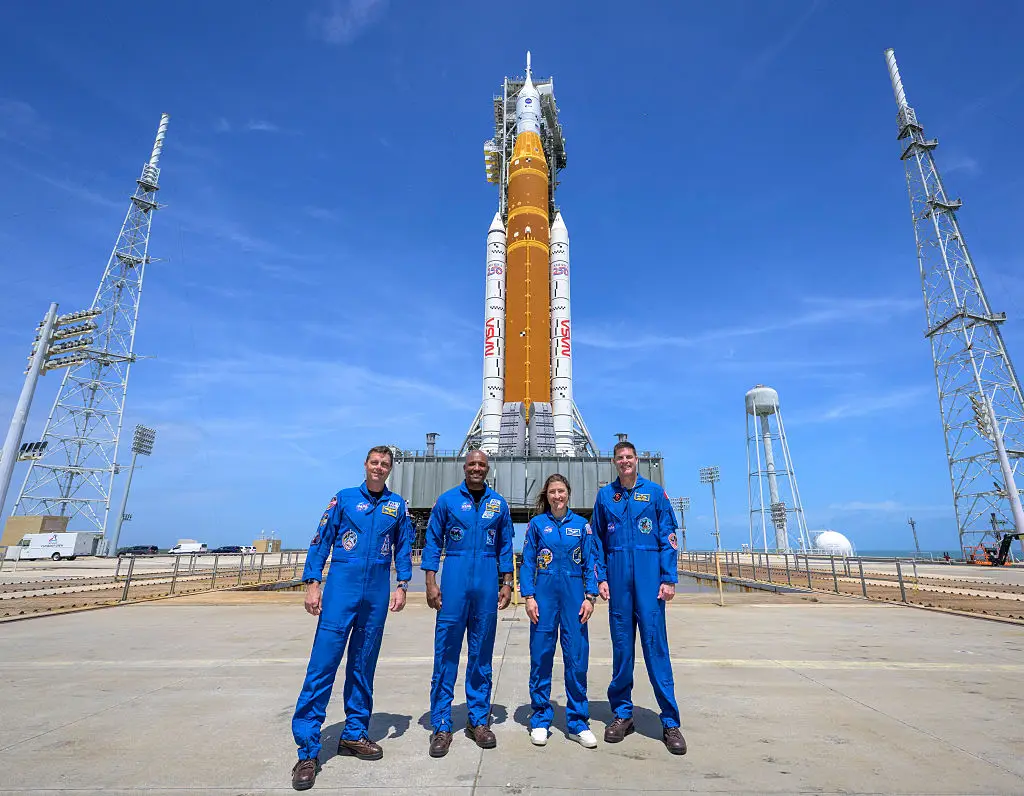
A potential lightning cloud issue was highlighted before launch, while issues around the Launch Abort System also threatened launch, but it seems like everything has gone to plan, with the capsule now in orbit around our planet.
Shockingly, though, the crew reported another issue just hours after take-off while going through life support system checks on board the spacecraft.
Arguably one of the more crucial aspects of the shuttle, the crew noticed something when they were inspecting the toilet, according to the BBC.
At first, astronauts told mission control: "Toilet is powered, waste tank merged."
But just minutes later, they said that the toilet's amber warning light was on, with mission control saying they would need some more time to figure out a solution.
What was wrong with the Artemis 2 crew's toilet?
Humanity's historic return to the Moon involved a lot more discussion of bodily functions than anyone had expected.
The issue was with the Universal Waste Management System, which is a fancy name for what NASA uses to collect astronauts' pee.
They could still go for a number two, but obviously, this was going to be a bit of a problem for a ten-day mission.
NASA spokesperson Gary Jordan said (as per Space.com): "The fecal collection of the toilet, that specific capability, can still be used with the waste management system aboard Orion."
Thankfully, with the help of Mission Control, Artemis 2 mission specialist Christina Koch managed to fix the issue.
Once the fix was implemented, Mission Control's Amy Dill told Koch over the radio: "Happy to report that toilet is go for use. We do recommend letting the system get to operating speed before donating fluid, and then letting it run a little bit after donation."
Which is a very formal way of saying, 'best to give it five minutes before anyone has a wee'.
Where is Artemis now and what's next for the crew?
The space agency said that the crew will now take a four-hour nap before being awakened at 7.00am EDT (11.00am BST) today, to 'prepare for the perigee raise burn'.
This is what will lift the lowest point of the Orion spacecraft's orbit around Earth, preparing it for 'later translunar operations', as the crew will then continue their sleep period at around 9.40am EDT.
At its furthest, the crew will be around 230,000 miles from Earth.
NASA administrator Jared Isaacman said in a press conference after take-off that 'NASA is back in the business of sending astronauts to the Moon', noting that the crew is 'safe, secure and in great spirits'.
What's on the menu for the Artemis II crew?
Space food has always been an intriguing phenomenon for us with our feet firmly on Earth, and NASA has given an insight into what the astronauts on board the Orion spacecraft for the Artemis II mission will be tucking into during their journey to and from the moon.
There are 189 unique menu items on offer to NASA astronauts Reid Wiseman, Victor Glover, Christina Koch, and Canadian Space Agency astronaut Jeremy Hansen, which include more than 10 types of beverages and five different hot sauces. Yes, turns out hot sauce is just as important in space as it is here on Earth.
The most common food and drink items include:
- Tortillas
- Wheat flat bread
- Granola with blueberries
- Vegetable quiche
- Breakfast sausage
- Couscous with nuts
- Mango salad
- Barbecued beef brisket
- Macaroni & Cheese
- Cauliflower and butternut squash
- Tropical fruit salad
- Cookies
- Chocolate
- Green tea
- Coffee
- Lemonade
- Apple cider
- Mango-peach smoothie
The menu has been carefully curated by NASA experts to support crew health and performance during the mission around the Moon, while also considering shelf life, food safety, nutritional value, crew preferences, and compatibility with Orion’s mass, volume, and power requirements.
NASA explains that on a typical mission day, astronauts have scheduled time for breakfast, lunch, and dinner.
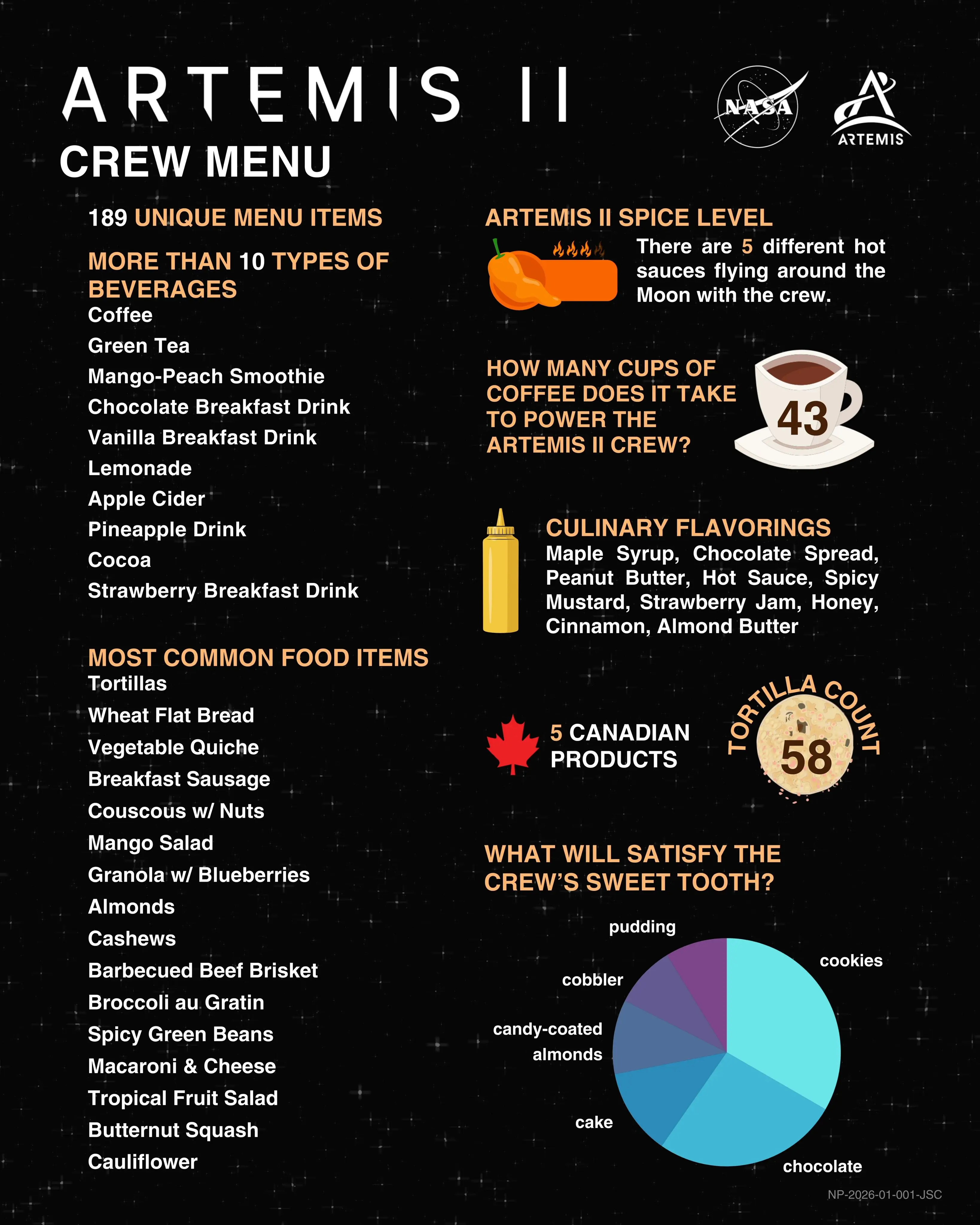
Each astronaut is allotted two flavoured beverages per day, which may include coffee. This is limited due to upmass constraints, which restrict how much food and drink can be carried on board.
Fresh foods will not be on board as Orion does not have the required refrigeration.
Shelf-stable foods help manage food safety and quality throughout the intended shelf life in a compact, self-contained spacecraft, while also reducing the risk of crumbs or particulates in microgravity.
 Joshua Nair