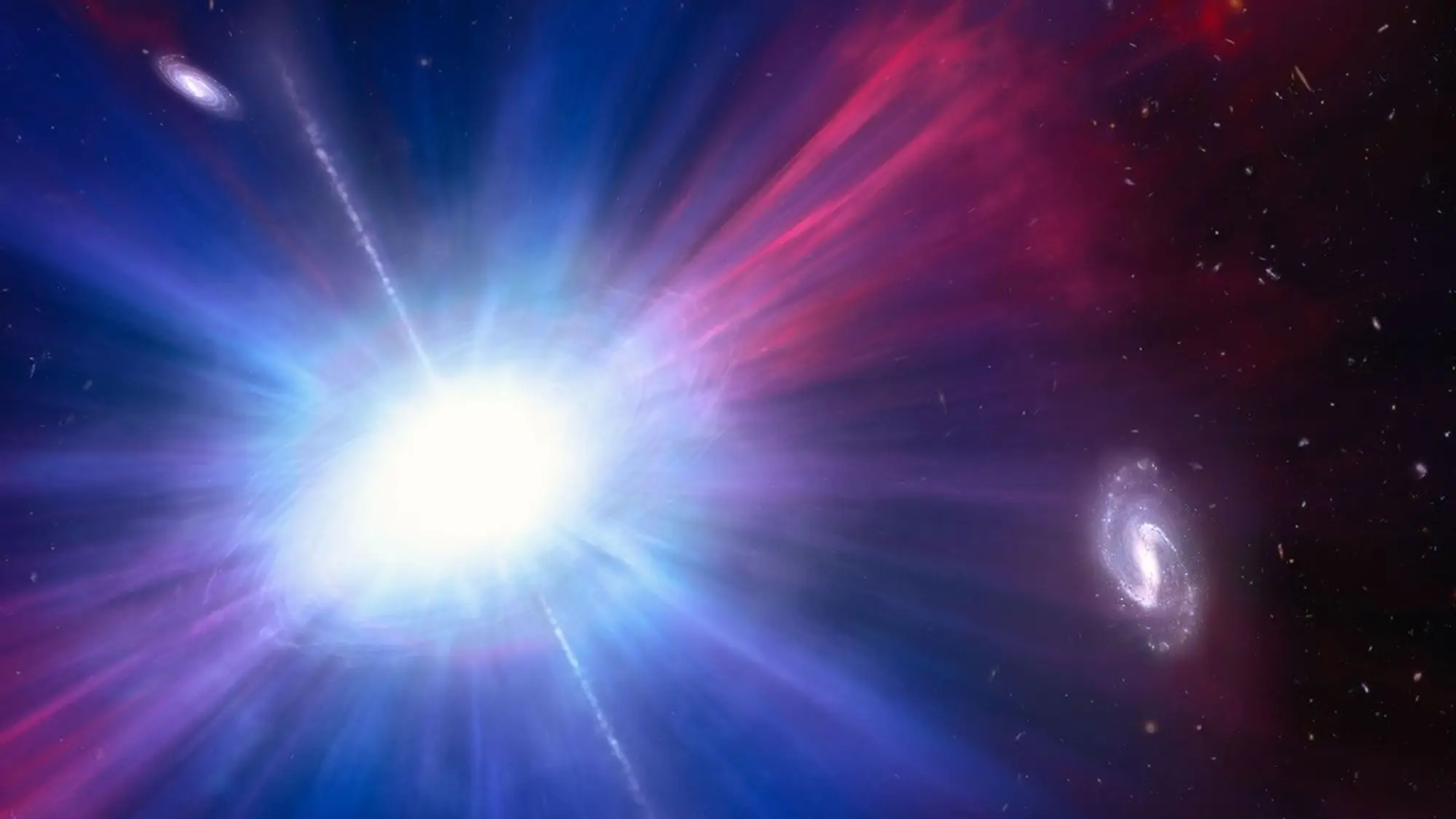
Scientists baffled after mysterious blue flashes shining from space

Scientists have been left flummoxed after spotting a strange blue light far out in the depths of space.
Observers have seen the lights flashing for nearly a decade but up to now have been left at a loss about what could be causing this strange phenomenon.
The first flash was spotted back in 2018, and they have since happened on 14 separate occasions.
This means that they are one of the rarest phenomenon recorded by astronomers, and have been called Luminous Fast Blue Optical Transients, or LFBOTs.
Advert
But it's not just their rarity which is extraordinary, it's also how quickly and how bright they burn.
In fact, scientists have estimated that they burn as much as 100 times brighter than anything else the scientists have observed, which is pretty startling when you think about how bright the Sun is.
After years of studying them, there is now a theory as to what could be causing these strange flashes in space.
No, it's not UFOs.
One group of scientists has theorised that this could be the result of an ultra-hot sun, so that's much, much hotter than ours, smashing into a black hole.
LFBOTs come and go over a a matter of just days, reaching an amazing brightness before fading away to nothing.
In astronomical terms that's the blink of an eye, so suggests a massive and rapid release of energy.
Not only that, but that distinctive blue is maintained throughout the event, which scientists think means it's very hot for the entire time.
Dr Anya Nugent, from Harvard & Smithsonian, is the lead author of a paper on the flashes, and said they are 'unlike anything we have observed before' in science.
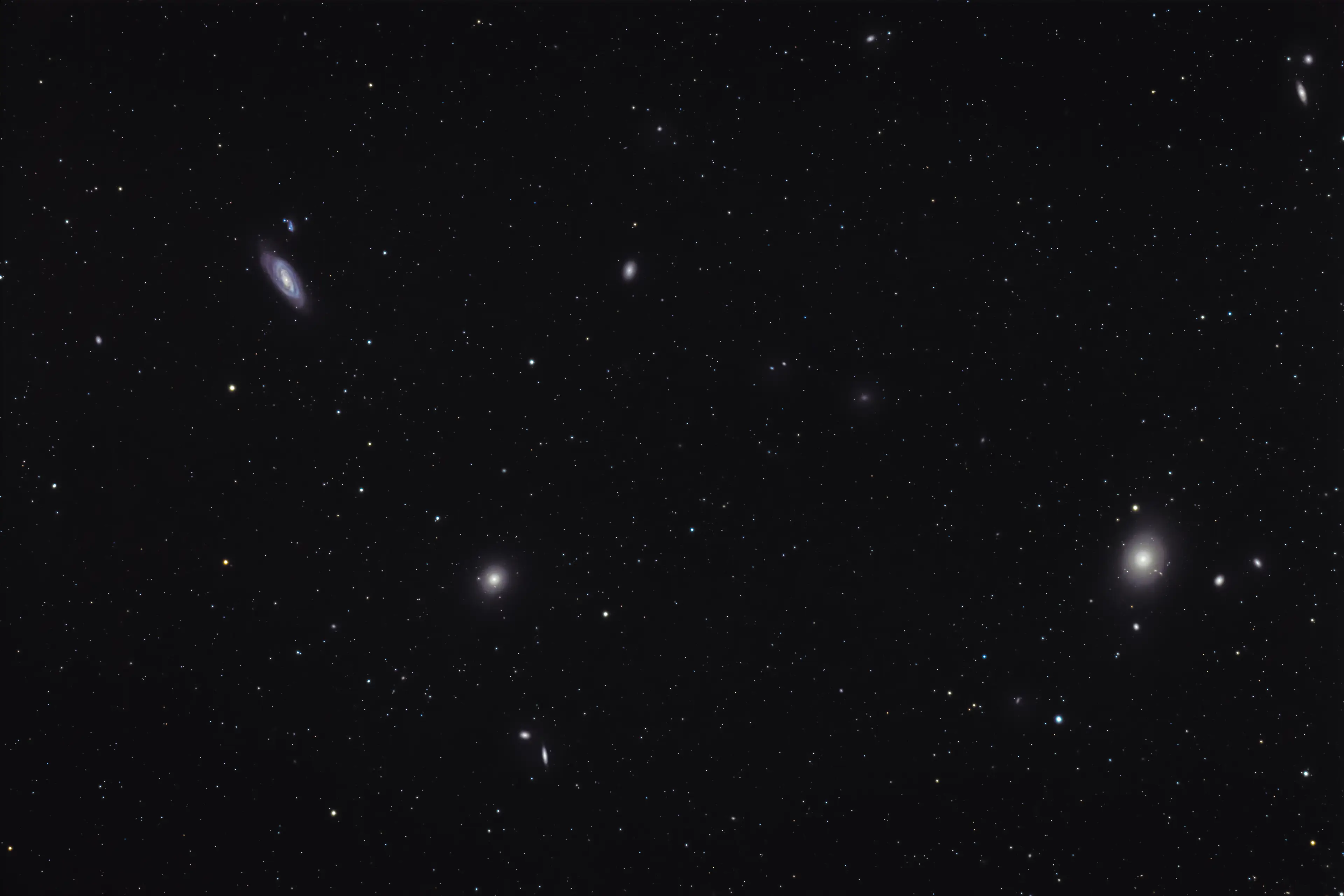
By analysing the galaxies in which these events have occurred, the paper suggests that they are the result of a dense object like a black hole or neutron star colliding with a Wolf-Rayet star, which is an extremely bright kind of star.
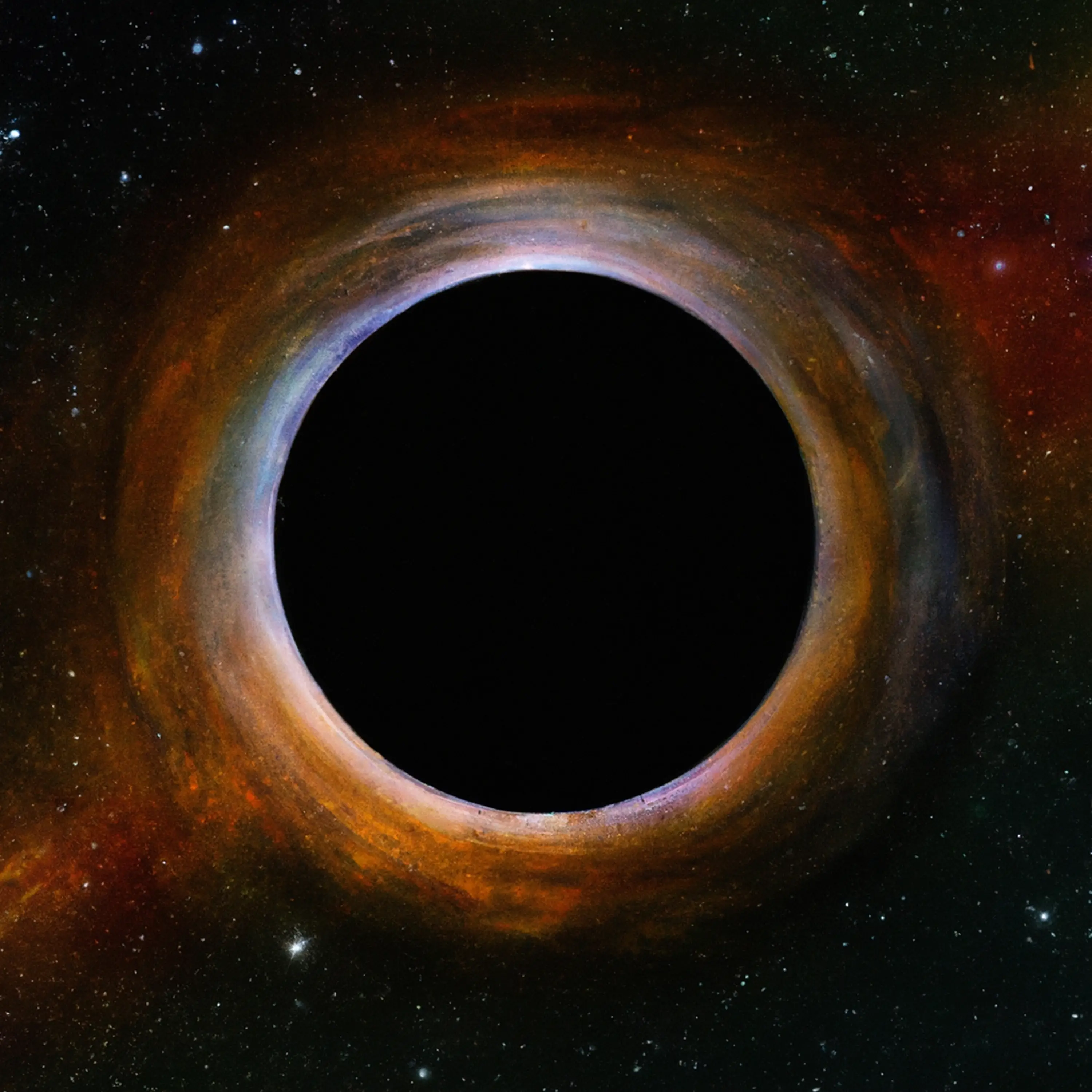
Professor Brian Metzger was a co-author on the paper, and told the Daily Mail: "When the compact object plunges into the Wolf–Rayet star, it can rapidly accrete the stellar [material] and release a huge amount of gravitational energy.
"Some of that energy drives powerful outflows or jets, which then collide with material around the star.
"That interaction can produce a very hot, bright flash of light on a short timescale."
The heat of a Wolf-Rayet star combined with the density of a black hole makes for the intensity shown in LFBOTs.
Topics: NASA, Space, Science, World News
 Kit Roberts