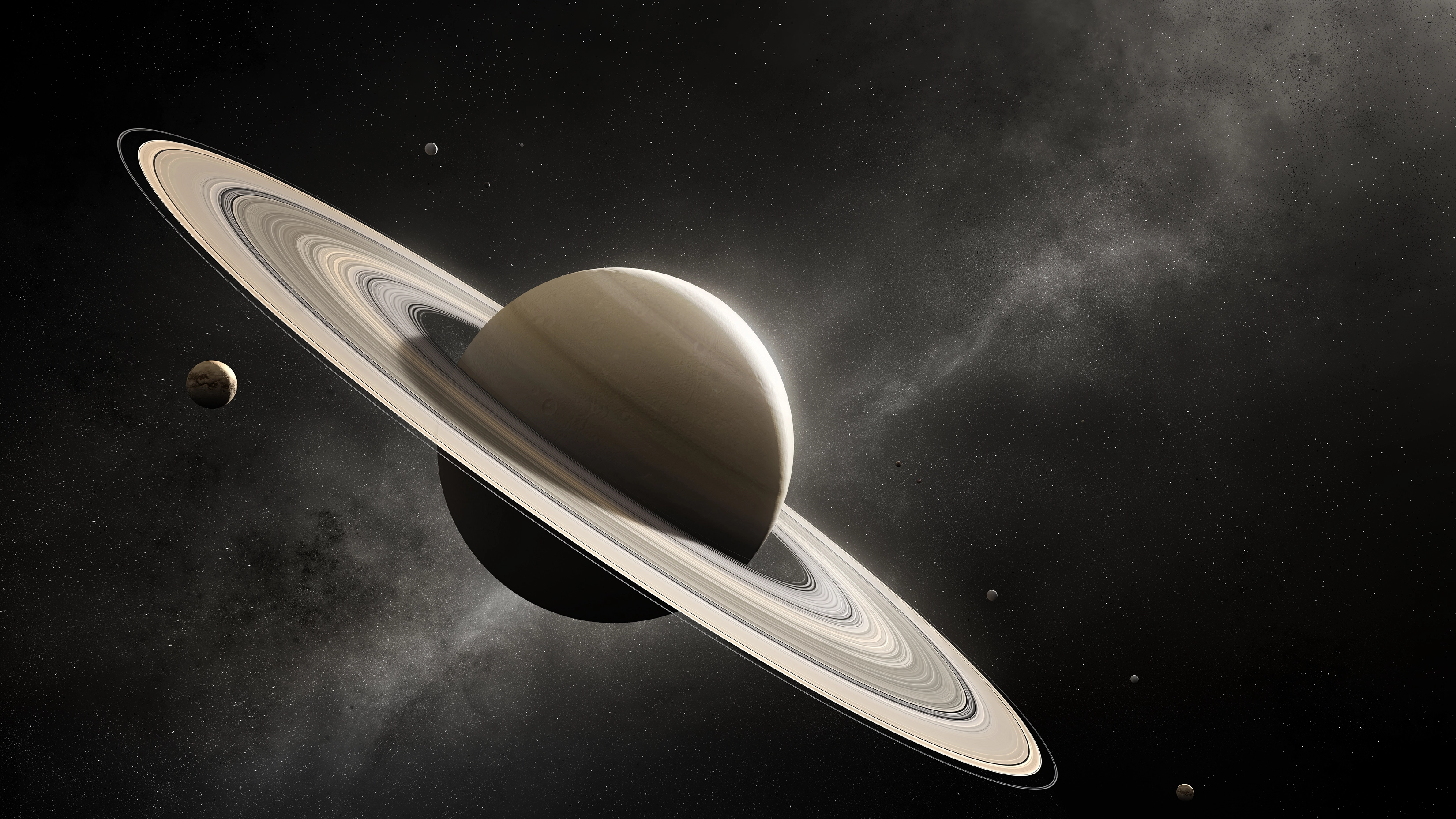
New research says 'precursor for life' could happen on one of Saturn's moons

Scientists claim that new research into Titan, Saturn’s largest moon, has resulted in the ‘precursor for life’ being found in its lakes and ponds - but what does that mean?
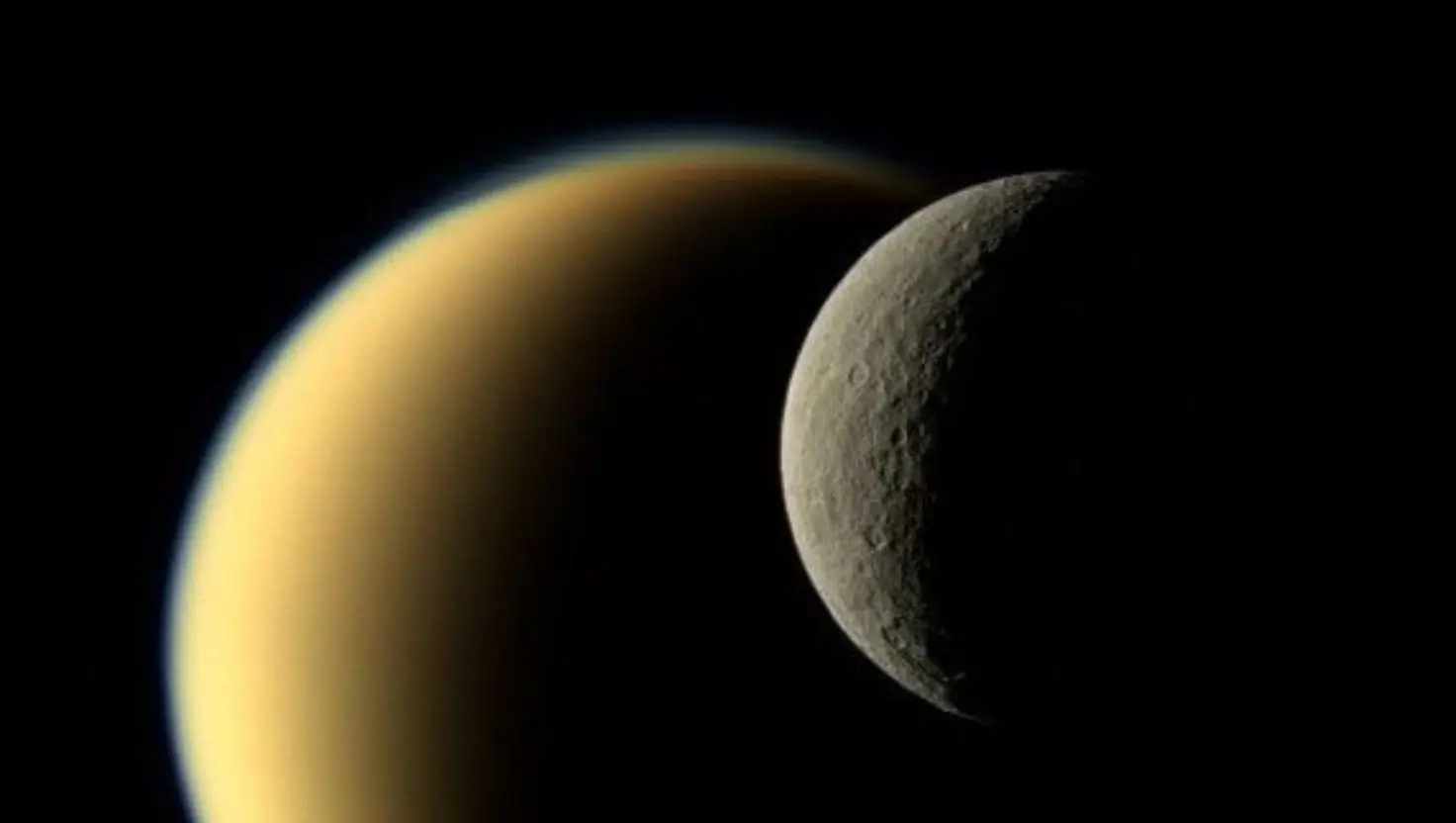
Titan, which was first discovered by astronomer Christiaan Huygens in March 1655, is the second-largest moon in our Solar System after Jupiter’s natural satellite, Ganymede.
It’s one of the seven moons circling Saturn, is around 50 percent larger than the Earth’s Moon and is thought to have a ‘rich organic inventory’ despite being primarily composed of ice and rocky material.
However, experts believe that life could eventually spring up on the sphere, thanks to a potential new discovery.
What is a ‘precursor for life’?
Advert
Some of the greatest minds in scientific history have grappled with understanding how life rose on Earth almost four billion years ago.
For decades, scientists have tried to recreate the primordial events that gave rise to life on the planet, according to Live Science.
To do so, researchers have been trying to mimick the chemical makeup of the planet's early oceans. What they found was several simple amino acids, the most primitive building blocks of life, formed as a result.
Precursors for life, also known as protocells, are described as the ‘most primitive living systems you can think of’, according to Phys.org.
The University of Chicago listed these as a steady energy source, organic compounds and water.
Going one step further, Research Outreach has outlined the nine precursors of life. These include a non-toxic water environment, a dry/wet cycle, diversified environments and more.
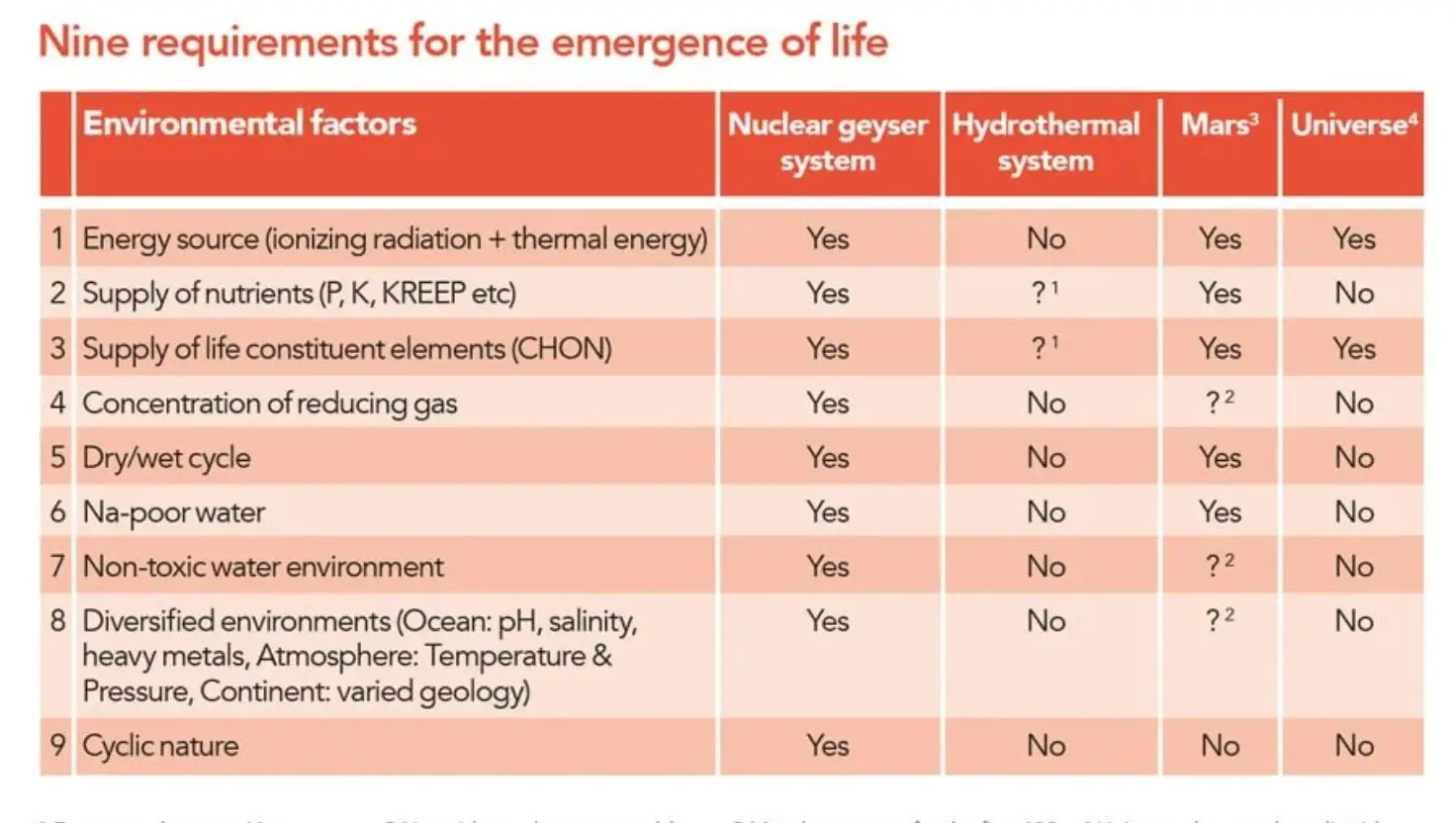
To put it simply: if the planet or Moon has all the ‘precursors for life’, then life should be able to survive and eventually thrive, just like us humans have on Earth.
What have they found on Titan?
NASA scientists have found that cell-like compartments called vesicles - needed to form the precursors of living cells (protocells) - could form in the numerous lakes on Titan, as per Space.com
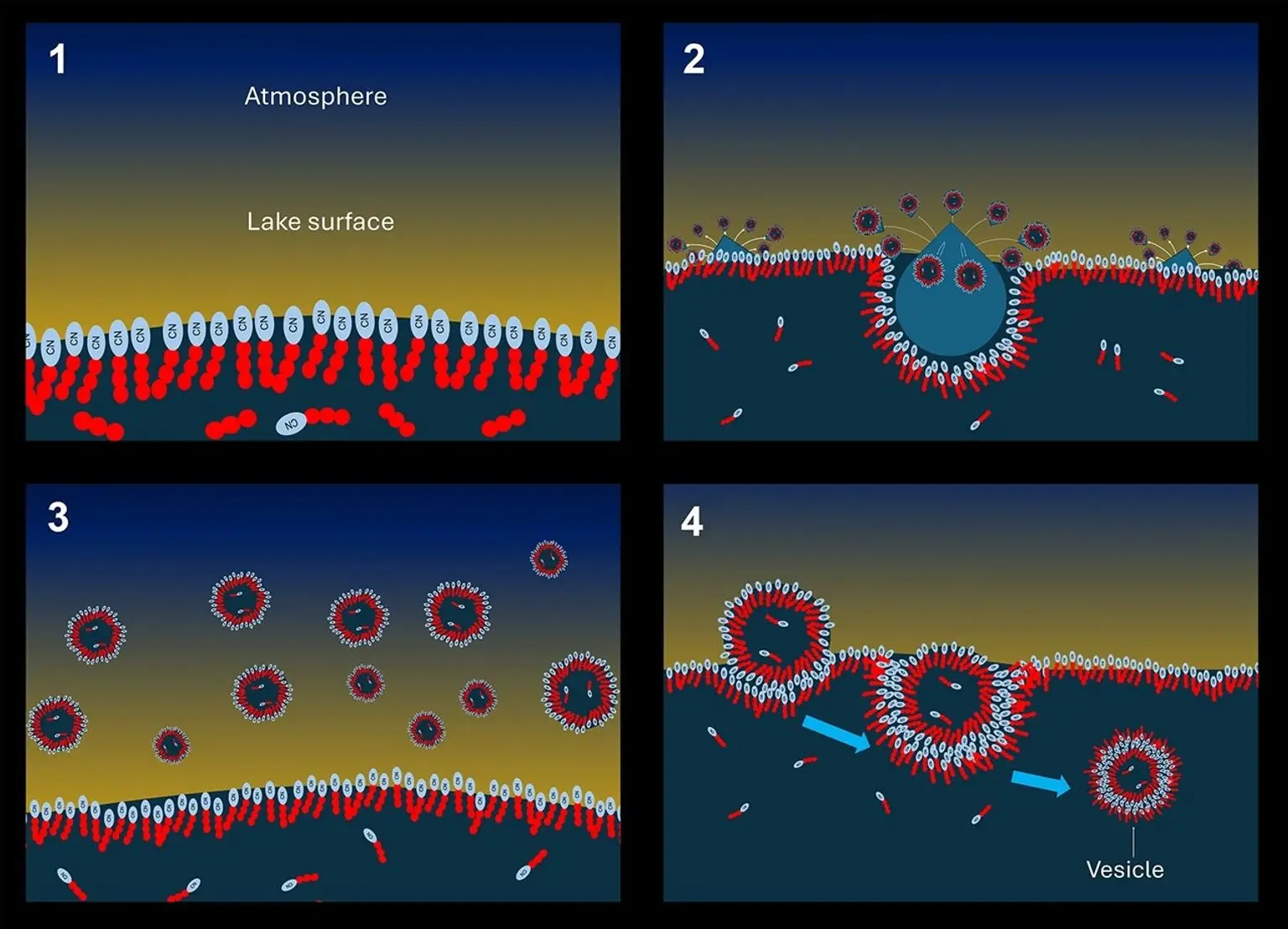
Unlike Earth, the Moon’s freezing lakes are filled with liquid hydrocarbons like ethane and methane rather than water, and the vesicles might form when sea-spray droplets are thrown upwards by splashing raindrops.
If and when one of these droplets lands on the surface of a lake, the two amphiphile layers meet to form a double-layered (or bilayer) vesicle, enclosing the original droplet, according to NASA.
Over time, these vesicles would be ‘dispersed throughout the pond and would interact and compete in an evolutionary process that could lead to primitive protocells’.
What could this tell us?
NASA wrote that if this proposed pathway were to happen, then it would increase scientific understanding of the conditions in which life might be able to form on the Saturnian moon.
Moreover, space experts would also be able to get a better handle on understanding how life emerged on Earth, Space.com reported.
Conor Nixon of NASA's Goddard Space Flight Centre said that the existence of any vesicles on Titan would ‘demonstrate an increase in order and complexity, which are conditions necessary for the origin of life’.
He added: “We're excited about these new ideas because they can open up new directions in Titan research and may change how we search for life on Titan in the future.”
Is life possible on Titan?
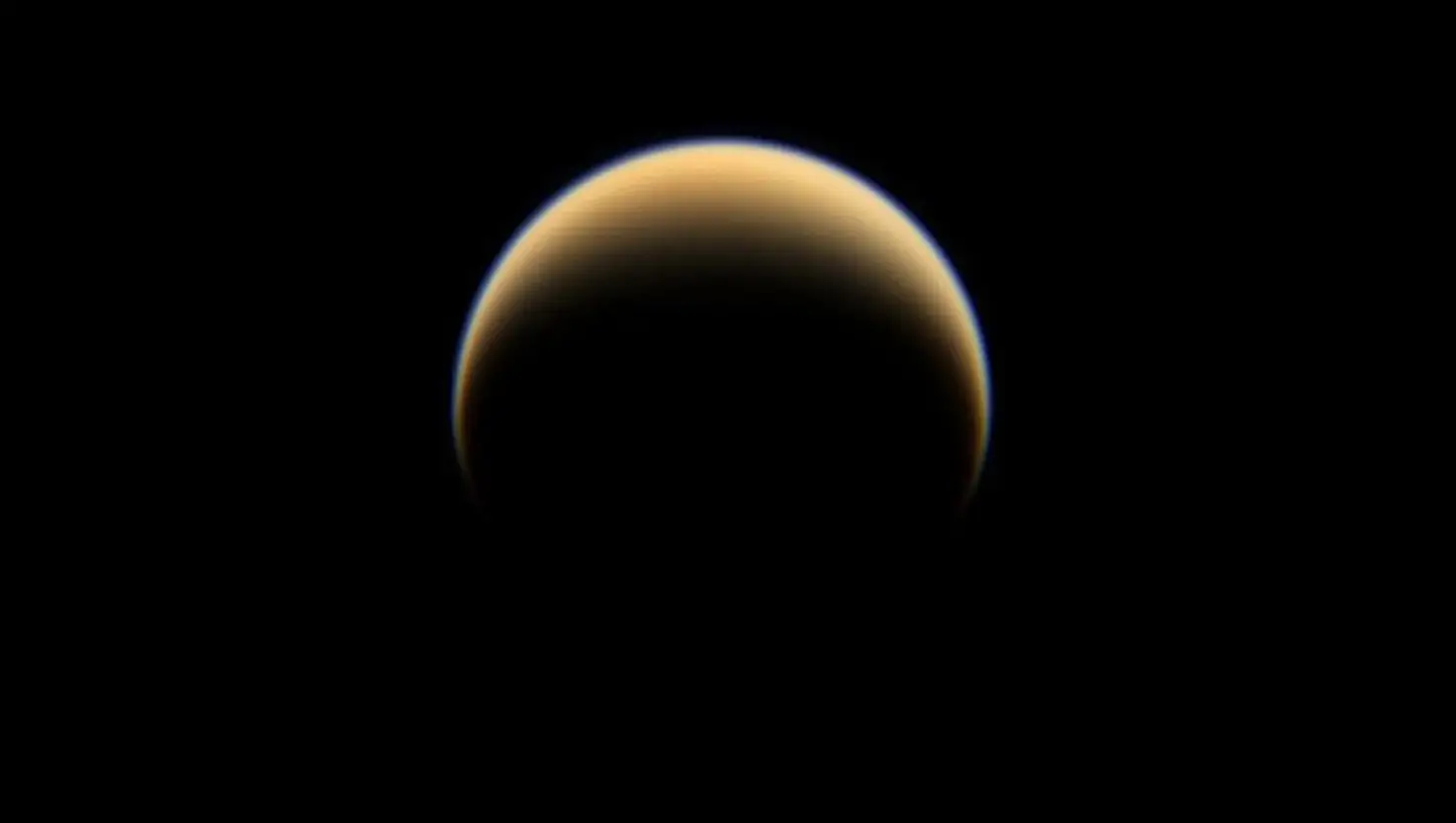
It’s the million-dollar question isn’t it: could life survive on the Moon if protocells have been correctly identified?
Scientists have previously stated that Titan is far colder than Earth, with NASA listing the surface temperature as a teeth-chattering 179 degrees Celsius.
Moreover, the second-largest moon in our solar system features a chemically active, hazy, golden atmosphere with a complex meteorological cycle.
However, due to the diversity of the organic chemistry that occurs in its atmosphere, life could, in theory, survive.
We’ll know more following NASA’s first mission to Titan in the upcoming Dragonfly rotorcraft.
Set to explore the surface of the celestial body, the Dragonfly will fly from location to location to study the moon’s surface composition.
It will also be making atmospheric and geophysical measurements whilst characterising the habitability of Titan’s environment.
The mission to Saturn’s moon is scheduled to launch in July 2028. It is expected to arrive at Titan in 2034.
So, will Titan end up with life on it? Come back in nine years and we’ll let you know.
Topics: Space, Science, NASA, World News
 Ella Scott