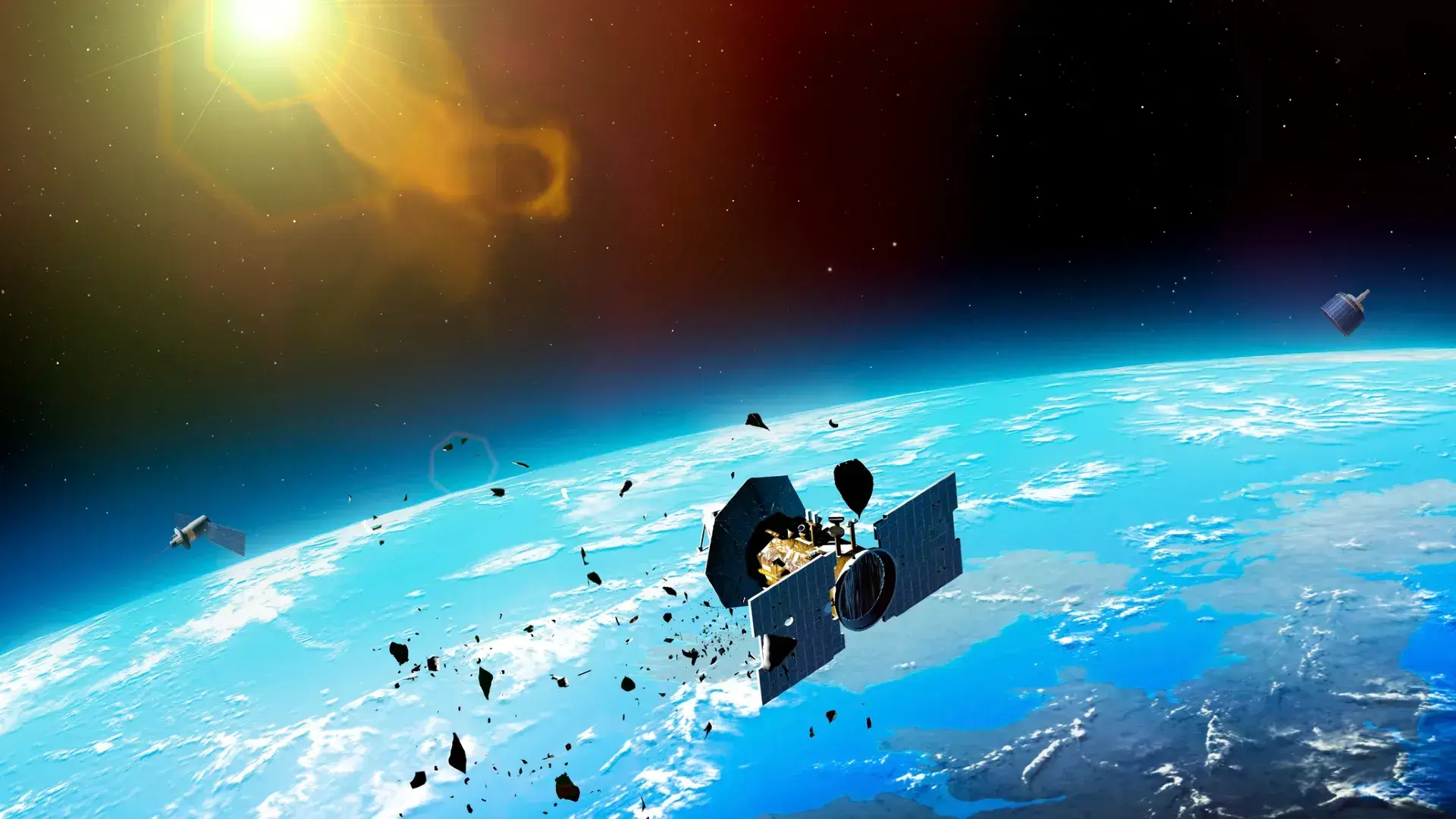
Experts warn 'space junk' likely to collide with aircraft sometime this year

If you're familiar with the Kessler syndrome theory, you'll know the area we call low Earth orbit is getting pretty crowded.
Low Earth orbit refers to the region around 100 miles to 1,200 miles above Earth, and is thought to be home to around 40,000 pieces of debris, from SpaceX's Starlink satellite constellations to broken pieces of spacecraft.
The area is becoming so densely populated that many items floating around in low Earth orbit are beginning to fall back into our planet's atmosphere, prompting huge safety fears over these human-made meteors.
These fears aren't new. NASA scientists Donald Kessler and Burton Cour-Palais raised their concerns back in 1978 when they theorised the Kessler syndrome, in which they predicted that one day, low Earth orbit would become so crowded, a chain reaction of collisions would occur.
Advert
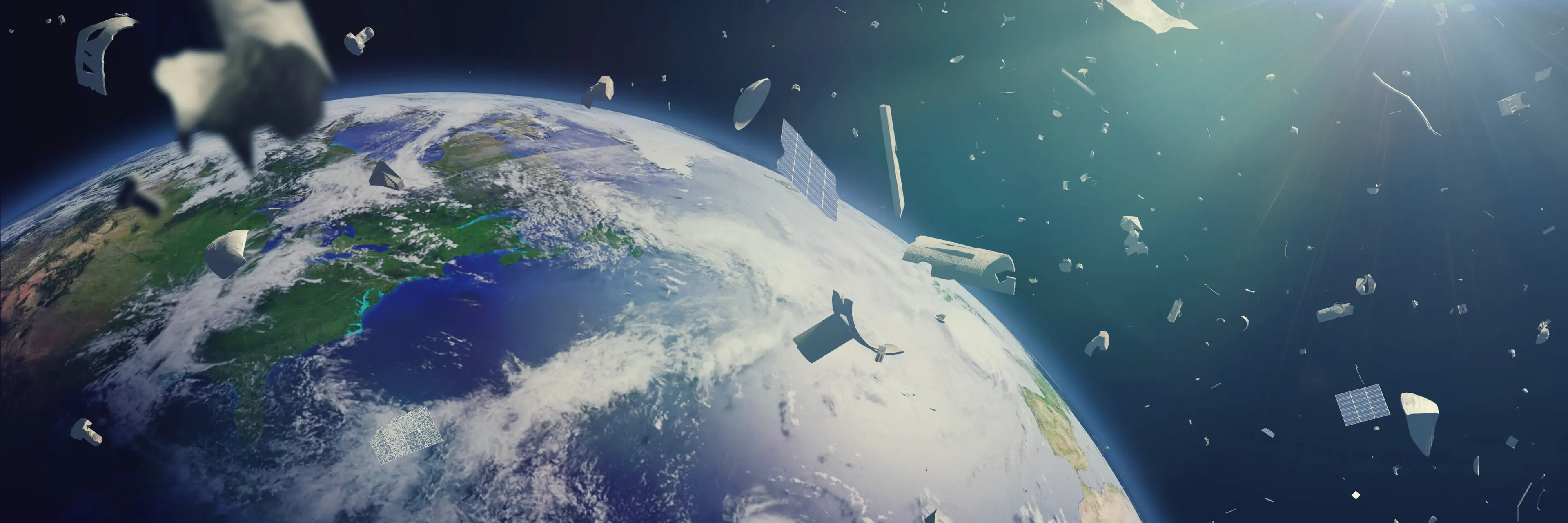
In this instance, it would be catastrophic for humanity as the chain of events may not stop, destroying satellites essential to maintaining life as we know it - from crop production and internet connections to international travel and phone calls.
But before we go straight to worst case scenarios, experts have warned of some of the very real risks involved with cluttering up the space around our planet.
One major worry is that one of the pieces of 'space junk' falling back into Earth's atmosphere could spontaneously collide with an aircraft, like an aeroplane, on its speedy descent back to Earth, and you don't need to be a scientist to know that would be very bad news.
So far, we've been lucky, but according to a paper published in early 2025, there's a 26 percent chance that space debris will fall through some of the world's busiest airspace during an uncontrolled re-entry in 2026. That's more than a one in four chance. Terrifying stuff.
We're not just talking about big, huge flaming satellites hurtling down and taking a plane out of the sky, we're talking about the danger associated with much smaller pieces of debris, which could potentially enter an aircraft's engine, as the European Space Agency's space debris system engineer has explained.
Benjamin Virgili Bastida told Space.com: "Aircraft can be affected by much smaller pieces of debris. For example, airplanes flying through the ash of a volcano is risky because of the small particles. Kind of a similar thing could happen with re-entering debris."
Back in summer 2025, a SpaceX spacecraft re-entered Earth's atmosphere over European airspace, prompting emergency closures of airspace, prompting questions over what could possibly happen next.
 Emma Rosemurgey