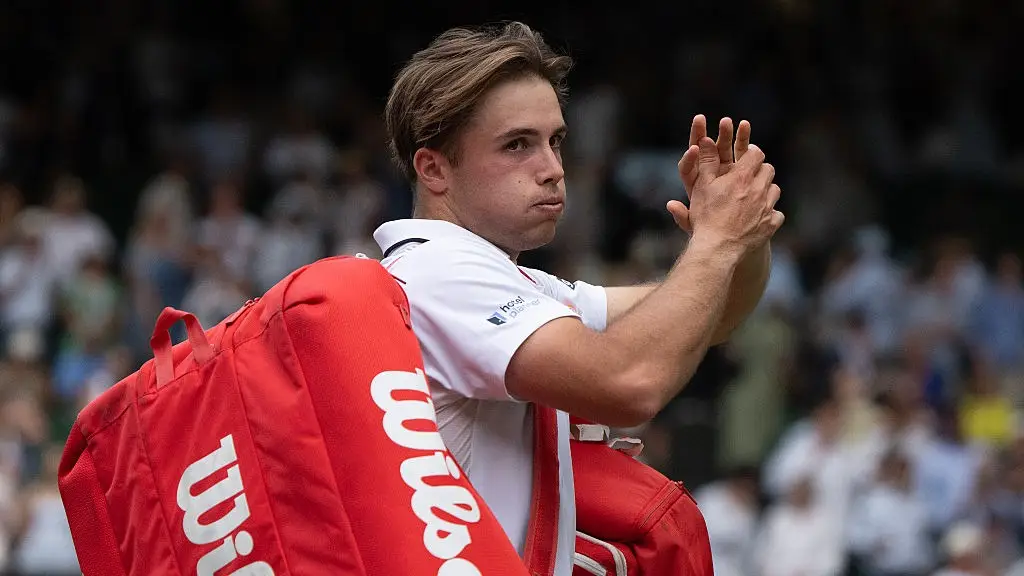
Arthur Fery would add 1% to net worth with Wimbledon win due to £275m inheritance

They say tennis is a rich man's game and Arthur Fery is proving that to be more than true.
Wimbledon is approaching the business end, and it's been another year of celebrity sightings, friction against strict rules and, of course, some stellar tennis.
It's not been a great year for homegrown talent in SW19, though, with all but one Brit being eliminated from singles competition.
But we all love an underdog and Arthur Fery is the one man keeping Britain's Wimbledon dream alive.
Advert
Fery was one of just four Britons to make it past the opening round and has now become the first British wildcard, male or female, to make it through to the final eight at Wimbledon in the Open Era.
The 23-year-old came back from behind in a thrilling contest to knock out Grigo Dimitrov 7-5 3-6 4-6 6-4 7-6 (10-7), ending in a tiebreak, on Tuesday.
Fery, who started the tournament ranked 114th, will be hoping to keep his fairytale story alive on Wednesday (July 8) when he takes on No.9-ranked Flavio Cobolli, who he defeated earlier this year, on Centre Court.
He is already guaranteed £480,000 in prize money for his efforts, but that's just a drop in the ocean given his family's immense fortune.
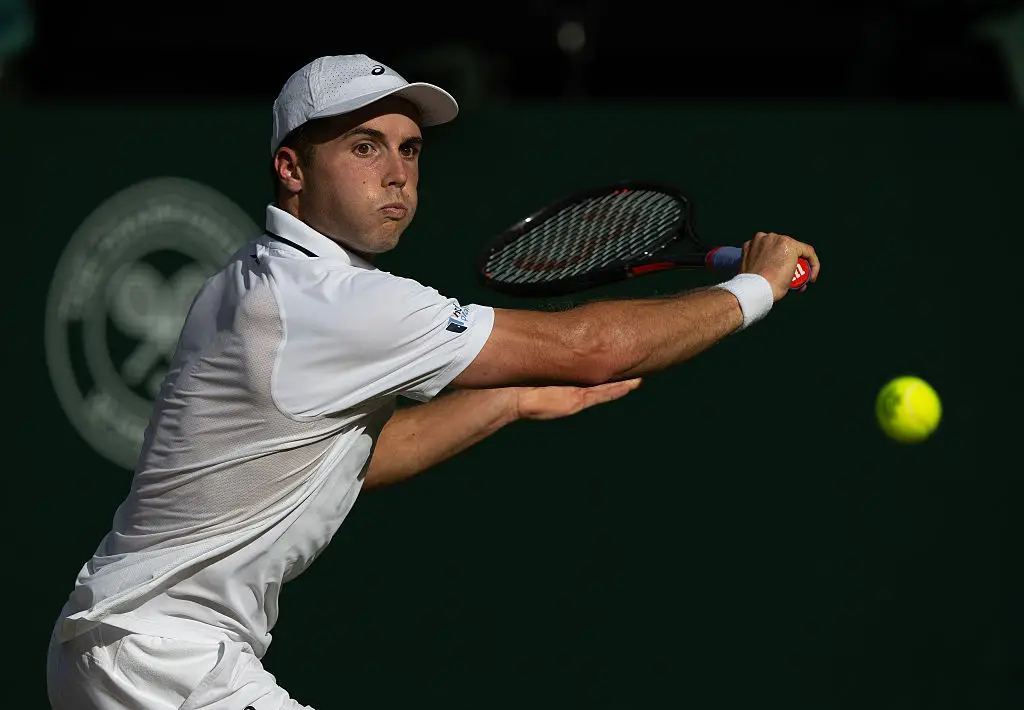
Wimbledon star Arthur Fery massive family fortune
Though he was born in Sevres, France, Fery childhood was spent in London, where he attended King's College School in Wimbledon, which costs a cool £33,000 a year.
Home comforts.
His father is Loic Fery, who has earned great wealth thanks to his career in finance and makes Fery the richest current British tennis player by some distance.
The Mirror reports that Loic Fery has an estimated net worth of £275m, which made him the 398th richest person in France in 2023.
Loic's interest in sport stretches beyond tennis, too, as he bought and became president of the Ligue 1 side FC Lorient in 2009. He sold the club earlier in 2026.
As a result, Fery's family net worth absolutely dwarfs Britain's biggest tennis stars.
The last British male winner at Wimbledon in 2016, Andy Murray, has amassed a reported fortune of £110m, while Emma Raducanu reportedly has a net worth of £13.5m after he shock 2021 US Open triumph.
Should he win Wimbledon and pocket the £3.6m prize, that would add a mere 1.3% to his £275m net worth.
Fery earned a scholarship to attend Stamford University, where he majored in Science, Technology and Society, while still developing his blossoming tennis career.
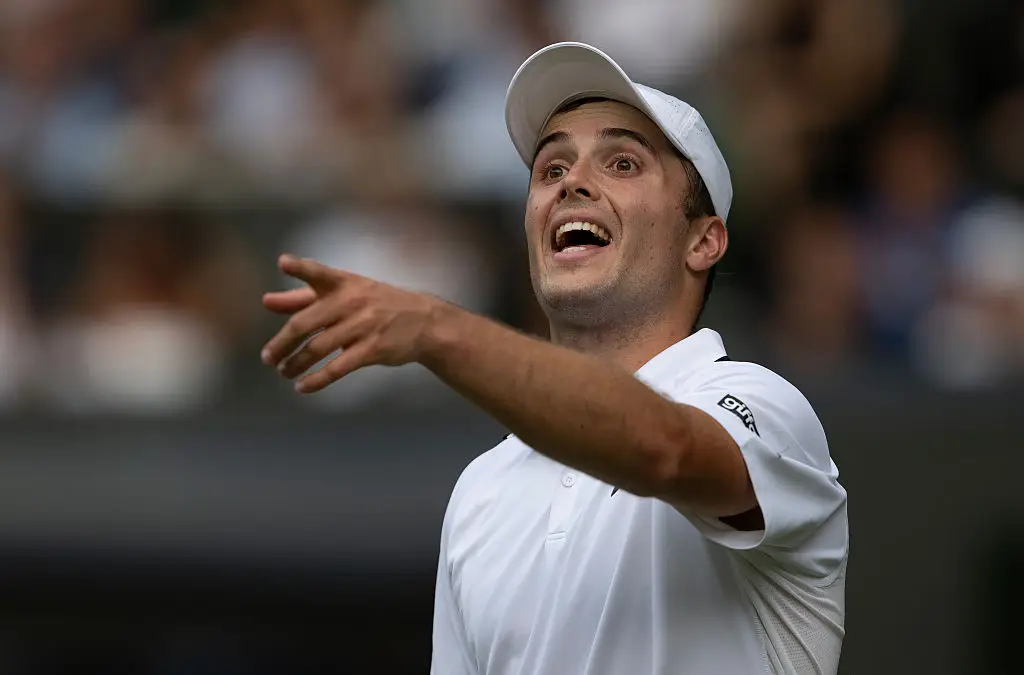
"Yeah, yeah, it's been a while now, three years since I was there. Yeah, spent three years at Stanford as a transition after my career as a junior. Yeah, really loved it. Don't regret it at all," Fery said on his time in the USA.
"I came out with a lot of hunger coming out of that, and I was ready to attack the pro circuit.
"Learnt a lot. Made some great friends. The coaches are awesome, and obviously it was a great academic school, as well. Provided me with a backup in case tennis didn't work out."
Fery will be aiming to keep the dream alive and make it to the Wimbledon final on Sunday, 12 July, which happens to be his 24th birthday. His quarter-final gets underway at 2:40pm.
As well as Dimitrov, Fery has beaten Zizou Bergs, Otto Virtanen and Damir Dzumhur so far.
Wimbledon’s strangest rules
Wimbledon has strict rules and regulations for pretty much everything - from the length of the grass to the temperature of the tennis balls, and you can be fined thousands of pounds for certain conduct violations.
Curfew
While at other grand slams, play continues late into the night, at Wimbledon there’s a strict 11pm curfew.
This means tennis fans sometimes have to go to bed on a cliffhanger.
Novak Djokovic and Rafael Nadal’s 2018 semi-final clash was suspended after the third set. Meanwhile, Andy Murray was particularly peeved when he was in the lead against Stefanos Tsitsipas in 2023, but went on to lose when the game was paused overnight and restarted the following morning.
Timed toilet breaks
Players are limited to one toilet break for matches up to three sets, and two if it goes on for longer.
They can only go during a set change and they have to be back within three minutes, or they risk giving a point to their opponent.
The longest ever Wimbledon match lasted a whopping 11 hours over three days, so players better get their nervous wees in before the match.
Temper tantrums
Players can be fined up to £36,900 for smashing their rackets. Djokovic is believed to have smashed over 60 of them over the course of his career.
Bad language can also result in the same maximum fine.
Countdown to serve
As soon as the ball goes out of play, the serving player has just 25 seconds to hit their serve, or the umpire can call a violation which could potentially grant a point to their opponent.
Fines for not trying hard enough
Players must demonstrate they’re giving their all to win the match. Australian player Bernard Tomic was fined an eye-watering £45,000 after he was accused of not putting in enough effort to beat French player Jo-Wilfried Tsonga, losing after just 58 minutes.
Age limits
Players have to be at least 14 to compete, which means youth sensations like Coco Gauff were initially barred from taking part.
Spectators, meanwhile, have to be accompanied by a guardian if they’re under 16. Under-fives aren’t permitted at all onto show courts.
This meant Serena Williams' two-year-old daughter Adira River couldn't watch her mum's comeback at this year's grand slam, while not all of Andy Murray's four children could watch his final doubles appearance in 2024.
The grass and the balls
Everything at Wimbledon is just so. The grass is cut to 8mm, which is apparently best suited for modern tennis play and for the grass to survive.
Meanwhile, the tennis balls are kept in a fridge in order to maintain a constant temperature of 20°C. A consistent temperature is important because it apparently affects the way the balls bounce. The more you know.
Tennis whites
It was originally just female players who were required to wear all-white on the court. According to Tennis Fashions: Over 125 Years of Costume Change, the rule was introduced because it was ‘quite unthinkable that a lady should be seen to perspire’. OK then…
Eventually, the rule was imposed on men too.
A single trim of colour is allowed around the neckline and sleeve cuffs, but this must be no thicker than 1cm.
In 2022, an exception was made so women could wear dark undershorts to feel more comfortable if they were on their periods.
 Daniel Murphy