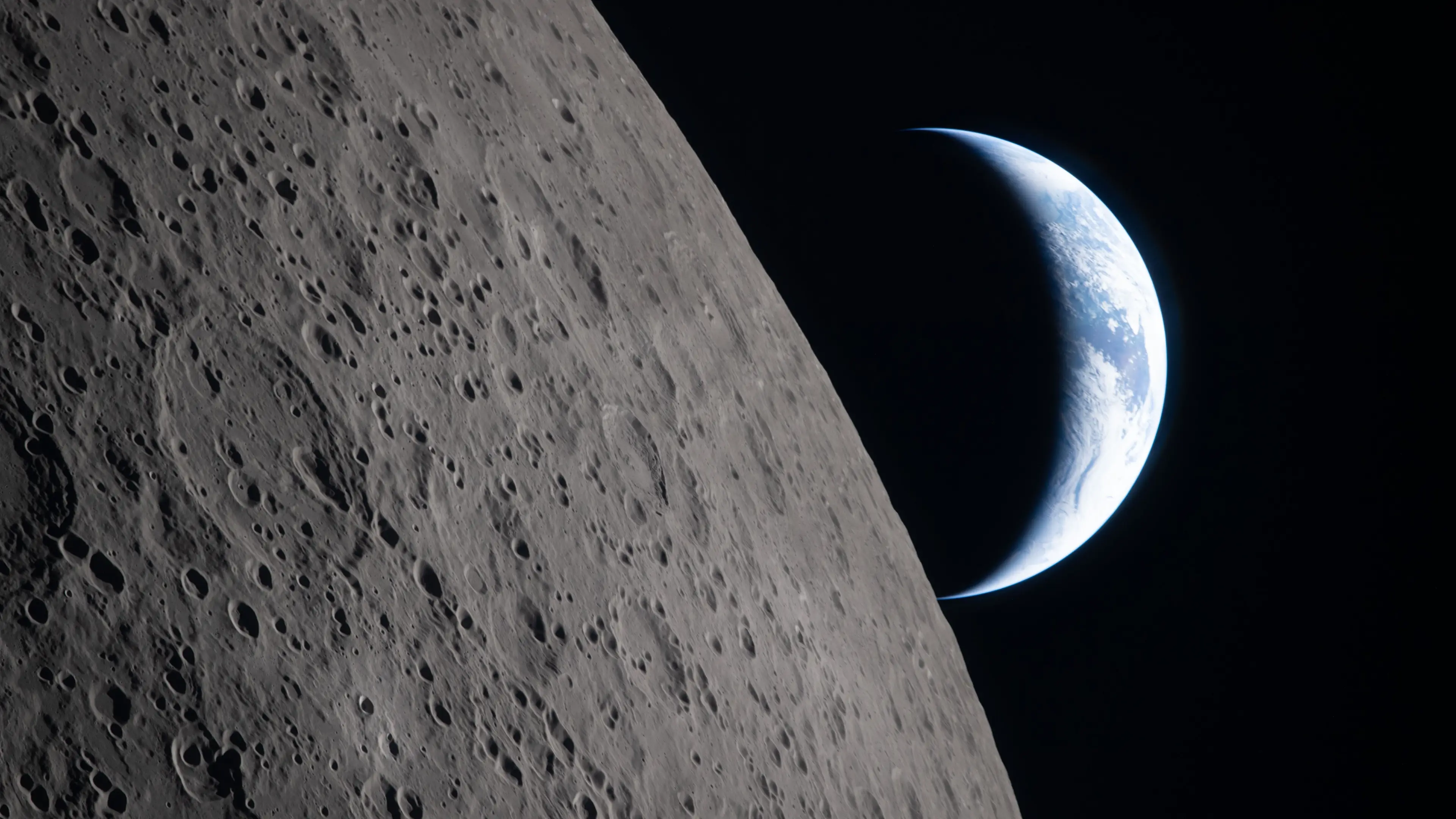
Ex-White House scientist tells NASA to use Moon as holding pen for alien life or endanger Earth

A former White House scientist has argued that a future NASA base on the Moon should include a facility to hold 'extraterrestrial contamination' in order to protect life on Earth.
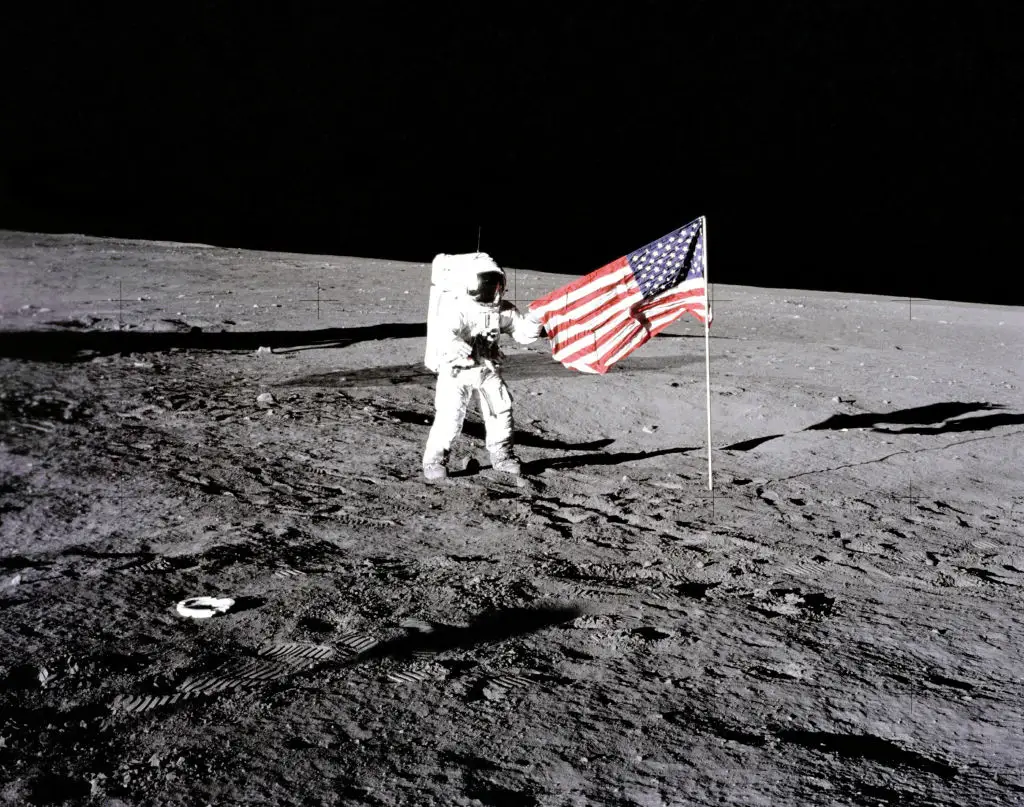
NASA's plan to build a permanent base on the Moon is no secret, with the US space agency saying that it aims to have a ‘sustained human presence’ on the lunar surface by 2032.
Of course, we all know that NASA plans to land man on the moon by 2028 with the Artemis program, so it's certainly ambitious to have a fully fledged, working base ready to go in under a decade.
But one scientist has insisted that the base should include a specialised biocontainment facility - or a holding pen of some sort - to keep Earth safe from potential 'extraterrestrial contamination'.
Advert
Or, to put it simply, potential alien life.
Why a biocontainment facility would be needed on the Moon base
A new policy paper - authored by former US Department of Defence technical director Frederick I. Moxley and Anthony Ricciardi, a James McGill Professor of Biology - has argued why the proposed moon base should include such a facility.
"Humanity is entering a new era of space exploration, but our planetary protection strategies have not kept pace with the risks associated with returning extraterrestrial samples to Earth," Moxley said to Science Daily.
"The proposed facility would essentially act as a firewall between Earth and any potentially hazardous live organisms that could accompany returning future space missions."
The paper, published in the journal Ambio, recommends that all material collected beyond Earth should be sent to a secure research and quarantine facility on the Moon first, rather than be transported directly to Earth.
The proposal recommends that samples collected from the Moon, Mars and other extraterrestrial locations should be examined and handled entirely by advanced robotic systems. This would be in order to minimise the risk of human exposure and prevent the accidental release of unknown organisms.
The risks of an unknown organism spreading on Earth
"Decades of research on invasive species have demonstrated how an organism introduced to the wrong place at the wrong time can spread uncontrollably with potentially devastating and irreversible long-term impacts on ecosystems," Ricciardi added.
"This research justifies a strong precautionary approach against introductions of extraterrestrial origin."
Even though tests from NASA over the decades have concluded that the Moon is completely lifeless due to its lack of atmosphere, the researchers of the paper rounded up by saying that finding life beyond Earth could mark humanity's most important scientific achievements.
However, they argue that the potential biological risks should be addressed before such discoveries are brought home.
"The Moon may become humanity's first line of biological defence."
Topics: Science, Space, Technology, NASA
 Emily Puckering