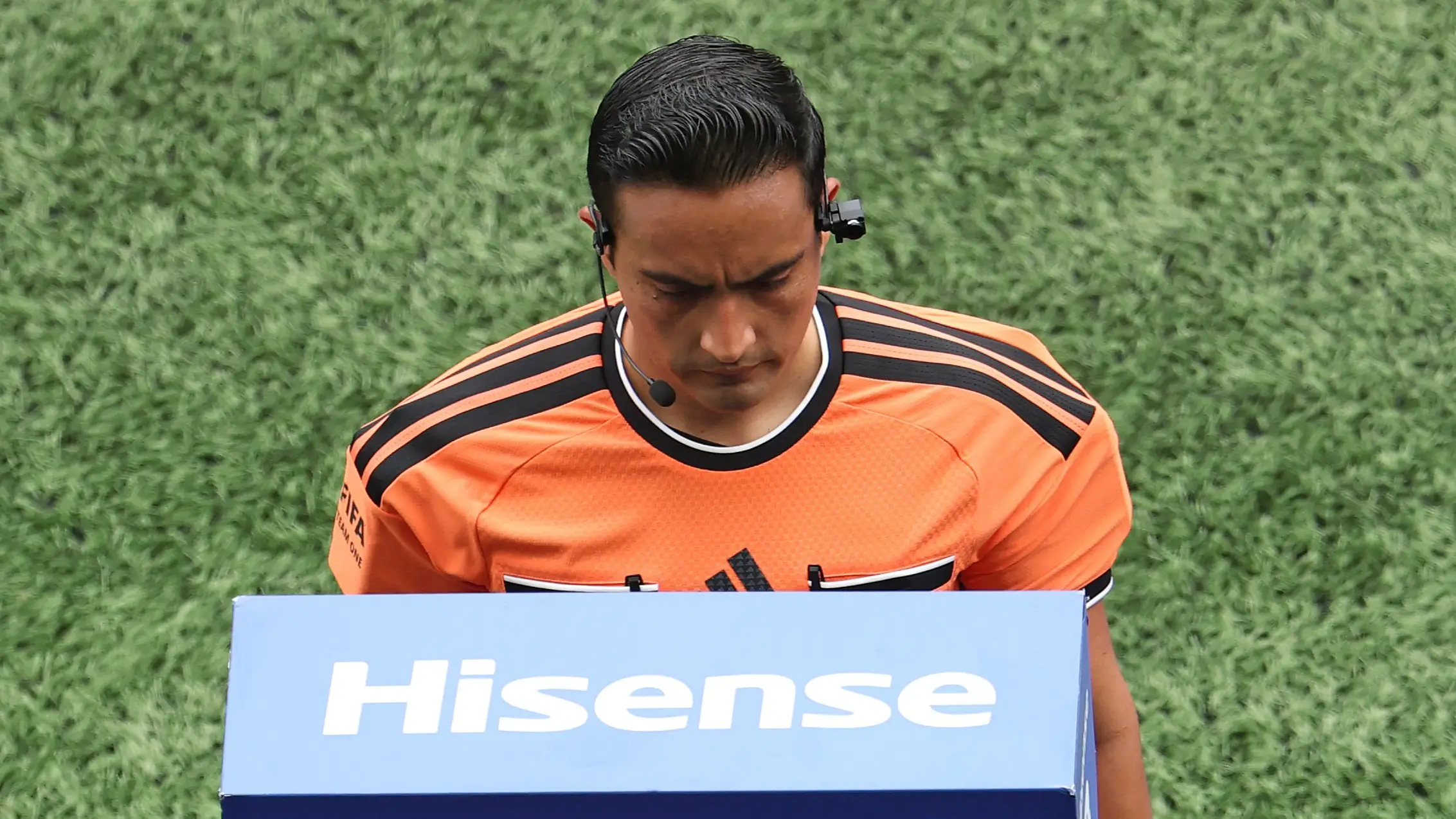
FIFA makes huge VAR change for rest of World Cup following major complaints

VAR officials will now be stationed inside stadiums for the remaining World Cup matches.
Previously, all video assistant referee (VAR) decisions at the World Cup were made at a single location in Dallas, Texas. This will now be modified so that a secondary VAR reserve official is present inside the stadiums where matches are taking place, providing extra support for on-pitch referees should there be communication issues between the stadium and Dallas.
The change has been implemented in tonight's France vs Morocco game, with The Sun reporting that Uruguayan official Leodan Gonzalez will be in charge of tonight's VAR while Nicaragua's Tatiana Guzman will be at the stadium - and will be in place for the remainder of the World Cup.
Advert
This means that Guzman will be on hand to provide VAR support to match officials should anything go wrong with the connection to Dallas' International Broadcast Centre.
He will be joined by an all-Argentinian refereeing team, which consists of lead referee Facundo Tello and assistants Juan Pablo Belatti and Gabriel Chade.
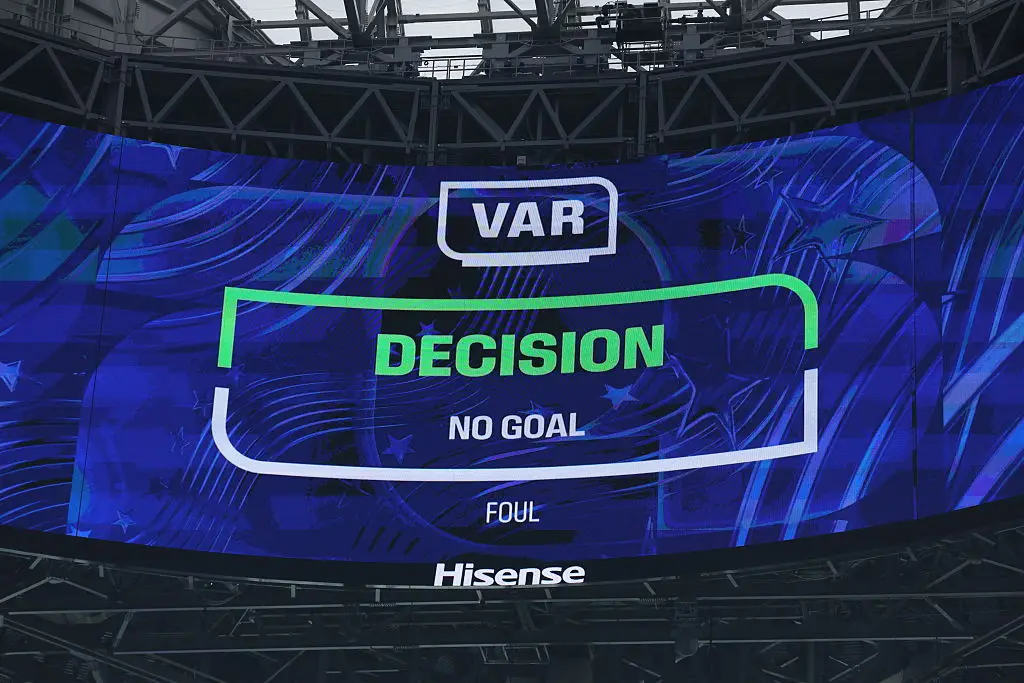
VAR powers have been extended during the ongoing World Cup, with officials now able to call for a review if they believe a free kick has been incorrectly awarded to a team, one of the many changes brought in for the tournament.
FIFA's decision to implement the change comes off the back of a rocky round of 16, which saw allegations of favouritism during some of the matches.
Following Egypt's 2-3 loss against Argentina, head coach Hossam Hassan accused French referee Francois Letexier of being biased towards Argentina.
"The referee is unfair, God is sufficient for me and the best disposer of affairs. He’s wasting the effort of an entire nation. The cup is directed towards Argentina," Hassan told reporters after a late Argentinian comeback saw his side dumped out of the tournament.
"This was clearly a rigged match and the whole world saw it."
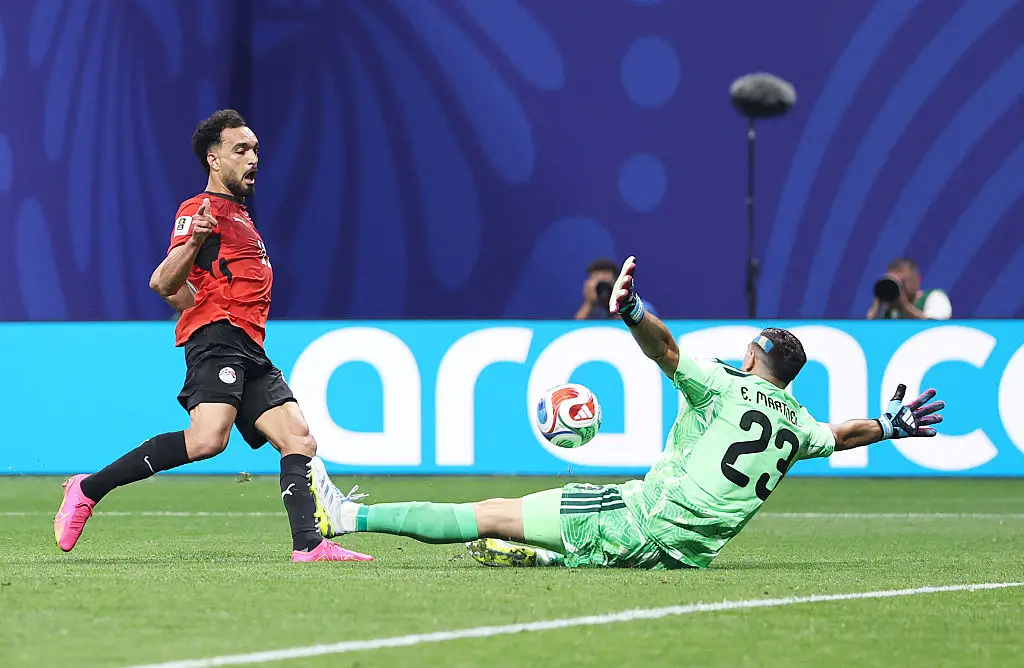
His sentiment was shared by winger Mostafa Ziko, who said: "The referee wasn’t good, he was unfair.
"His injustice was clear. He persecuted us from the start of the match. He doesn’t want us to win."
Meanwhile, Three Lions boss Thomas Tuchel hit out at how the matches were being officiated after his side prevailed over co-hosts Mexico, telling the reporters that the standard of refereeing in matches wasn't good enough.
“It’s not good enough,” Tuchel said (per The Guardian) after England player Jarell Quansah received a red card during the round of 16 clash. “He [the referee] can send any team out in any moment. It’s just not good enough. It’s just erratic, it’s just unreliable in matches. Now we have two fourth officials who just scream at you if you put one foot out of a coaching zone. It’s just not good enough.”
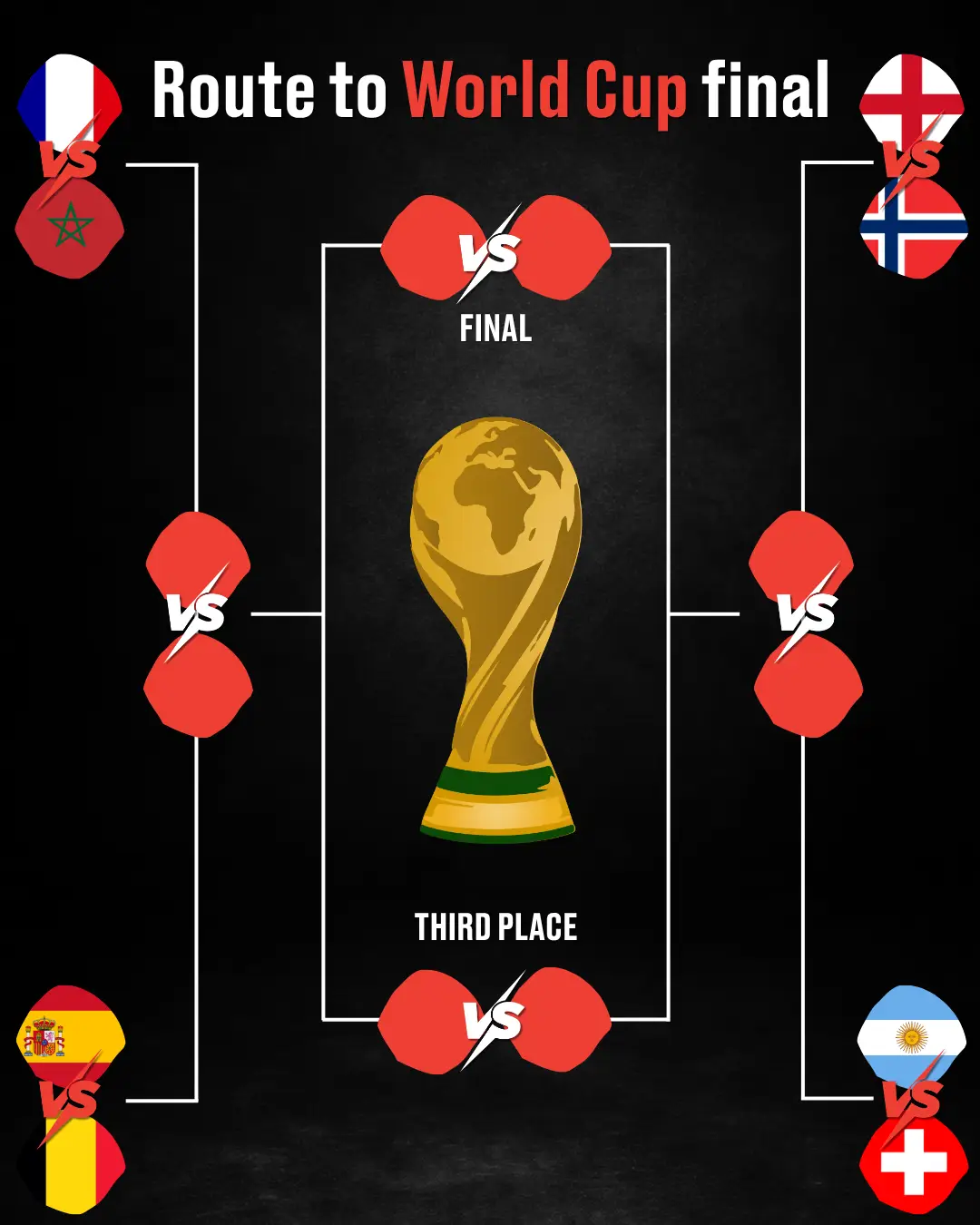
New rules for the FIFA World Cup 2026
This year, there’s been a whole host of rule changes, many of which are designed to speed up the game and penalize players who drag things out. Some of the new regulations are likely to prove controversial.
10-second substitution
Subbed players now have to get a move on and leave the pitch within ten seconds by the nearest exit point. If they haven’t, their replacement will get held up by one minute until the next stoppage of play, and until then, their side will have to play with 10 men.
5-second throw-ins and goal kicks
If a referee thinks a player is taking too long for a throw-in or goal kick, they’ll start a five-second countdown, by which time the ball needs to be back in play. If it’s not, for throw-ins the opposing team will get their own throw-in, or for a goal kick the other side gets a corner.
Injured players to remain off the pitch for one minute
An injured player treated by medical staff off-field has to stay off the pitch for one minute, leaving their side with just 10 players.
More VAR
VAR can now be used to review an incorrectly awarded corner kick; second yellow cards resulting in a red card; when a player is incorrectly awarded a yellow or red card for another player’s actions; and any attacking fouls that occur before the ball is in play.
Players can’t cover their mouths
Players who cover their mouths in confrontational situations will be handed a red card. It’s believed players might cover their mouths to guard against lip readers while racially abusing other players, which some suspect has happened in the past.
Red cards for players leaving the pitch
Any player who leaves the pitch in protest over a referee’s decision will be handed a red card, and if a team walks off and causes a match to be abandoned, they’ll forfeit the game.
 Brenna Cooper