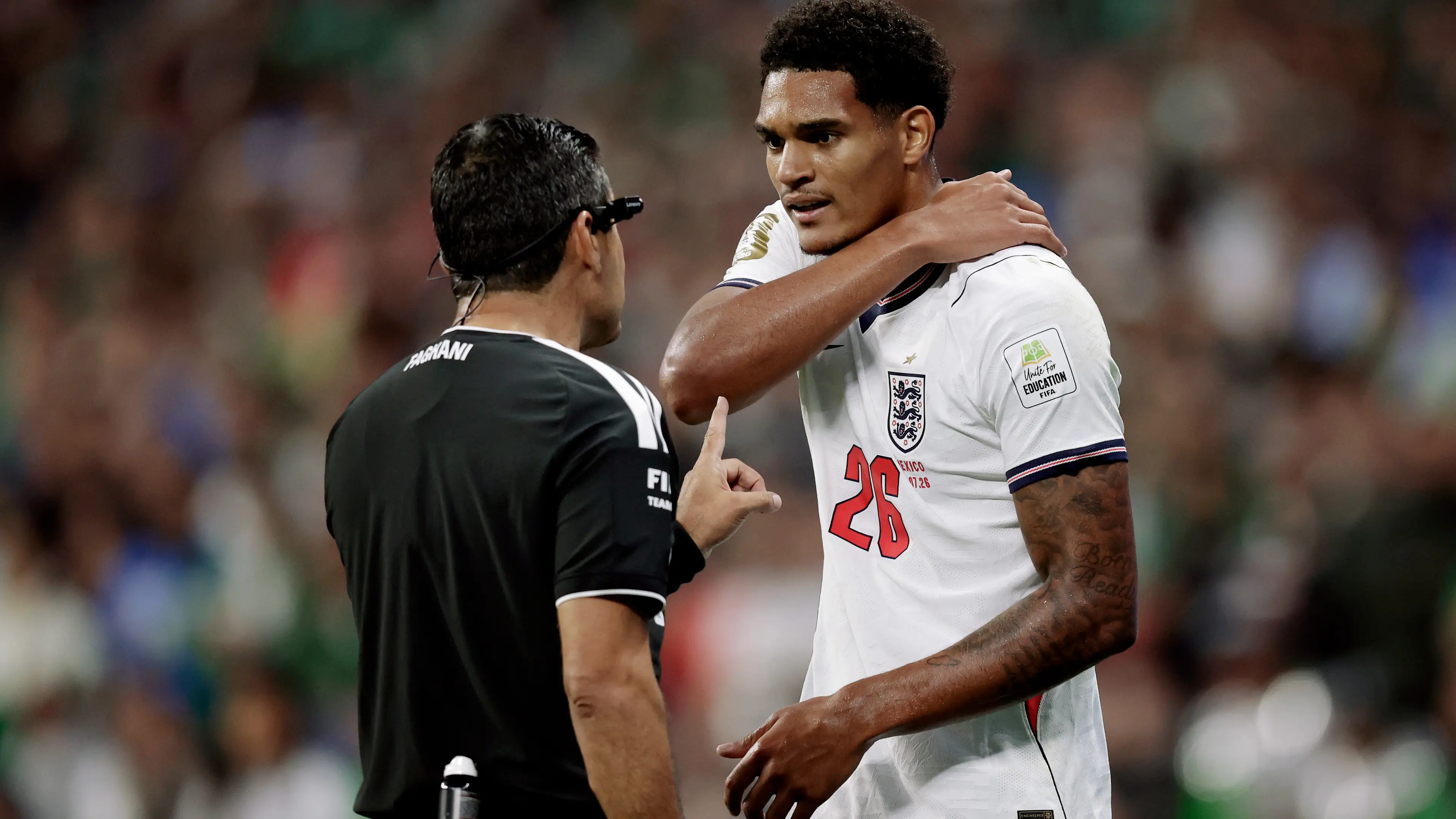
FIFA rule that means Jarell Quansah's new World Cup ban can be appealed

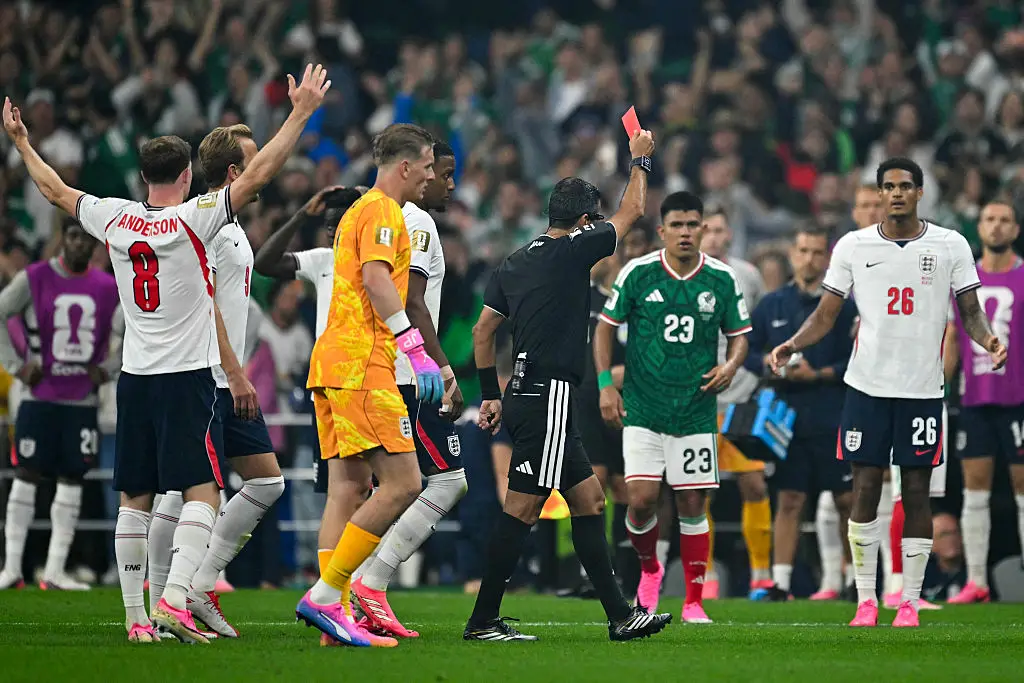
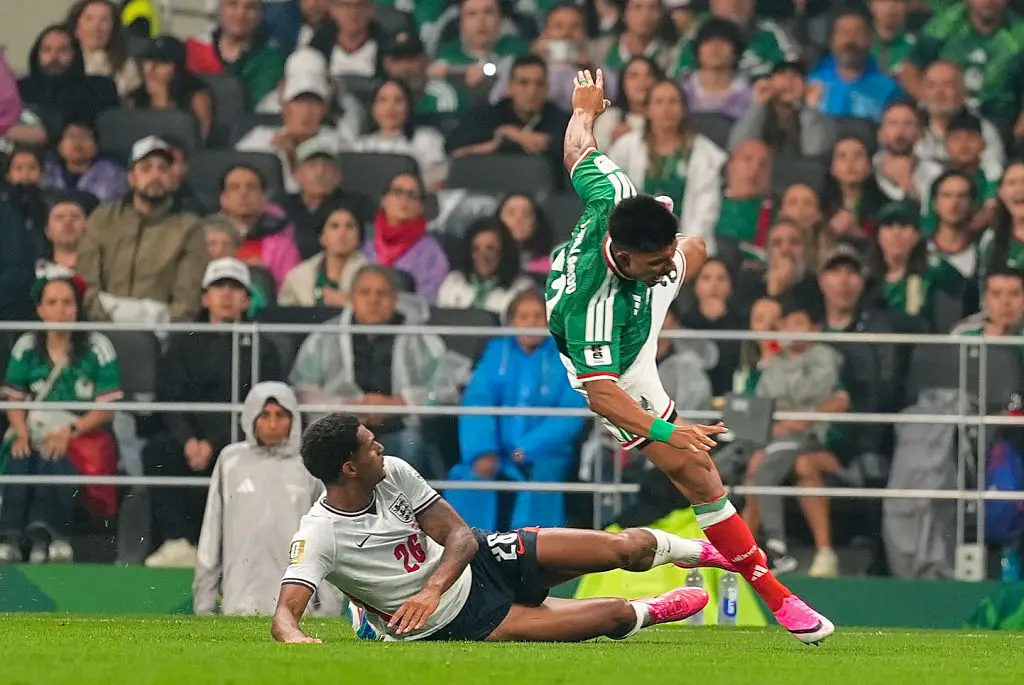
England defender Jarell Quansah will serve a two game ban for the red card he was shown against Mexico, meaning he'll only be available again for the World Cup final.
Quansah was shown a red during England's 3-2 win against Mexico in the round of 16, and the ruling on his suspension means he'll miss the quarter-final tie against Norway and a semi-final if the Three Lions reach that.
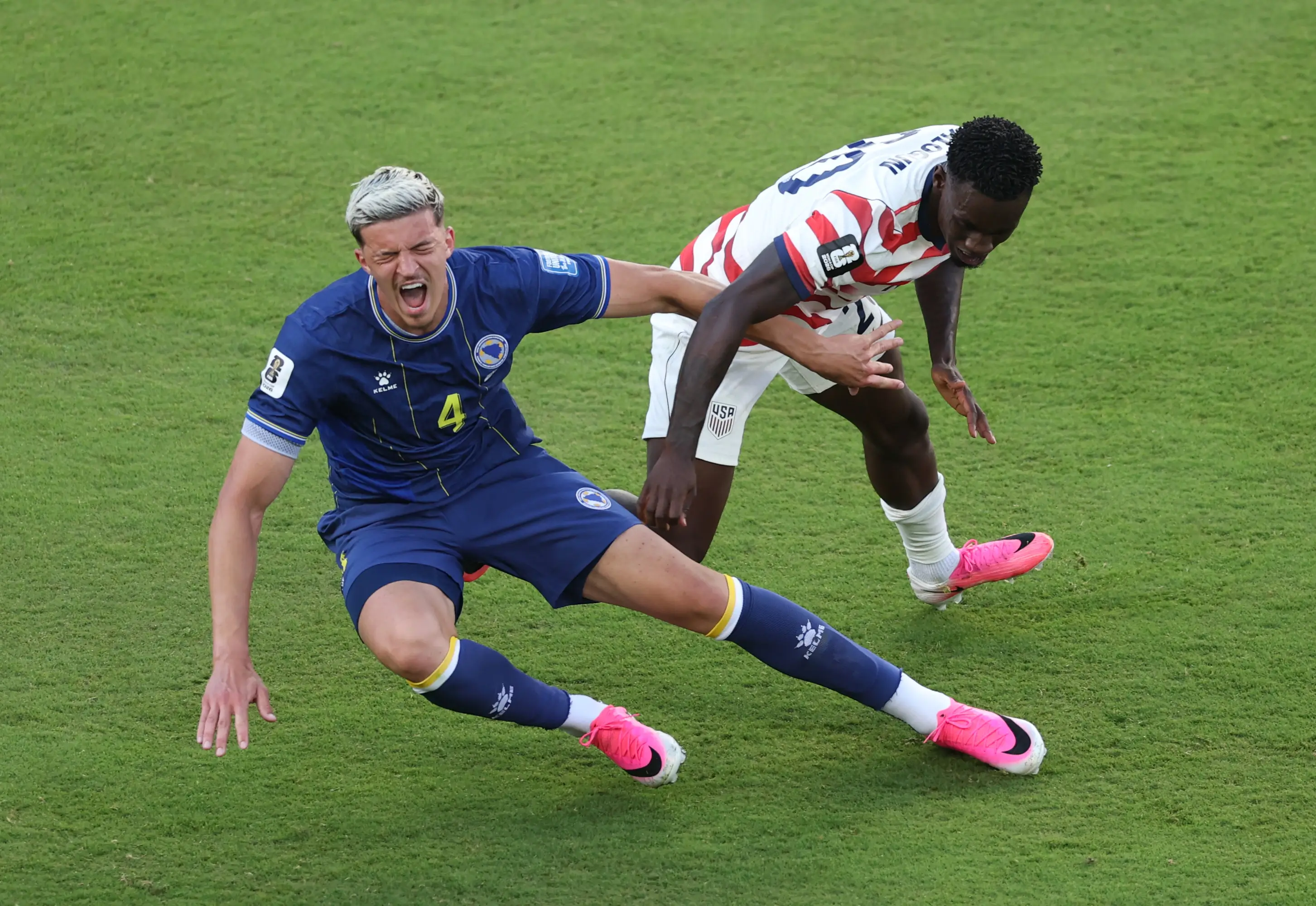
The defender's offence was classed as 'serious foul play', and it's been pointed out that it's the same offence for which US striker Folarin Balogun was sent off in the World Cup, only to have FIFA decide his red card would be suspended for a year.
It was a highly controversial decision, with US President Donald Trump saying he made it happen by calling FIFA boss Gianni Infantino, which proved to be quite unpopular with UEFA and Team USA's next opponents, Belgium.
Advert
Fortunately, Belgium saved football by defeating the USA 4-1.
As for Quansah, he could technically play the remaining England fixtures at the World Cup if FIFA treated him the same way they treated Balogun and applied the same rules and decisions to his suspension.
However, that doesn't look like it's going to be the case in this instance, and when England manager Thomas Tuchel commented on the situation previously, he didn't sound like a big fan of having red cards suspended in the middle of the tournament.
He'd said: "Where do you draw the line? I have no answer to that. Where does this end now? Do we appeal if a yellow card is not a yellow card? Do we think it's not a red card, or who thinks it?
"Where does it start and where does this end?"
England have their game against Norway to focus on, and if they get past Erling Haaland and his squad they'll face one of Argentina or Switzerland.
Of course, if they reach that stage then they'll either make it into the final or the third place match, with Quansah being eligible for whichever of those fixtures England might end up playing in.
When FIFA suspended Balogun's red card they cited Chapter 4, Article 27, of the FIFA Disciplinary Code, which states that a 'judicial body may decide to fully or partially suspend the implementation of a disciplinary measure'.
Under these seldom-used rules, it's theoretically possible that Quansah could have his red card suspended and he be made available for selection again if the FA decide to appeal.
This is all very unlikely to happen given the can of worms that was opened when they suspended Balogun's red card.
Teams at the World Cup cannot appeal red cards directly, so any potential reprieve would suspend his ban rather than overturn it, creating a situation like Balogun's where the decision to send the player off is not challenged, but he's allowed to be picked for the next game.
New rules for the FIFA World Cup 2026
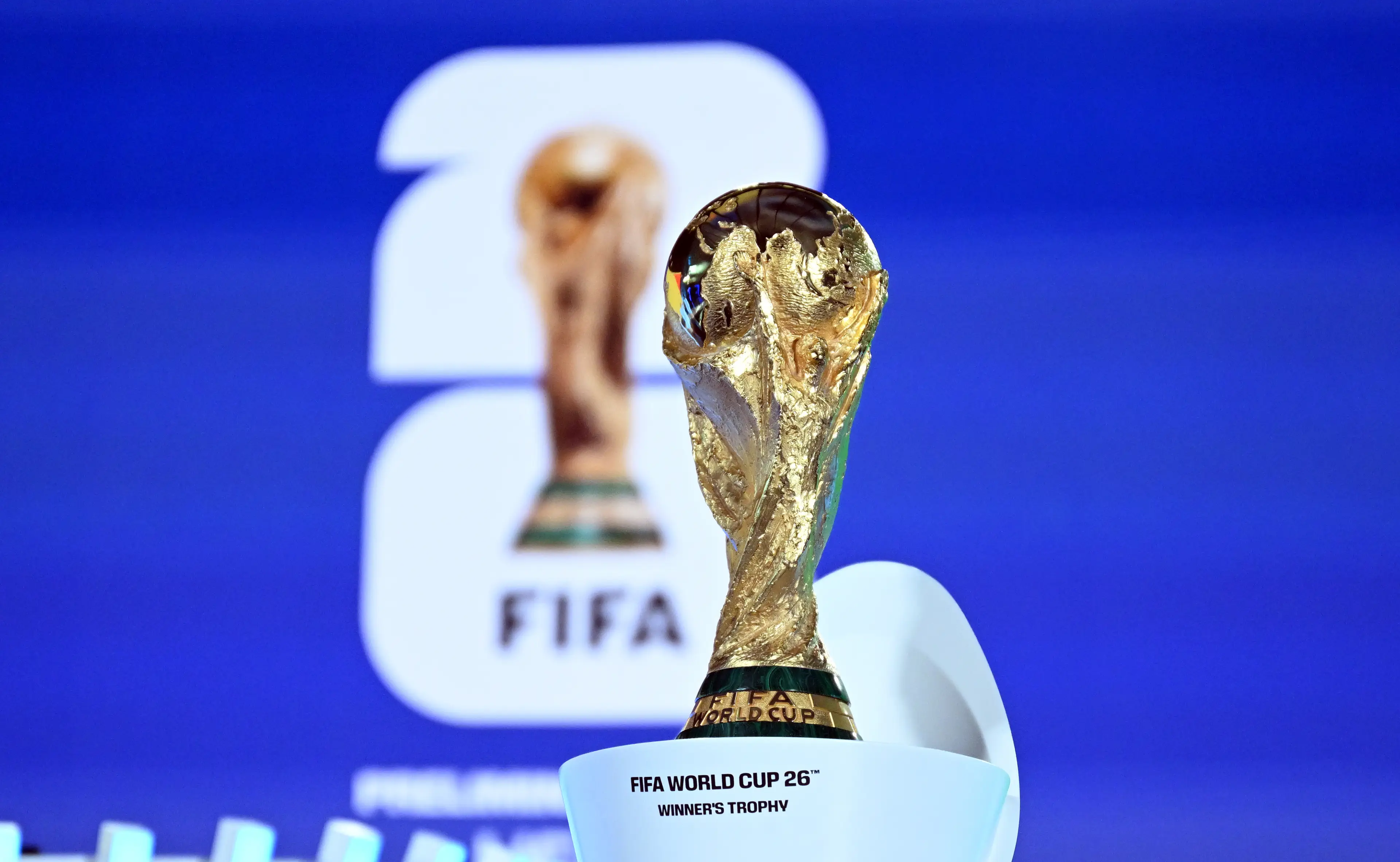
This year, there’s been a whole host of rule changes, many of which are designed to speed up the game and penalise players who drag things out. Some of the new regulations are likely to prove controversial.
10-second substitution
Subbed players now have to get a move on and leave the pitch within ten seconds by the nearest exit point. If they haven’t, their replacement will get held up by one minute until the next stoppage of play, and until then, their side will have to play with 10 men.
5-second throw-ins and goal kicks
If a referee thinks a player is taking too long for a throw-in or goal kick, they’ll start a five-second countdown, by which time the ball needs to be back in play. If it’s not, for throw-ins the opposing team will get their own throw-in, or for a goal kick the other side gets a corner.
Injured players to remain off the pitch for one minute
An injured player treated by medical staff off-field has to stay off the pitch for one minute, leaving their side with just 10 players.
More VAR
VAR can now be used to review an incorrectly awarded corner kick; second yellow cards resulting in a red card; when a player is incorrectly awarded a yellow or red card for another player’s actions; and any attacking fouls that occur before the ball is in play.
Players can’t cover their mouths
Players who cover their mouths in confrontational situations will be handed a red card. It’s believed players might cover their mouths to guard against lip readers while racially abusing other players, which some suspect has happened in the past.
Red cards for players leaving the pitch
Any player who leaves the pitch in protest over a referee’s decision will be handed a red card, and if a team walks off and causes a match to be abandoned, they’ll forfeit the game.
 Joe Harker