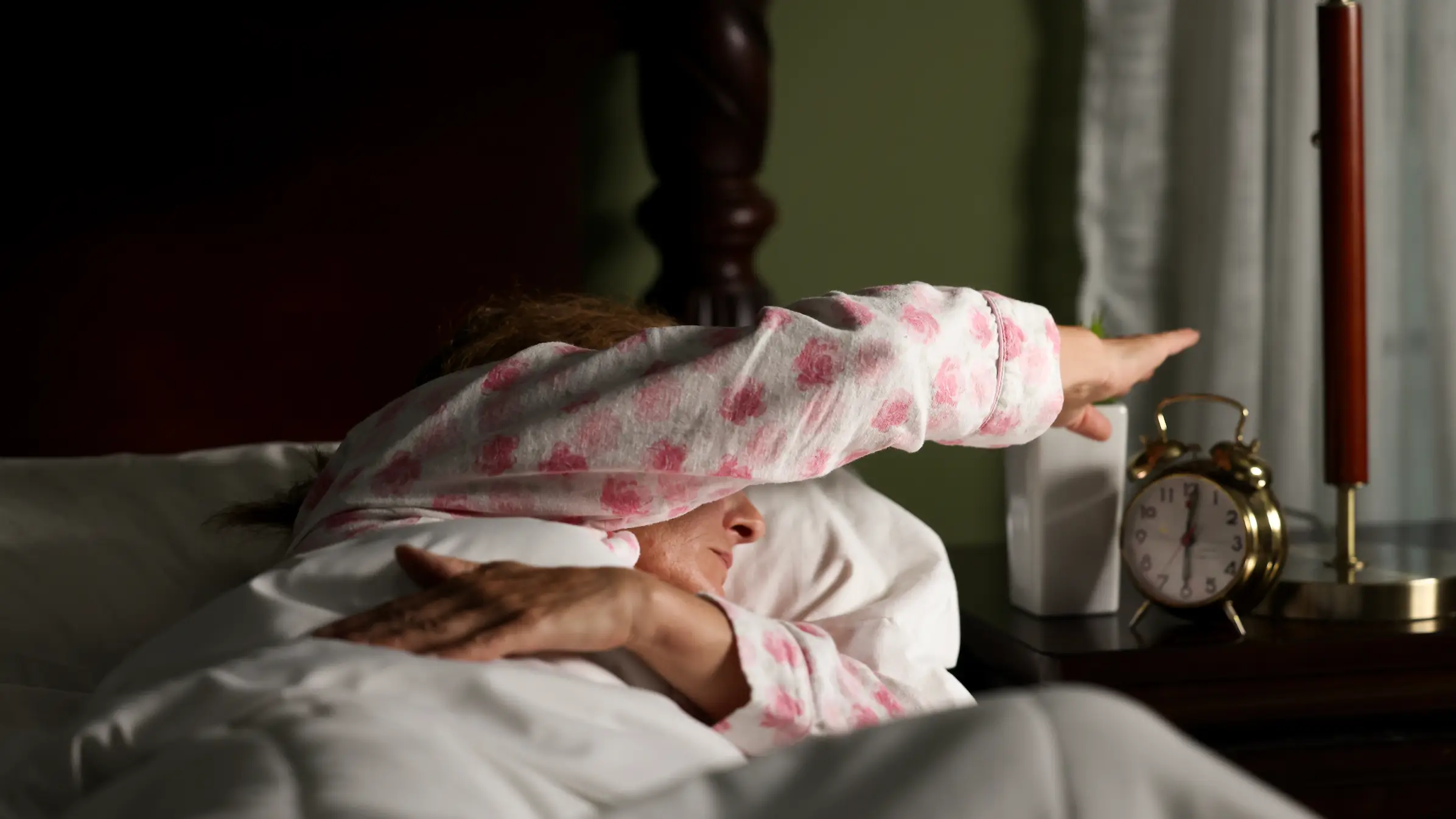
Warning as clock change this weekend could have negative effect on your health

It's that time again where we lose an hour of sleep and nobody's happy about it.
That extra hour in bed in the winter can be blissful at times but as soon as it comes to spring and we're all shedding off the seasonal depression thanks to the early-morning sun, it suddenly goes back to being dark again.
And it's always on a Sunday, instead of at 4pm on a Friday when we'd all happily move forward an hour when we want to leave work to go to the pub.
But apart from the genuine anger that we're all losing an hour of our precious weekends rather than an hour of week, health experts have warned about the potential side effects of this Sunday's sacrilege.
Advert
Dr Jeffrey Kelu, from King's College London, explained a bit more about why the change in time can do damage to our mental health.
He said: "There’s increasing evidence to show that shifting the clocks, particularly in spring, has a significant impact on circadian rhythms and sleep health. Our internal body clocks, synchronised mainly by light exposure, regulate essential physiological functions, such as the sleep-wake cycle and metabolism.
"Shifting the clock time by one hour creates a misalignment between social time and the natural light-dark cycle, disrupting circadian rhythms.
“The acute effect of the spring clock change is a sudden reduction in sleep duration, caused by the overnight loss of one hour, and the difficulty in adapting to earlier wake times. This can lead to chronic ‘circadian misalignment’, a condition known as ‘social jet lag’, which is associated with an increased risk of obesity, metabolic syndrome, and mood disorders.”
But it's not just our mood which might be affected by the change in times, as unless you have the forethought to head to bed an hour earlier, which seems unlikely on a Saturday night, you may also suffer from the lack of sleep.
Dr John O'Neill told Manchester Evening News about other potential risks that could arise from the time change, while also questioning if it is even necessary.
He said: "It does not really serve much of a benefit to anybody these days, whilst exposing us to a small but significant series of risks.
"It is like everybody in the country gets an hour's jet lag, all at the same time. You see an increase in incidence of heart attacks and strokes, and you do get an increase in the number of road traffic accidents for a few days after clocks change."

He even suggests that serious issues such as heart attacks or strokes could occur because our body is trained to expect certain activities at certain times.
"If you place all of those burdens and demands on, for example, the cardiovascular system, an hour earlier, then it is just not quite as well prepared to satisfy the demand, so in people that are a bit older or a bit less healthy, it increases their risk of an adverse event, a heart attack or a stroke", he concluded.
So, if you are fortunate enough to not be working this Sunday, or playing in a Sunday league game, then maybe just give yourself the extra hour in bed to try and stave off these health risks.
Unfortunately, it's likely to be darker in the morning, but at least we'll have some extra sunlight in the evening for the next few months at least.
Topics: Mental Health
 James Moorhouse