Retired Army Colonel issues fresh conscription warning to two specific groups of Brits

Experts have weighed in on the topic of conscription and how likely it is for the UK government to implement it.
The topic has left millions of Brits nervous for their imminent futures, as shown in the results of a 2024 YouGov poll, which revealed that a large chunk of people wouldn't want to fight in a war.
Data revealed that 38 percent of those aged under 40 would refuse to serve in the armed forces if WW3 broke out, while 30 percent said they wouldn't serve even if an 'imminent invasion' was on the horizon.
Despite Prime Minister Keir Starmer stating last year that conscription isn't on the agenda, the turbulent start we've experienced in 2026 has raised anxieties nevertheless.
Advert
For instance, within the first week of the year, US President Donald Trump ordered the US military to carry out strikes on Venezuela while abducting the president of the country, Nicolás Maduro. The 79-year-old then threatened to do things the 'hard way' when it comes to his desire to acquire Greenland.
What is conscription?
Conscription is introduced when a nation's military requires people to fight in a war, but there aren't enough volunteers for the armed forces.
This means that you'll legally be required to fight if you are able to.
Sir Richard Knighton, Chief of the Defence Staff, said that he 'cannot see conscription returning in the short term', with measures last being put in place in the lead-up to World War II.
He said that there were currently 'no plans' for it to be introduced, but highlighted that 'the situation in the world may deteriorate very significantly'.
Meanwhile, Starmer stated last year that the proposal of conscription 'never crossed my lips'.
What happens if you refuse conscription in the UK?
Many may consider refusing conscription if it ever became a thing again, which would have landed you in a world of trouble during World War II.
For those who refused, the government would usually assign work in farming, hospitals, civil defence, forestry, or non-combat military roles.
However, if someone chose to refuse all war-related work, prison time would be on the cards.
Certain job types have previously been exempt from conscription in the past, such as bakers, farmers, doctors, nurses and engineers.
Following news that the PM signed a deal to deploy troops in Ukraine in the event of a peace deal with Russia, it is unknown how close we are to the next global conflict.
What have experts said about conscription?
At the end of 2025, Knighton spoke of the 'sons and daughters' of Britain needing to be ready to fight, claiming that the world is now 'more dangerous than I have known during my career'.
Speaking to The Express, retired Lieutenant Colonel Stuart Crawford said that the idea of conscription 'shouldn’t be dismissed out of hand'.
He noted: “The British Army is the smallest it has been since Waterloo, and if we entered a major conventional war against Russia, then we don't have enough troops.”
Britain has approximately 141,300 full-time troops, while Russia boasts over 1.1 million soldiers.
The European nation spends seven percent of its national income on defence, while the UK spends just 2.4 percent.
“The Army traditionally prefers to work on the principle that 'one volunteer is worth 10 pressed men'. But numbers matter, and if we can't recruit sufficient volunteers then conscription may be necessary,” Crawford pointed out.
He highlighted: “How it is applied is another debate altogether, but younger single men and women would seem to be the obvious target demographic.”
Germany and France are among the latest nations to bring back military service in attempts to rectify their dwindling armed forces numbers.
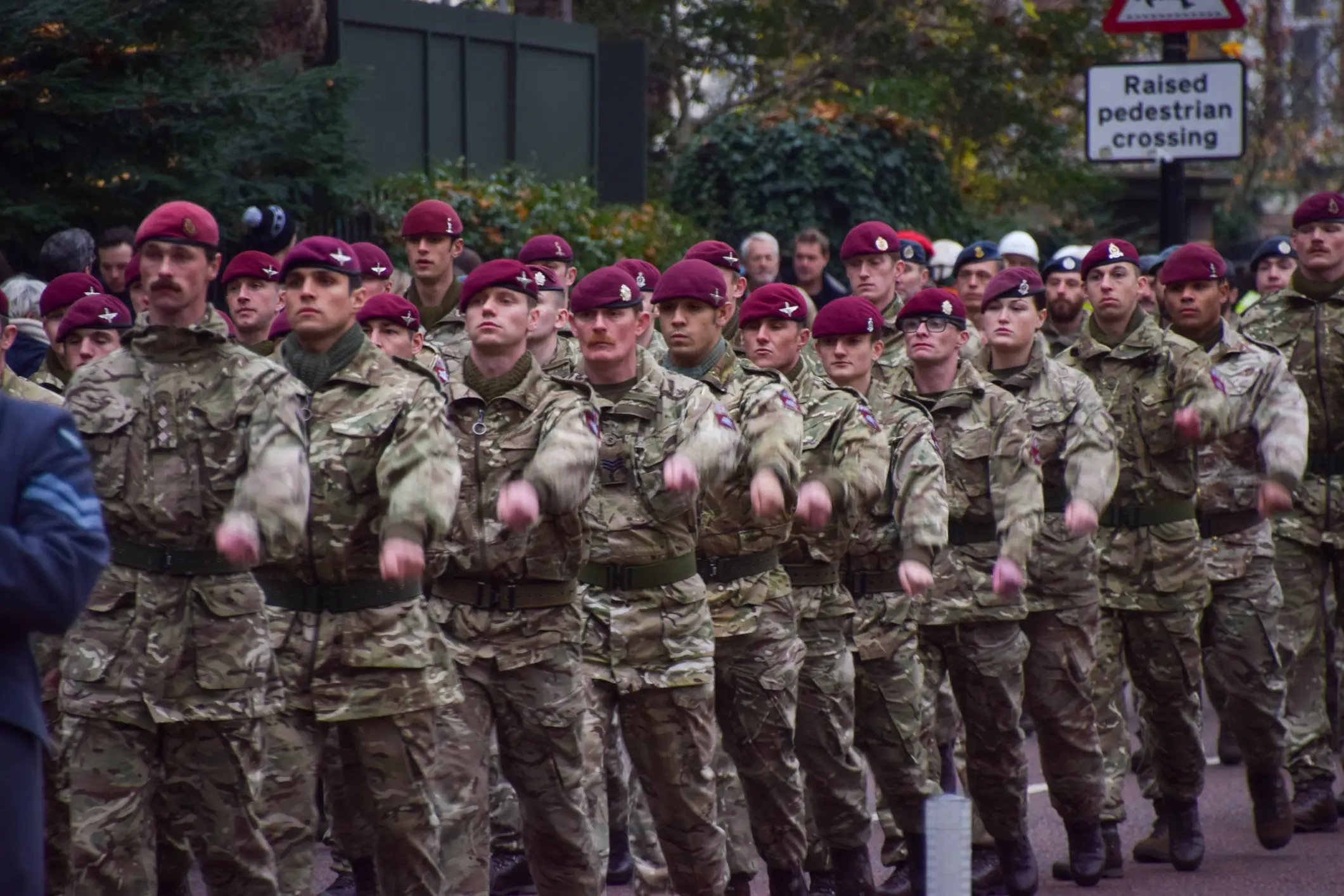
Robert Lyman, a retired Army major and military historian, claimed: “Our armed forces have never been so denuded of power since the Napoleonic wars.”
He said that the UK is now in a 'much worse' position than it was when World War II broke out, as he claimed that it's 'really hard to describe how poorly-prepared we are'.
“We all talk about the need for technology and how cyber and drones will win the next war. All of that is palpable nonsense.
“The way that wars are won are by mass of intelligence, infantry, armour and artillery, well-coordinated using technology to assist them.”
He said that 'small armies' won't win wars, urging for action to be taken as 'the Government is doing nothing' about the fact that the nation is 'uniquely ill-defended'.
Topics: Keir Starmer, Donald Trump, Russia, UK News, Army
 Joshua Nair