
Sir Keir Starmer changed the way people will buy and sell houses before resigning as PM

Keir Starmer announced his resignation as the UK's prime minister yesterday (22 June) as he laid out a timetable for his departure, but he'll have done something for people buying and selling houses before he goes.
Never one to talk very much about what he was doing as prime minister, which may be part of the reason he's leaving Downing Street, Starmer's government last week (19 June) announced a package of reforms to make buying or selling your house less stressful.
Unfortunately for him that was also the day the results of the Makerfield byelection which put Andy Burnham back in the House of Commons were announced, so nobody was paying much attention.
Burnham is likely to be prime minister before long, but before he does the ball has started rolling on reform to buying and selling houses designed to make it a less expensive and frustrating process.
Advert
Anyone buying or selling a house will know how damn annoying it is with all the costs and delays and the endless waiting for someone to talk to someone else.
Even if you do get a deal sorted there's the danger it all falls apart at the last minute because someone swoops in with a higher offer, or that happens somewhere else along your chain of deals which throws your plans sideways.
What's changing about buying and selling houses?
Those selling a house will need to provide a 'sales pack' when listing a property which must contain information about the condition of the house, any leasehold details and whether it's part of a chain.
Another change brings in new agreements which mean significant fines if a buyer or seller pull out of a deal with no reason, and also if a seller backs out of an agreed deal if someone else comes in with another offer.
Basically, things would get legally binding much sooner in the process and breaking the agreement would be costly for either party.
With the expected changes there's more information upfront for buyers, they can't be 'gazumped' by someone coming in with a higher offer without the seller paying a penalty, and neither can abruptly walk away from the deal without a cost.
These reforms were first announced in October last year and will come into effect by the end of the parliament, so they'll be in place by 2029.

How will the changes help?
According to the government it takes an average of 120 days to buy a home in England and Wales, and one third of sales fall through which costs people around £400 million a year and costs the economy around £1.5 billion overall.
The government claims their changes will save first-time buyers £650 in the process of buying a home, and bring down the time it takes to buy a house by around four weeks.
Rightmove says it actually takes even longer than the government's estimates to buy a house, as their own projections put it at 170 days on average, though their figure for deals falling through is closer to one in five than one in three.
They also reckon that around £900 million worth of stamp duty receipts and estate agent commissions were lost because deals fell through.
Their CEO Johan Svanstrom said: "This is an encouraging step towards a faster and more efficient property market, addressing some of the biggest frustrations that home-movers and industry participants face.
"By making more information available upfront, there is a clear opportunity to reduce fall-throughs and increase transparency."
Speaking about the plans, Starmer said: "Getting the keys to a home you can call your own is one of the biggest events in anyone’s life.
"But right now, the system that should provide support instead turns it into a battle, leaving people in limbo and putting that opportunity out of reach.
"We’re turning the page. Our reforms will bring this outdated process into the modern age, saving people time and money, and giving them the certainty they deserve.
"This is about building a stronger, fairer Britain, one that works for the next generation and makes the dream of home ownership a reality for many more hard-working people."
Time will tell if that turns out to be the case.
Keir Starmer’s road to resignation: a timeline
Starmer’s premiership has been controversial from the off, in a government rife with U-turns on issues like the two-child benefit cap and pensioners’ winter fuel allowance.
But this is when the writing was truly on the wall for Starmer:
20 December 2024
Starmer appoints Peter Mandelson as the UK’s ambassador to the US, a decision he will come to regret.
28 January 2025
We didn’t know this at the time, but on this date, UK Security Vetting (UKSV) advises that Mandelson should be denied security clearance. The following day, the Foreign Office decides to ignore UKSV’s guidance.
1 July 2025
Starmer is forced into a significant U-turn on plans to cut welfare payments, and 49 MPs still vote against the amended bill. It’s the biggest rebellion of Starmer’s premiership, and exposes tensions between Labour MPs and No 10 which aren’t going to go away.
10 September 2025
Bloomberg publishes emails from Mandelson to Jeffrey Epstein advising him to ‘fight for early release’, sent in 2008, the day before he reported to jail after being convicted of soliciting prostitution from a minor.
11 September 2025
Mandelson is sacked as US ambassador. That month, the Labour Party conference is dominated by rumours that Manchester mayor Andy Burnham is looking to mount a leadership challenge.
25 January 2026
Burnham is blocked from standing as an MP in the Gorton and Denton by-election, leading to further unrest within the Labour Party
30 January 2026
The US government releases the largest tranche of documents relating to Epstein so far. Emails within the files suggest Mandelson passed on sensitive government information to Epstein, and lobbied the Treasury on his behalf during his tenure as business secretary in Gordon Brown’s government. Labour MPs are furious about the revelations.
23 February 2026
Mandelson is arrested on suspicion of misconduct in public office.
7 May 2026
A disastrous polling day for Labour, the worst local elections result for the party on record, losing almost 1,500 councillors in England, with Reform making huge gains.
9 May 2026
Labour MP Catherine West demands that a cabinet minister challenge Starmer for the leadership, or she will herself. She later backs down.
11 May 2026
It’s widely reported that four senior cabinet ministers, including Home Secretary Shabana Mahmood and Foreign Secretary Yvette Cooper, are telling Starmer to set out a timeline for his departure. Meanwhile, nearly 80 Labour MPs are thought to have signed Catherine West’s letter demanding Starmer resign. Starmer delivers a speech saying he’s ‘not walking away’, while admitting: “The British people are tired of a status quo that has failed them.”
12 May 2026
Four ministers - Jess Phillips, Miatta Fahnbulleh, Alex Davies-Jones and Zubir Ahmed - resign and call for Starmer to step down.
13 May 2026
Health Secretary Wes Streeting attends a meeting at Downing Street, which lasts just 20 minutes. His allies expect him to resign and launch a leadership contest.
14 May 2026
Streeting quits and calls for Starmer to resign. In his resignation letter, Streeting writes: “It is now clear that you will not lead the Labour Party into the next general election and that Labour MPs and Labour Unions want the debate about what comes next to be a battle of ideas, not of personalities or petty factionalism.
“It needs to be broad, and it needs to be the best possible field of candidates. I support that approach and I hope you will continue to facilitate it.”
Makerfield MP Josh Simons stands down so Burnham can ‘fight to re-enter Parliament’.
Mid-late May 2026
Leadership speculation intensifies as attention turns to Starmer's potential successors, including Andy Burnham, and other senior Labour figures.
17 June
Speaking at the G7 summit in Evian, Starmer says he ‘intends to fight in any challenge to my leadership’.
He tells the BBC: “I don't think there should be a challenge, because I think that is a bad thing for the country.”
19 June
Burnham wins the Makerfield by-election and becomes an MP again. He says he will set out a ‘new path for Britain’.
Starmer congratulates Burnham but urges Labour to ‘pull together’ and avoid ‘turning on each other and tearing apart our party’. Starmer says that he ‘will stand’ if a leadership contest is triggered, adding that he will not ‘walk away’.
According to the BBC, Transport Secretary Heidi Alexander advises the PM to set out a timetable to leave office.
Labour MP Jo White says Starmer should ‘consider his position very, very carefully’ and announce a ‘smooth transition’ on Monday (22 June).
21 June
US President Donald Trump chimes in and says Starmer ‘will resign’ in a post on Truth Social.
“He failed badly on two very important subjects - IMMIGRATION AND ENERGY (OPEN NORTH SEA OIL!),” he writes. As per the BBC, No. 10 says Starmer has not spoken to Trump.
22 June
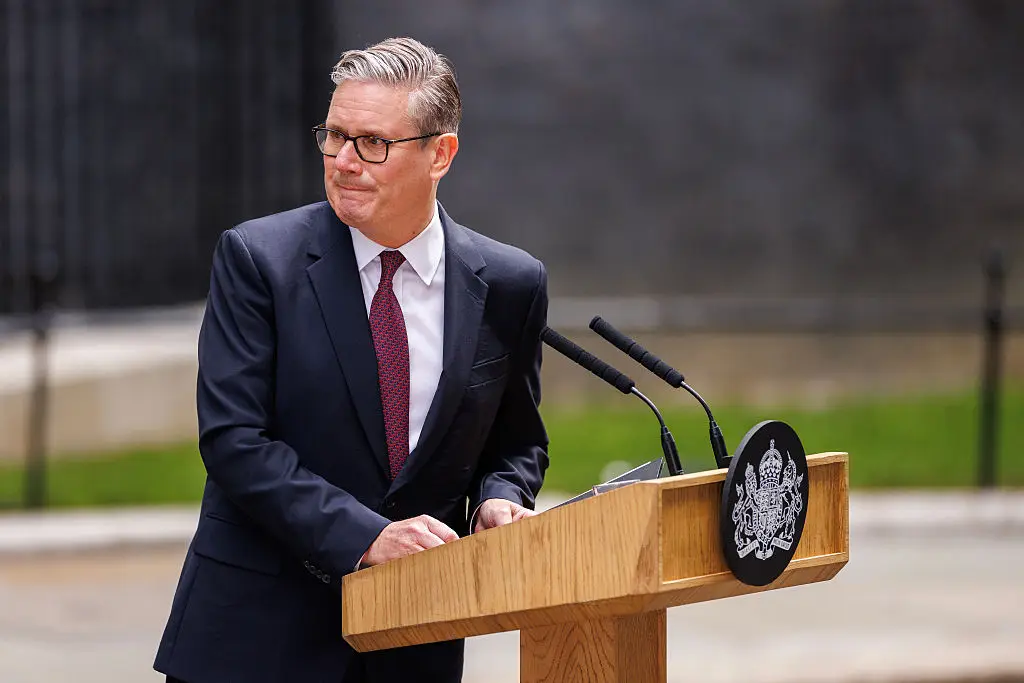
Starmer announces his resignation as Prime Minister and leader of the Labour Party. Standing outside No 10, he says that becoming PM two years ago had been the ‘proudest moment of his life’ and talks about the ‘hard work of change’, listing off some of the achievements of his government during that time.
Topics: UK News, Home, Politics, Keir Starmer
 Joe Harker