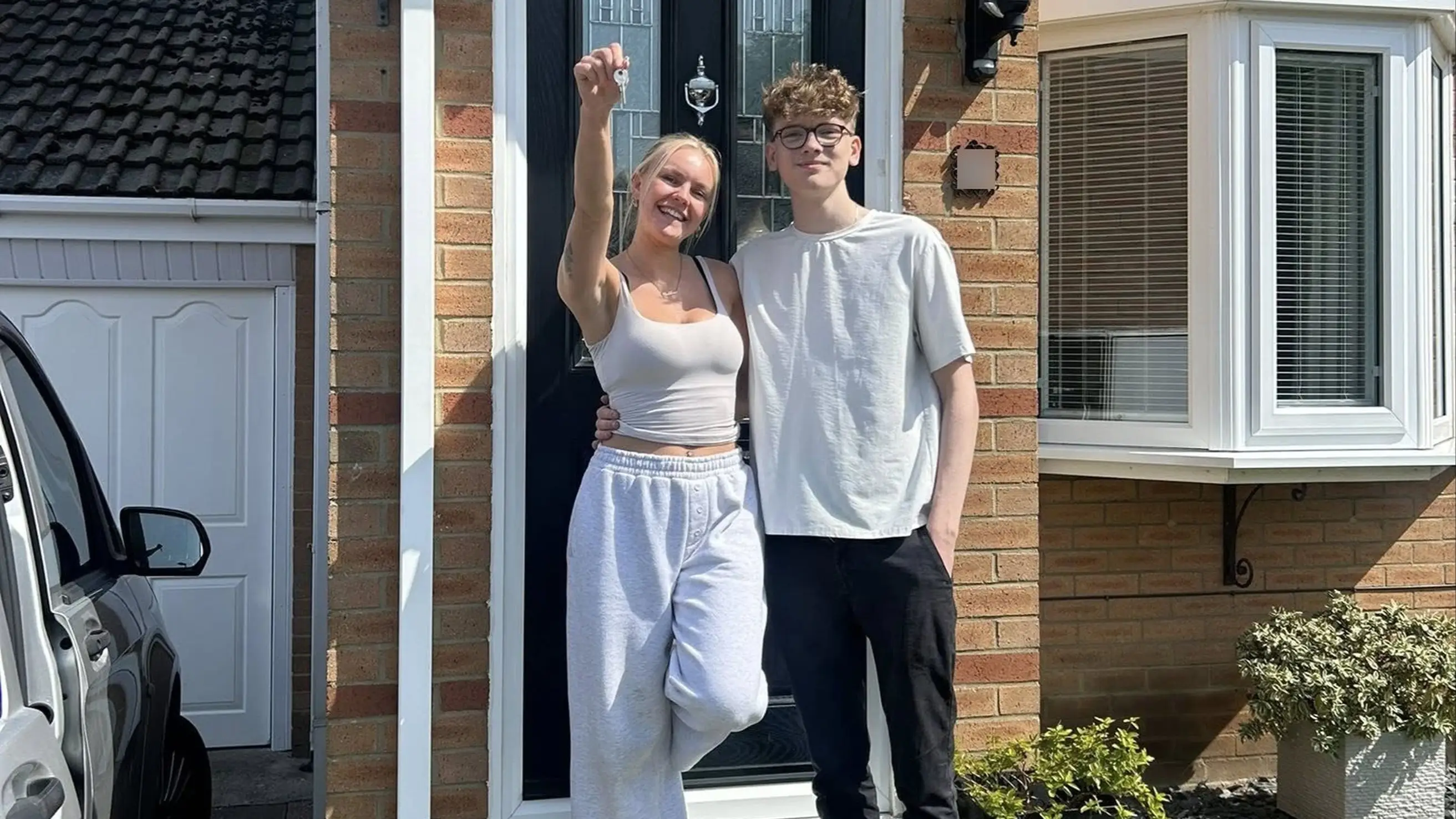
Couple buy first home at just 19 using simple trick despite eating takeaway three times a week

A teenage couple have bought their first home thanks to one simple trick, while still treating themselves to takeaways three times a week.
The Cost of Living Crisis continues to impact the United Kingdom, with the majority of Brits feeling the pinch.
Inflation rose by 0.3 per cent in the 12 weeks leading up to May, while the number of job vacancies across the country fell to a five-year low in the same period.
The Office for National Statistics (ONS) reports that the number of available roles dropped by 19,000 to just 707,000.
Advert
Young people have found it especially tough to find jobs, leading to the number of NEETS – young people Not in Employment, Education or Training – in the country to rise to over one million.
It's no wonder savvy operators are switching bank accounts to pocket free cash welcome offers, or that a proposal for under-40s to receive a £12,500 early pension payment was met with such excitement.
There are other tricks young people can use to their advantage, too, like a government Lifetime ISA (LISA), which one teenage couple used to help buy their first house aged just 19.

How a teen couple bought their first home
Childhood sweethearts Millie Atherton and Alfie Boardman, both aged 19, moved into their two-bedroom, semi-detached home in Seaham, Durham, in May.
Though they were fortunate enough to receive help from family members and lived rent-free with Millie's payments, they still saved an impressive £10,000, which was then topped up with the LISA and from support, to be approved for a mortgage on their £150,000 house.
Alfie, an IT apprentice, explained that the couple aren't 'big spenders' so were able to squirrel away the cash while still indulging on multiple takeaways a week.
The teenager said: "We're not big spenders, we don't really go on dates. Occasionally we will, but we don't really go to fancy places.
"The most money we spent on was takeaways. We're not big on purchasing things - I rarely buy clothes.
"When we were saving, we weren't doing it that strictly, we didn't cut down on takeaways. We got takeaways two or three times a week."
"We do go out occasionally drinking and socialising with friends around twice every month. When it got closer to the point of actually buying a house, we decided to budget ourselves on a night out because before we would just do what we wanted.

"£100 was roughly the budget for both of us on a night out. We didn't put an actual figure on it but just said to limit ourselves a bit."
The couple decided early on to save up while they could rather than rush into the renting market, putting a large portion of their combined £2,500 monthly income into the piggy bank.
"We came to the conclusion that renting would just be throwing money away. We saw it as we would be paying someone else's mortgage," Alfie added.
Trainee hairdresser Millie put half of her weekly wage into her LISA, which gives savers a 25 per cent bonus when using the money to buy their first house.
She explained: "I get paid weekly and every week, I put away 50% of my wage. The rest of the money went on food, takeaways and our cars."
Though the couple acknowledge the support from family members, they have urged others to avoid renting in favour of buying outright.
"[Our family] knew how much we loved the house and didn't want us to lose it, we were proud of how much we did manage to save," Millie said, while Alfie added: "We had the 5% deposit ready to go but when we found out we needed a 10% deposit, we needed some help so we were very fortunate to have support from family members.
"My advice to other people is I wouldn't go with renting, I would look into buying a house. If you get on the property ladder, you're already winning."
What is a Lifetime ISA
A Lifetime ISA is not just used to help people save up for deposits on their first homes, like the now defunct Help to Buy ISA.
Instead, they can also be used to save for later in life, and the government will add a 25 per cent bonus to the savings, up to a maximum of £1,000 a year.
A saver can place £4,000 into a LISA a year until they turn 50, but a first payment must be made into it before they turn 40.
Stocks and shares can be held in a LISA, as well as cash or a combination of the two.
When a person turns 50, they will no longer be able to pay into their LISA or earn the bonus, but the account can remain open and the savings will still earn interest or investment returns.
 Daniel Murphy