
Dad left with 'necrotic' rotten finger after being bitten in dead of night

Warning: This article contains graphic images which some readers may find distressing.
A dad has urged people to realise how dangerous cat bites can be after he was left with a 'necrotic' finger when a stray attacked him in his own home.
Dan Perry claims that his mental faculties and ability to speak started to slip in the days following the incident on 7 October - which left him needing a staggering six surgeries in total.
The life coach, 48, explained that he heard something go bump in the night while in bed with his wife Suki, only to find a random feline roaming around his home in Lambeth, South London.
Advert
A stray cat had somehow found its way inside their pad, and when Dan tried to gently escort it out in the early hours, it sank its teeth into his left index finger.
"We heard a noise and we knew it was a cat," he explained. "The cat ran upstairs. I didn't want to be chasing it all round the house so I picked it up and it bit me, really hard.
"I carried it downstairs while its teeth were still sunk into my finger. It clung on for around 20 or 30 seconds."

The father-of-two said he was left with a 'very deep puncture wound' which was 'really sore' - and he knew this injury was a lot worse than when his own cat simply 'nips' him.
Dan was also aware that there is a high risk of infection from these kind of bites as cats mouths harbour a ton of bacteria, so he took himself to A&E to get checked out.
Medics at King's College Hospital then cleaned the wound and sent the dad home with some antibiotics, while Dan also dosed himself up with painkillers to combat the agony he was in.
"But the next day, the pain reached a point where I couldn't think about anything else," Dan said, explaining that he then hauled himself to St Thomas' Hospital to seek further help.
Doctors discovered that he had been infected with pasteurella, a type of bacteria commonly found in animals such as chickens, turkeys, cattle, swine, cats, dogs and rodents.
UK government guidance explains that this can cause a serious soft tissue infection, abscesses, septic arthritis, osteomyelitis, meningitis, ocular infections, and respiratory infections in humans.
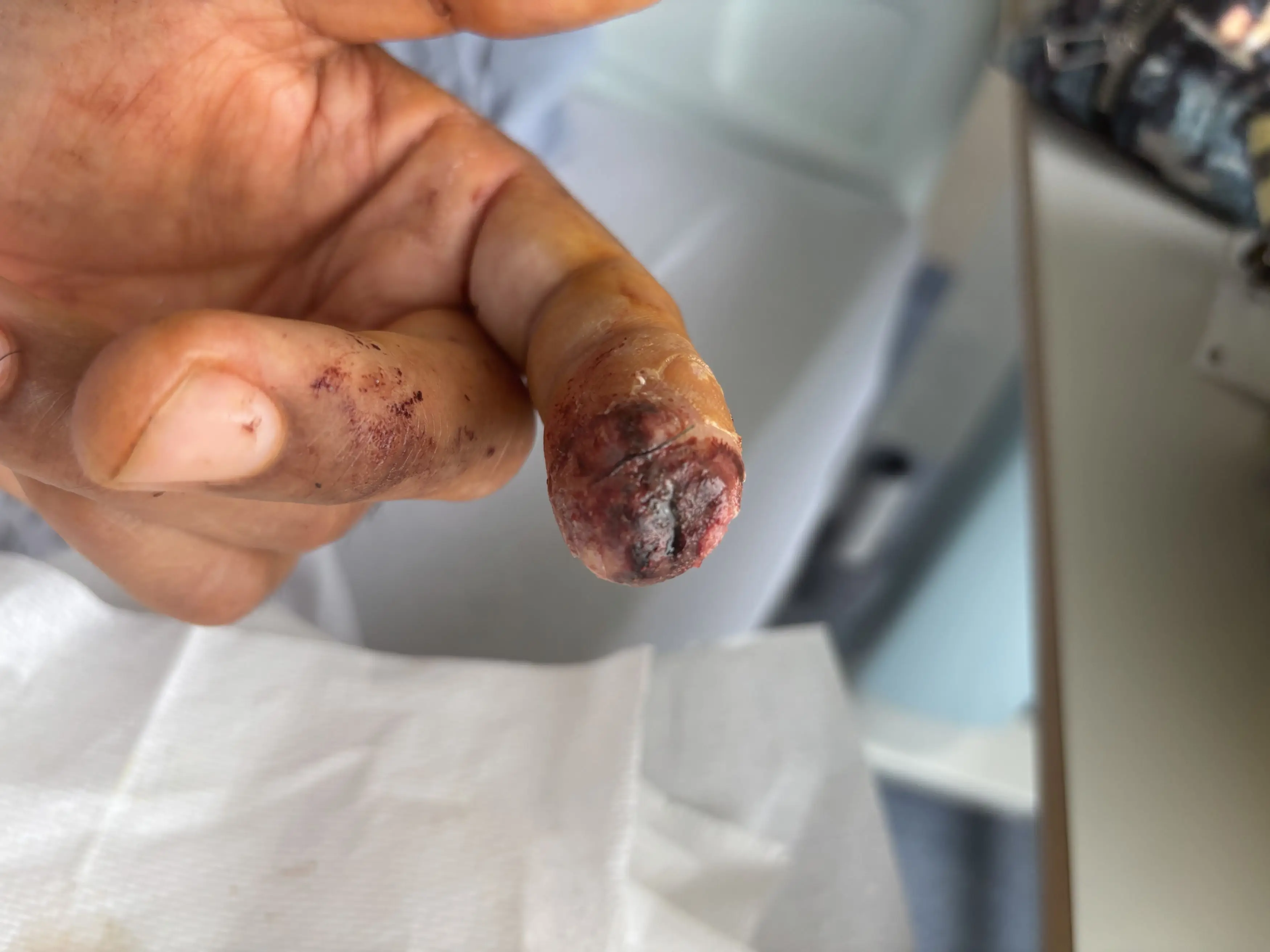
Dan then underwent a debridement procedure, which is a term that describes the removal of 'non-viable tissue' - AKA, the infected flesh - to help it heal.
Necrotic wounds harbour bacteria, increase the risk of sepsis and delay wound healing, according to the NHS, so it was a grisly but necessary step to help Dan get on the mend.
However, his ordeal didn't end there - as he ended up having to return to hospital for three further procedures over the next few days, as the infection had penetrated his finger a lot deeper than doctors initially thought.
"I was kind of scared," Dan admitted. "The pain was making me delirious, I was losing my cognitive ability and my ability to speak.
"Part of me thought, 'This is just a cat bite, there's nothing wrong with me'. But my finger was turning black and necrotic, it smelled bad, so the [doctors] kept sending me to have stuff cut away.
"They did one procedure in theatre, two in a procedure room and the other three were done in A&E. By the fifth procedure, it looked like I'd put my finger in a blender."
Veterinary experts at VCA Animal Hospitals explain that a cat's sharp teeth can easily puncture our skin - and these 'punctures quickly seal over', trapping bacteria underneath.
"All cats carry bacteria in their mouths that can cause tissue infections in bite wounds," it states. "An infected cat bite wound will be red, swollen, and painful.
"Depending on the location and depth of the wound, the bacteria can spread in the surrounding tissues, causing a condition called cellulitis. Bacteria can also distribute through the blood to other areas of the body, causing a condition called septicemia (often called blood poisoning).
"Infected people may suffer from fever and flu-like symptoms and, rarely, may die if proper medical treatment is not sought."
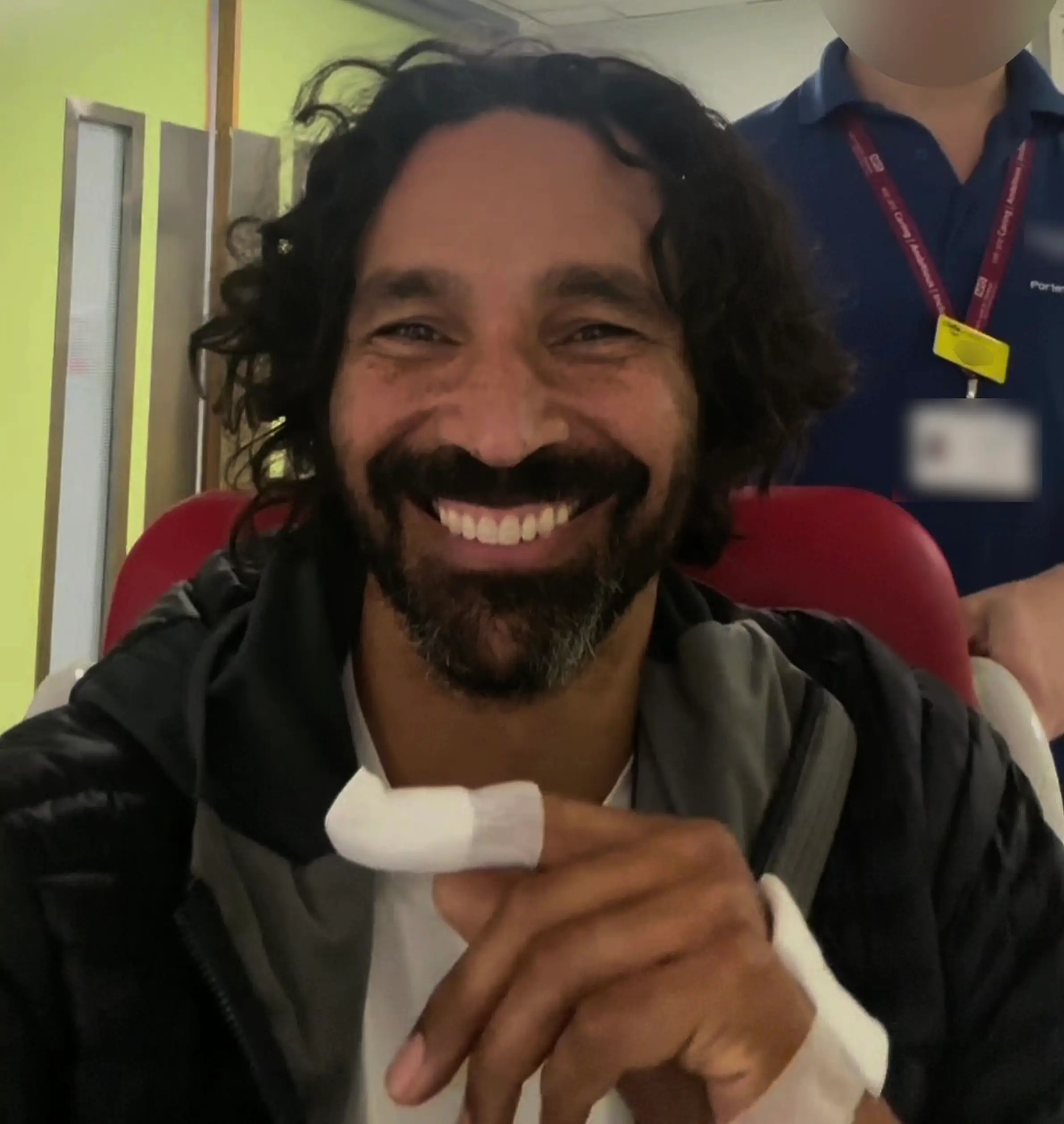
Now he's home and healing, Dan is urging others to get checked out immediately if they ever have a similar run in with a cat, while explaining why it is important to tell doctors how deep the wound is.
"There is a balance for doctors between cleaning the infection and not cutting more than they need to, which can cause more harm to the patient," he added. "So it's really important for the patient to inform doctors.
"If they can't find [the infection] and it's still really painful, maybe it's deep."
 Olivia Burke