Expert explains how attack could 'completely screw life in this country'

A few attacks on particular targets in the UK could cause serious damage according to a defence expert who has warned that 'some quite simple things could completely screw life in this country'.
The government has just got in touch with 100,000 military reservists telling them to 'prepare for war', with defence secretary Wes Streeting saying the UK needs to be ready by 2030.
Meanwhile, there have been growing warnings about a 'black sky event' that would knock critical infrastructure offline and the House of Lords National Resilience Committee recently warned in a new report that the UK is 'dangerously unprepared' for a crisis.
Francis Tusa, editor of Defence Analysis, told LADbible that things were even worse than that as he warned 'the UK has no resilience worth the name'.
Advert
He added that 'there's a belief that the home base will always be safe', which is not the case as he outlined how one attack could cause significant damage.
"You don't have to drop a nuclear weapon to destroy them"
Tusa said that near West India Dock in London there were a pair of windowless buildings where '80 percent of South East Britain’s internet traffic goes through'.
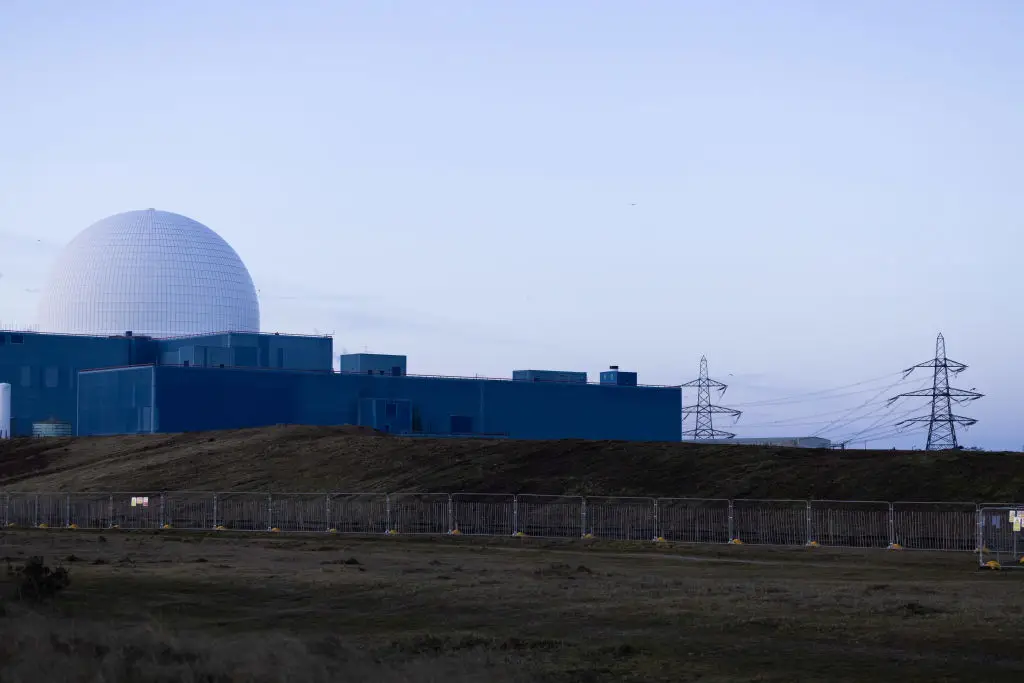
"You don’t have to drop a nuclear weapon to destroy them, what if you just mess with their power supplies," he said, describing a 'what if' scenario where an attack on the pylons taking power from Sizewell B to London were hit.
He noted that 'you could probably do it with 10 kilos of explosives' and it would cause a huge impact on the UK's ability to respond as it robbed London of a significant amount of power.
He said: "A lot of government communications go through those buildings, including MoD.
"‘Don’t worry, it’s all internet telephony’. Brilliant until someone takes out the internet. ‘Oh, that will never happen.’ Well, Musk was able to turn off Starlink."
The defence expert explained that the Russians are known to have captured medium-range drones from Ukraine and warned that if such weapons were used against the UK there's a risk 'we would not know about it until it impacted London'.
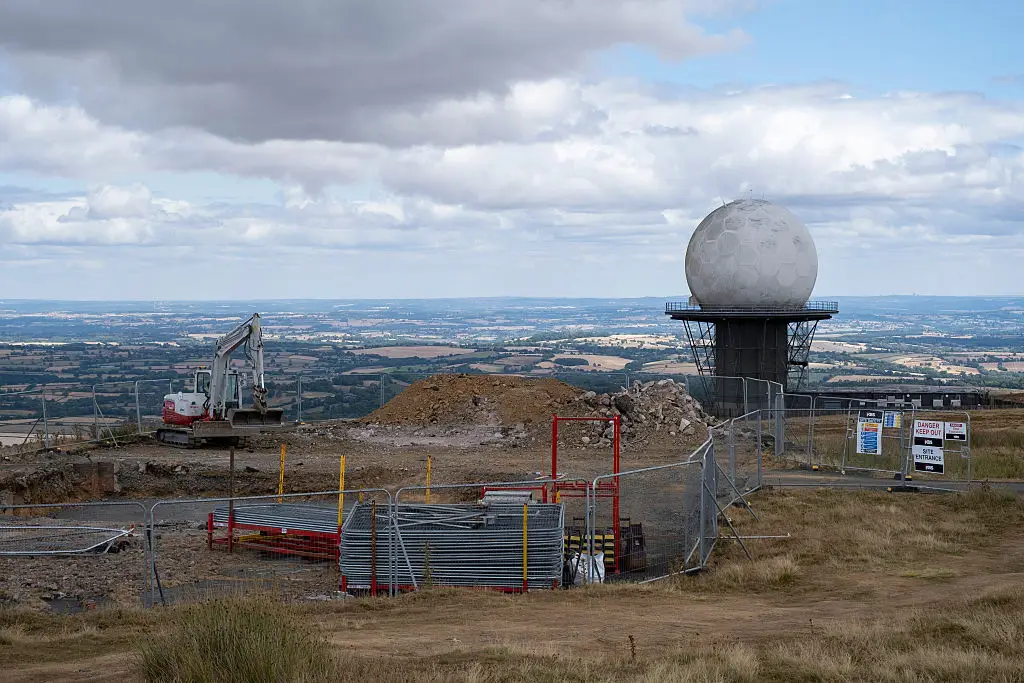
He said the UK's radar coverage wasn't sufficient to pick up an attack of this nature, and that other countries have struggled to detect the drones because 'they don't fly fast enough'.
"What do you do? ‘We know the Russians fired it’. Do you? You're not going to go to war on that are you," he said of the prospect of further 'grey zone' attacks, hostile actions being taken which aren't going to lead to an official declaration of war.
"We are [already at war]. There is war going on."
Tusa added that a lack of honesty with the public wasn't helping, as people would be likely to turn round and say ‘what do you mean you knew about this’.
He said: "As a home defender paranoia is a tool, not a weakness. You have to look around and just go ‘what is the worst that could happen’."
The '1,700km duvet'
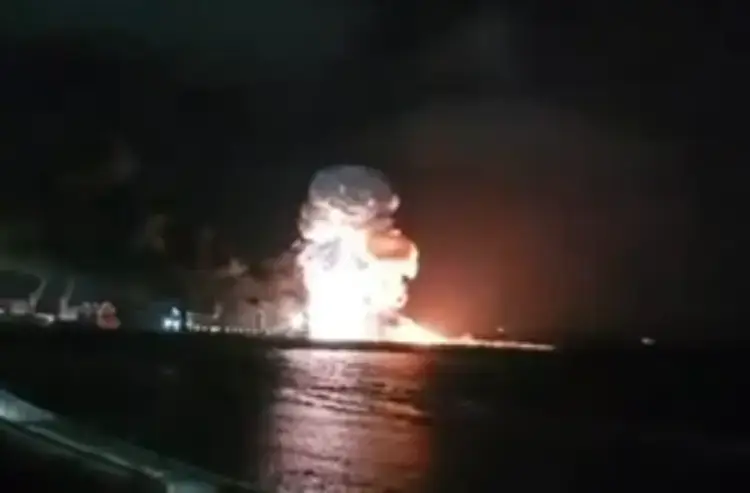
Pointing towards the long range of modern warfare, the defence expert explained that the Ukrainians demonstrating a capability to destroy Russian shipping far from their own country meant distance was no guarantee of safety.
He warned that if Ukraine could hit Russian shipping off the coast of Libya then Russia could target vessels off the UK coast, and described his concept of the '1,700km duvet' which lulled Brits into thinking they were safer than the reality.
"Basically, 1700km gets you to the closest bit of Russia to Britain," Tusa said.
"For the Russians to launch anything at us it would have to cross the Baltic states, then the Baltic, then Sweden, Norway, Denmark, Germany and the Netherlands. Then it has to cross the North Sea.
"Our allies will intercept anything fired at us so we don't need to bother. I’ve spoken to air defence gunners in Germany and Poland and said ‘okay, you spot a ballistic missile launching and it's going up, up, up, what happens’.
"It's the same for all anti-missile systems, it’ll say ‘we've now tracked this ballistic missile for eight seconds, oh, it's going to hit Britain’. I said ‘would you intercept it with one of your Patriots', and they go, ‘no, why? It's not going to hit us, is it?’
"The assumption is ‘don’t worry’. I call it the 1700km duvet, we’re snuggled up warm, snug as a bug in a rug 1700km away from the closest bit of Russia and we believe nothing can hit us."
"I think conscription is inevitable"
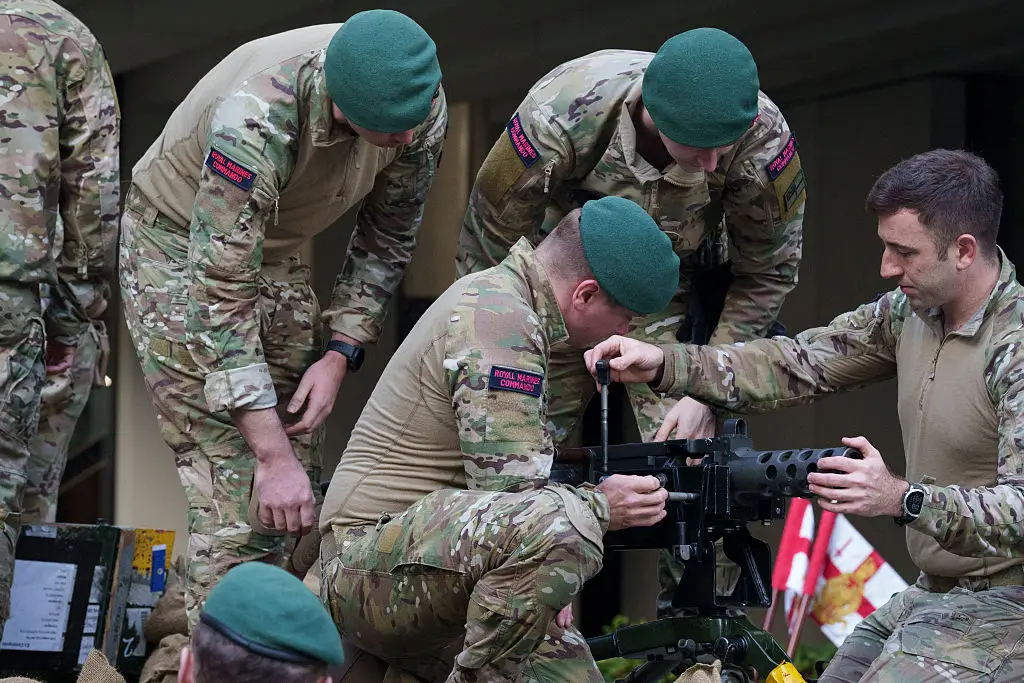
While the UK government has said it has no plans for conscription Tusa believes it is 'inevitable', though not in the way many people might expect.
The defence expert said you shouldn't think of it like the World War Two model and if the UK ever does it then it'll look more like the Nordic models where they wait for people to volunteer first.
He suggested a civilian national service done right could help build UK resilience and free up military personnel for the things they need to be doing.
"What if you had a national service where you don’t wear camo, you don’t have weapons, no shooting required at all, but you do first aid, rescue and associated skills using drones for surveillance stuff and whatever," he suggested, adding that countries like Norway sweeten the deal by making service a 'golden ticket' that gives someone priority for state jobs afterwards.
Besides, even if the UK tried to press huge amounts of young men into military service Tusa warned that there aren't enough uniforms and weapons for them.
Explaining that equipment procurement was 'all done on last minute retail basis', he added that the UK already doesn't have enough rifles for all military personnel and reservists so there wouldn't be enough guns if there was conscription.
 Joe Harker