
Omega ‘heatwave dome’ has killed at hundreds as Europe swelters in record temperatures

Anyone living in Western Europe doesn't need to be told that it's currently unbearably hot outside.
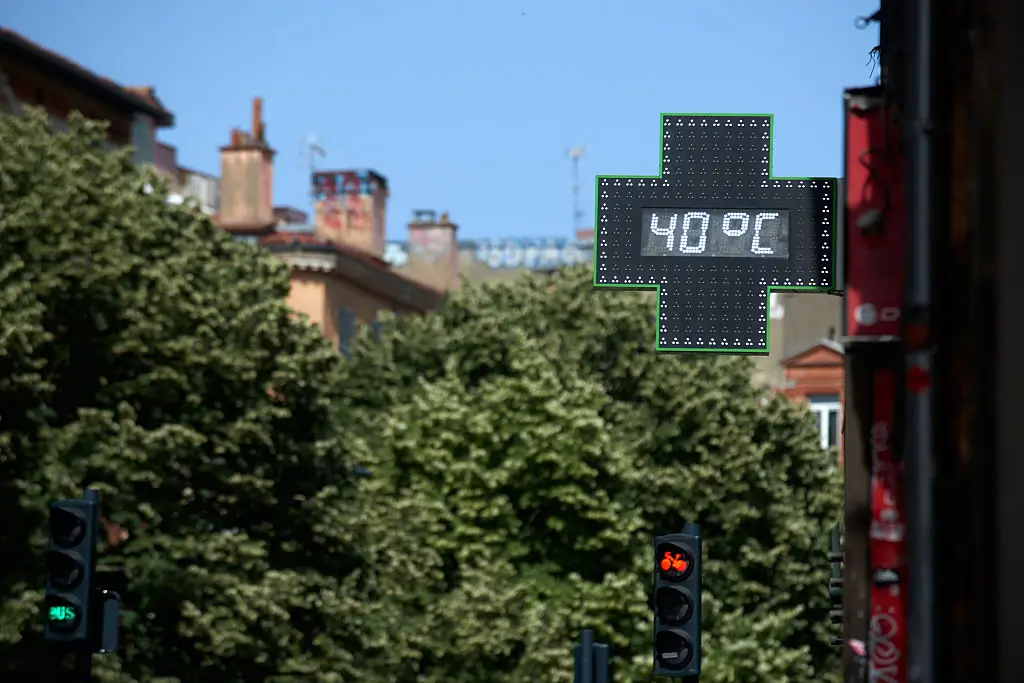
The continent is currently gripped by a sweltering 'Omega block' heatwave, with yesterday (24 June) seeing the UK record its hottest ever day in June, after the mercury tipped 36.1 °C in the south of the country.
Not quite the same levels as in 2022, when a town in Lincolnshire hit 40.3 °C, but when your entire infrastructure is designed around keeping heat in, it's still uncomfortably hot.
The Met Office has placed significant parts of the country on red and orange heat warnings, while regions of France and Spain have recorded highs of 42 °C in Bordeaux (potentially as high as 44.3 °C in nearby Pissos) and 42.5 °C in Bilbao.
Advert
Meanwhile, the French capital came close to recording a temperature of 41 °C, as the French national weather service placed half of the country under a red alert.

Heatwave may have killed hundreds
The punishing temperatures across Western Europe has led to a spike in heatwave-related deaths, with Reuters reporting that 48 people have died of drowning in France, after trying to cool off from the extreme heat.
Meanwhile, two children - aged two and four - died from heat-related health complications in their parents' car in southeast France. Earlier today, AFP reported that a three-year-old child had died in similar circumstances in a car in the Paris region.
Weather agency Meteo-France has also warned that the heatwave conditions could be comparable to those of the August 2003 heatwave, which lasted for 16 days and caused as many as 72,000 people across the continent, with between 14,802 to 19,000 of those deaths occurring in France alone.
Over the border in Spain, data collected by the Daily Mortality Monitoring System (MoMo) of the Carlos III Health Institute revealed that 212 deaths between Monday and Thursday could be linked to the spike in temperature.
Spain's national weather agency AEMET, also confirmed that two elderly people had died of heatstroke.

Back in the UK, a climate change event aimed at discussing adaptation to increasing temperatures was cancelled due to the extreme heat warning.
The Foreign Office has also updated its advice for Brits travelling to Spain, France and Portugal over the next few days.
What is a 'heat dome', explained
The current heatwave is being described as a 'heat dome', but what does that mean?
According to ClimateCheck, a heat dome occurs when warm air is pushed to the surface and trapped there for an extended period of time.
This is caused by a build-up of high pressure in the jet stream, causing hot air to be compressed downwards. The heated, compressed air also limits cloud formations, further heating the ground.
"The heat dome is really what the jet stream is doing," Jennifer Francis, a climate scientist at the Woodwell Climate Research Center, told PBS.
"The heat wave is what we feel at the surface."
The Telegraph added that the current type of heatwave is referred to as an 'omega block', which earns its name through resembling the greek symbol, as hot air is drawn up from the Sahara while cooler air is kept out.
The 'omega block' style heatwave is considered to be particularly deadly, and responsible for the prolonged 2003 spike in temperatures.
Meanwhile, the BBC explained that the June heatwave feels more oppressive than the one in May, as the centre of the heat dome originated in hot and humid regions before centring over France, forcing temperatures above 40 °C.
Humidity also plays a role in how dangerous a heatwave can be, with a higher humidity making it harder for the body to cool down.
Topics: UK News, World News, Europe, Health
 Brenna Cooper