Alleged Penn State drug ring busted after students made 'obvious' mistake

14 people have been charged in connection to an alleged cocaine trafficking ring authorities believe largely involved students at Penn State University, and were able to catch them thanks to an 'obvious' mistake.
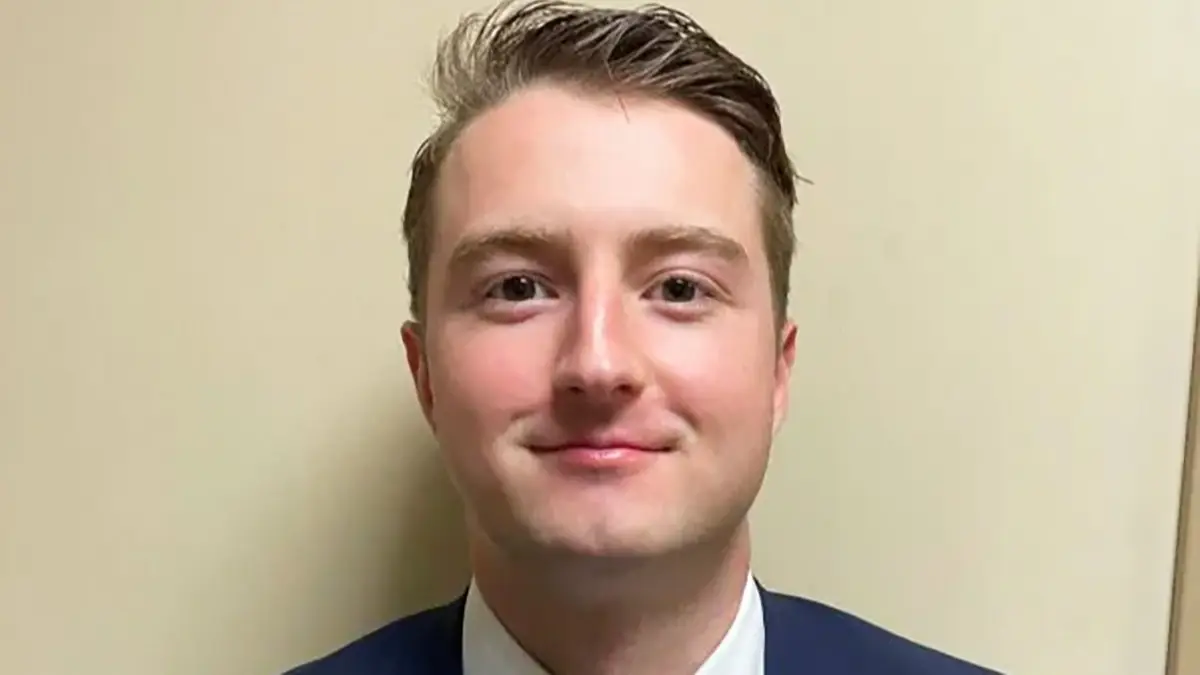
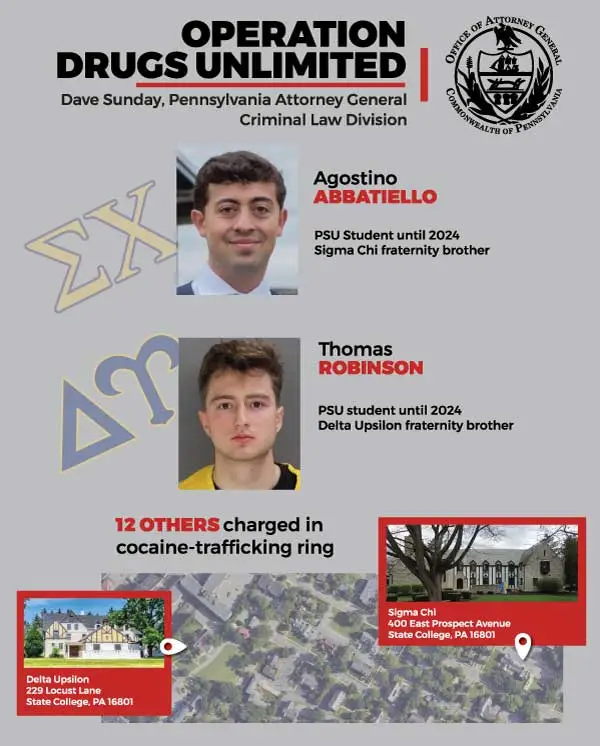
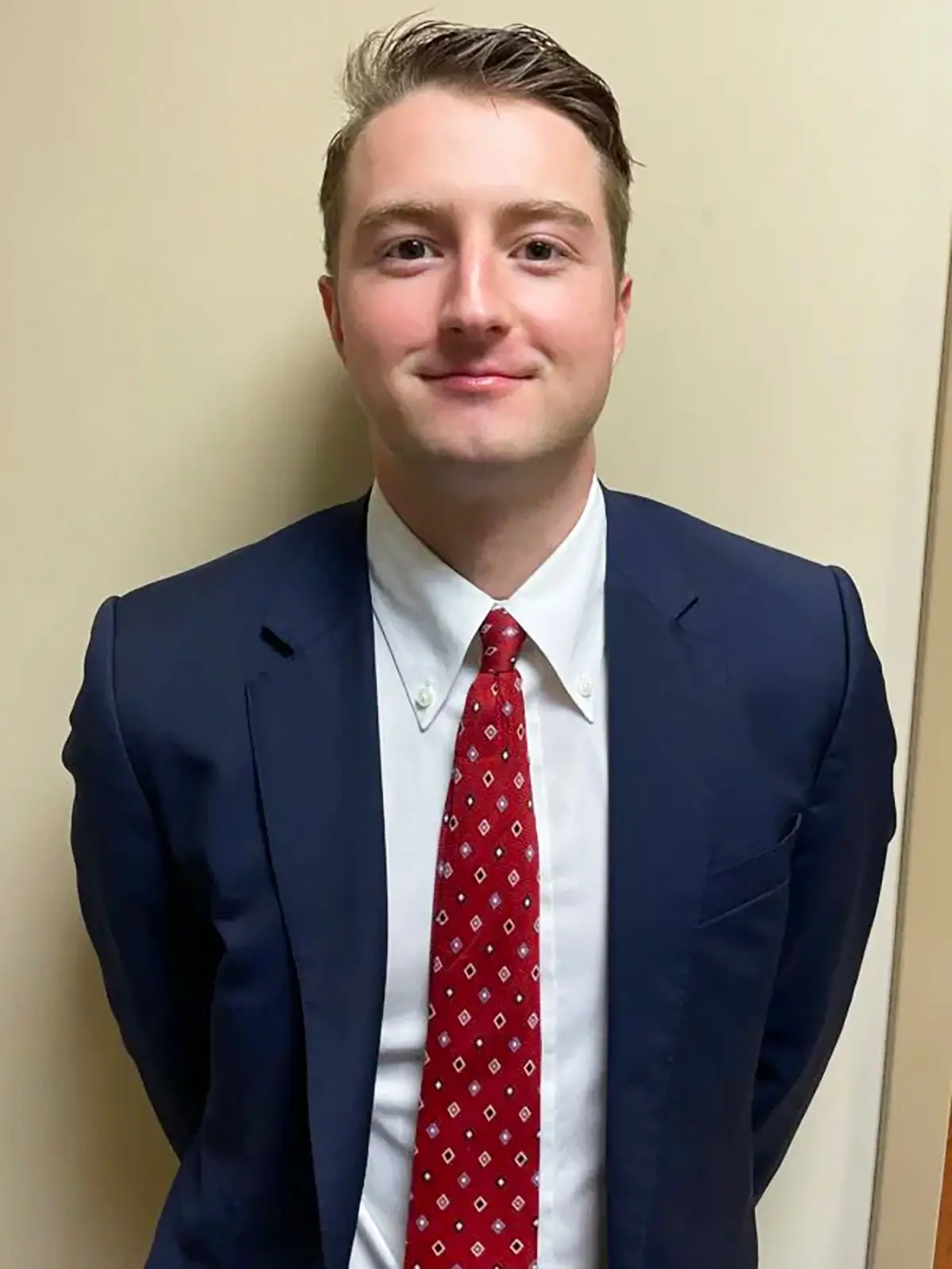
Investigators claim that Agostino Abbatiello and Thomas Robinson would make journeys to Philadelphia and New York to buy large amounts of cocaine, then return to the Pennsylvania university.
It is alleged the cocaine was taken to the Delta Upsilon and Sigma Chi fraternity houses, where it was packaged before being sold, primarily to students at Penn State University.
According to Pennsylvania attorney general Dave Sunday, Abbatiello, Robinson, Mohammed Hurabi and Lars Zeepvat have been charged with felony corrupt organisations, conspiracy, dealing in proceeds of unlawful activity, and related offences.
Advert
Robert Zanolla has been charged with felony conspiracy and criminal use of a communication facility, while eight others who were also students between 2023 and 2024 when the alleged wrongdoing occurred have been charged with misdemeanour counts of possession and paraphernalia.
Charges of tampering with evidence and hindering the investigation have also been brought against the father of a student.
NBC reports that court documents indicate the alleged drug ring was exposed after one of the members made an 'obvious' mistake, as Thomas Robinson is claimed to have been caught accepting Venmo payments for drugs via an account using his own name.
According to court documents, police had been told that a man going by the name of 'T-Rob' was selling cocaine from the Delta Upsilon house, and this 'T-Rob' was allegedly accepting payments with an account under the name 'Tom Robinson'.
Police raided the frat house in 2024 and Robinson is alleged to have resisted arrest because he initially thought officers raiding the building 'were his fraternity brothers playing a prank on him'.
This one was definitely not a prank, as court documents say the student ended up being tasered and arrested, a search of his room allegedly resulted in the discovery of eight grams of cocaine, eight ounces of cannabis and over 200 amphetamine and dextroamphetamine pills.
A handgun was also allegedly found in the bedroom.
Sunday said in a statement: "This was a coordinated and highly-profitable drug-trafficking crew revolving around two senior members of the fraternities, other fraternity brothers, and pledges.
"In fact, according to the evidence uncovered, cutting and packaging cocaine was, for some pledges, an indoctrination into the fraternities.
"This is very serious criminal conduct. There was nothing junior or childlike about this type of conduct. This was an upper level trafficking organization for this region in Pennsylvania."
Penn State's response
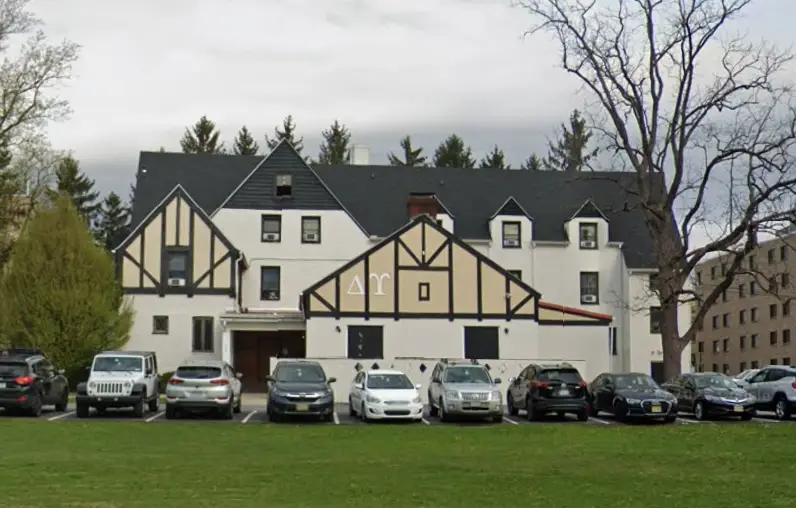
Andrea Dowhower, Penn State University's vice-president for student affairs, said in a statement: "We are horrified by these serious allegations against current and former students.
"Criminal activity, including hazing, such as this has no place at our institution, and we will cooperate with law enforcement in any way we can.
"We will continue to enhance our efforts around health and safety and hazing educational efforts for all our organisations."
The university said that when criminal charges were brought against students or a student organisation, their Office of Student Accountability and Conflict Response holds its own investigations.
It added that Delta Upsilon has been placed on 'interim suspension', while 'Sigma Chi is not a recognised organisation and operates outside of the University's support and oversight'.
Disciplinary action they can issue independent of the law includes permanent separation from the university.
 Joe Harker