Chilling parallels between Russian plague outbreak and how Covid pandemic began

Experts have highlighted alarming parallels between the start of the Covid-19 pandemic and an outbreak of plague in Russia.
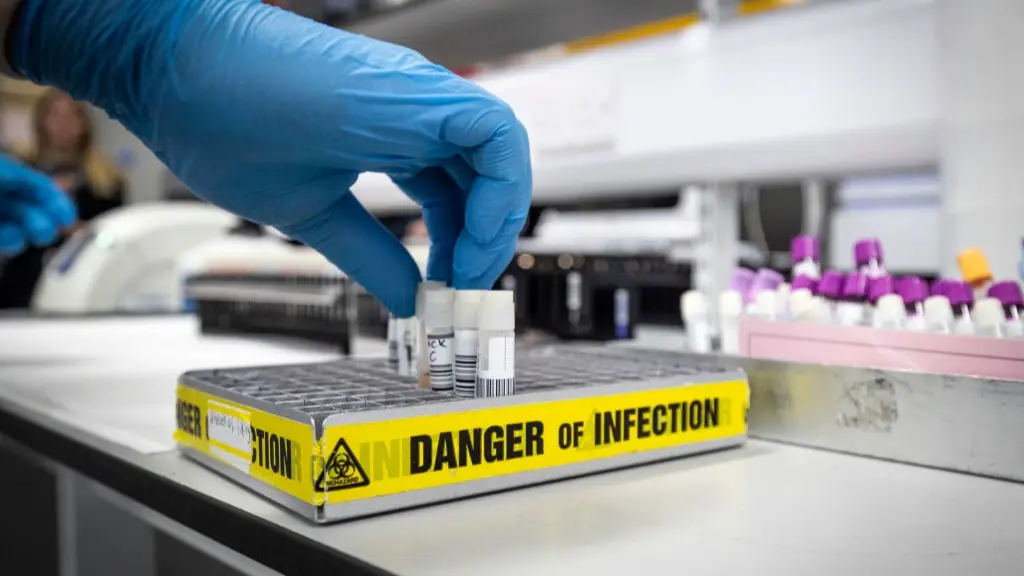
A 28-year-old lab worker named in local media reports as Daria Shipilova is reported to have died of pneumonic plague after accidentally breaking a test tube filled with the bacterium Yersinia pestis, which causes plague.
Shipilova was taken to hospital on 29 September, where she received treatment for pneumonia, but sadly died two days after being admitted.
Almost 200 people are believed to have had contact with Shipilova, and measures are reportedly being put in place to contain the outbreak, though due to suppression of the press in Russia more precise information is difficult to find.
Advert
Shipilova had worked at the Antiplague Research Institute of Siberia and the Far East, which is located at the city of Shelekho in the Irkutsk region.
Hamish de Bretton-Gordon was formerly the commanding officer of the Joint Chemical, Biological, Radiological and Nuclear Regiment in the UK, and warn that Russia's lack of transparency may mirror that of the start of the Covid-19 pandemic, which started in China.

“The Russian authorities have clammed up and lots of social media posts have been withdrawn," told The Telegraph. "We know what happened when Covid emerged. The Chinese clammed up, four million people left Wuhan and the disease spread around the world.”
de Bretton-Gordon also raised concerns about the measures which were being put in place at the laboratory as well, saying that there should have been precautions in place to prevent someone in Shipilova's job being vulnerable to the condition.
“For a lab technician working with plague to die from plague is extraordinary," he said. "She should have been vaccinated, there should have been medical countermeasures."
The opacity of the Russian authorities around the incident has also meant that the basic facts around the outbreak are still not clear.
Filippa Lentzos, is a biosecurity expert at King’s College London, and said: “Russian authorities seem to be denying that the woman died of plague or that there was a laboratory accident. So the basic facts are not yet settled.”

Igor Kobzev, the regional governor of Irkutsk, said on Monday that an expert commission found that Shipilova's cause of death was 'pneumonia of undetermined aetiology', adding that the investigation had said that 'no microorganisms linked to the young woman’s professional work were found in her biological samples'.
All three forms of Plague are caused by the bacterium Yersinia Pestis, though the form of plague varies depending on how it is spread and the part of the body it affects.
Pneumonic Plague is a rare but extremely dangerous form of plague affecting the lungs, with the other two types being Bubonic Plague, which is spread by infected rodent fleas and affects the lymph nodes, and Septicaemic Plague which affects the blood.
While Pneumonic Plague is rarer than Bubonic Plague, UK heath security guidance advises that it is almost always fatal when not properly treated, and even when treatment is started promptly it it fatal around 30 percent of the time.
Pneumonic Plague can be come about as a development from a case of Bubonic Plague, but is more commonly contracted by inhaling infectious particles.
Topics: World News, Health, Russia
 Kit Roberts