
Why possible pneumonic plague outbreak could look very different to Covid as fears grow

After the trauma of the Coronavirus pandemic back in 2019, many fear the worst when they hear about a potential outbreak.
Darya Shipilova, an employee at the Anti-Plague Research Institute in Shelekhov, died recently after she was exposed to plague bacteria, having broken a test tube in the lab where she worked.
Although her cause of death has not yet been 100 per cent confirmed, the 'live bacteria' inside the test tube has got a lot of people concerned, especially considering the severe pneumonia of an 'unknown origin' which she was suffering from in hospital before she passed away at the end of September.
The word quarantine is enough to strike fear into our hearts and we would be right to be worried if the outbreak was indeed 'pneumonic plague', as several outlets are reporting this week.
Advert
The US are said to be aware of the situation but considering the survival rate is near zero without treatment, it could cause devastation if it does turn into a full-blown pandemic, with emergency antibiotics often the only hope of preventing death.

Dr Simon Clarke, associate professor in cellular microbiology in the School of Biological Sciences at the University of Reading, has allayed fears somewhat with his expert commentary, where he highlights exactly how this potential outbreak would be very different to what we all saw seven years ago.
He said: "Reports from Russia have inevitably drawn comparisons with Covid-19, but it is important to remember that pneumonic plague is a very different disease. It is caused by bacteria, Yersinia pestis, famous for causing the Black Death, that remains with us today mostly in animals across parts of Asia, Africa and the Americas.
"Pneumonic plague is particularly serious because it means the infection has reached the lungs and is nearly always fatal if not treated promptly. Unlike the bubonic plague which enters the body via infected flea bites, pneumonic plague can spread between people through respiratory droplets during close contact.
"Unlike many viral respiratory diseases, plague is caused by bacteria and is generally treatable with antibiotics if identified quickly."
While both illnesses can be passed through respiratory droplets and close contact, Covid did not originate from bacterium and couldn't be treated with antibiotics in the same way.
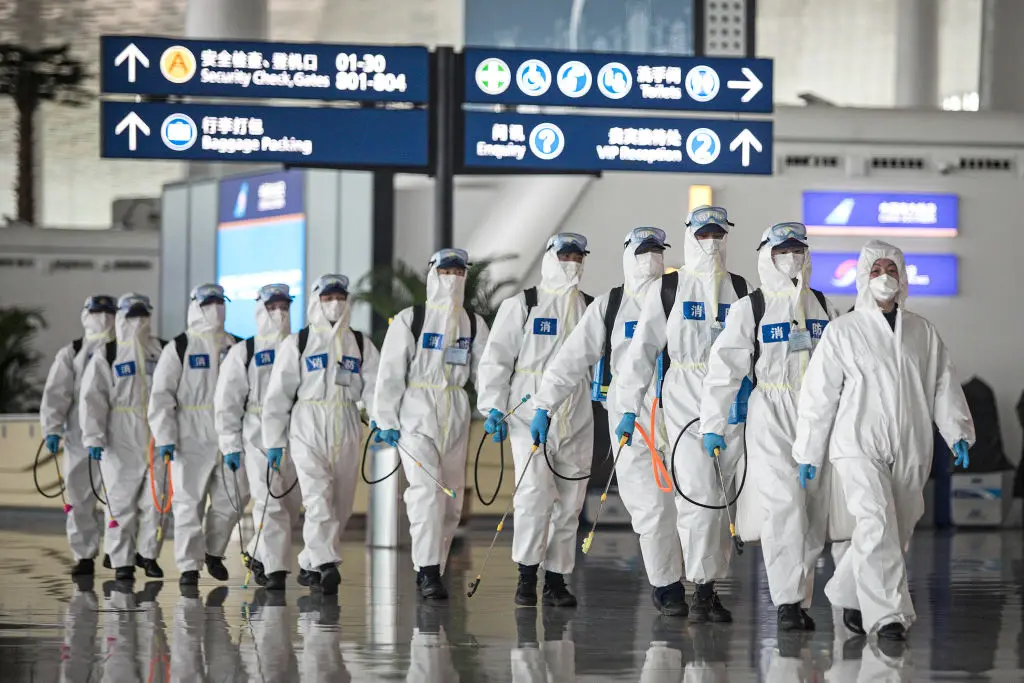
Russia has also acted quickly by putting around 200 different people into quarantine after they came into close contact with Shipilova, but so far the public health service has only conceded that she died of 'pneumonia of undetermined origin'.
Despite the White House also describing it as an 'outbreak' in its official statement, Dr Clarke is less convinced and suggests that 'an awful lot must have gone wrong for a lab worker to be infected by a broken test tube'.
He added: "Having worked in high-containment laboratories, I know that handling dangerous pathogens involves multiple layers of protection, strict procedures, safety cabinets, airflow systems and careful procedures carried out by well-trained staff. Lab-acquired infections are rare events, and a broken tube would not automatically lead to exposure or infection. We also don't tend to use test tubes very much.
"Until more details emerge, it is difficult to assess whether this represents an isolated case, an occupational exposure, or evidence of wider transmission.
"Transparency, rapid diagnosis and effective contact tracing would be the most important factors in managing an outbreak."
Topics: Russia
 James Moorhouse