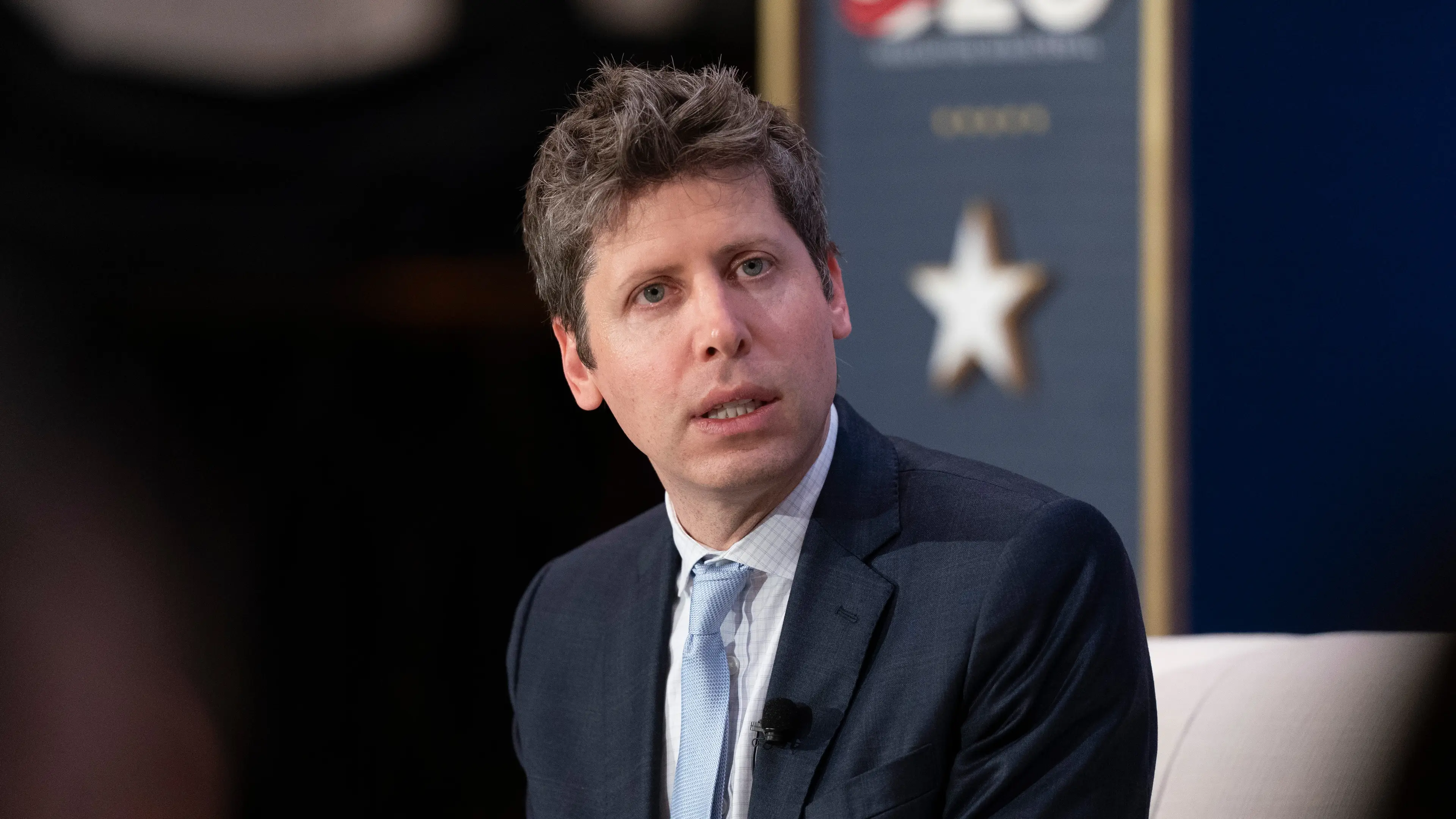
OpenAI boss Sam Altman explains the two ways AI could end 'very badly' amid fears it will destroy humanity

Sam Altman has taken to social media in warning about the 'two ways AI progress could go very badly' in the future that 'we must avoid'.
If the story of an artificial intelligence (AI) ethics professor receiving a 'dystopian' email from a 12-day-old AI agent asking for paid work didn't freak you out enough about the future of AI, then take the CEO of OpenAI's word of warning - or two.
Sam Altman's first warning not to 'lose control' of AI
Altman took to X on September 14 to offer his expertise on the biggest 'two threats' he perceives in the future when it comes to AI.
His post reads: "First, we could lose control of the future to AI. This is unacceptable; we are unapologetically on Team Humanity, and AI must always serve people."
Advert
But how do we ensure this doesn't happen?
Well, Altman continues: "To ensure that, we need ways to ensure that alignment and safety techniques stay ahead of progress in model capabilities."
And as to what else we have to watch out for? Well, in the words of Cheryl Cole, too much of anything can make you sick...
Sam Altman's warning over the second 'threat' of AI progress
Altman stressed just how 'extraordinarily powerful' AI can be and how if one person or company uses it to 'impress their worldview onto everyone else, the results could be extremely dystopian'.
Essentially, if one person or company harnesses the power of AI and abuses it, 'we could end up in a world with too much concentration of power'.
And it's a 'narrow middle path' Altman warns we must walk down in order to 'avoid these two threats'.
"For example, one country could gain too much power," he added. "Another example is one lab ending up with too much power."
Altman's post followed off the back of another in which he specifically interrogated American companies which are developing AI.
Altman's warning to American companies who are developing AI
Altman urged American companies which are developing AI to 'act responsibly'.
He stressed the 'world deserves confidence' that 'every frontier lab' still prioritises this despite how quickly AI is advancing - essentially, not sacrificing care and due-diligence over the need for speed.
"There is no reason any of us should come to work if we cannot," he added.
Altman continued: "We welcome a federal framework that sets consistent safety requirements for frontier AI. But we do not believe we need to wait for an anti-trust exemption or legislation to begin the work of providing this confidence. Consistent rules to manage frontier risk so that we can maximize the benefits are a good idea (and we are excited by ideas like independent auditors)."
The CEO reflected Responsible Scaling Policies and Preparedness Frameworks developed at OpenAI but noted while they were 'good that moment' they 'focused primarily on the deployment of completed models, not what happens during their development process'.
He appealed for 'new tools' which can focus on 'safe development and evaluation' to be carried out by all companies, exemplifying OpenAI's formulation of 'explicit safety cases in advance of frontier reinforcement learning runs [they] expect to significantly increase capability'.
Altman's overall message? AI companies shouldn't have to stop, but they should be pacing themselves - to ensure they don't become so consumed by 'American competitive pressure' that they risk becoming 'reckless' or 'let capabilities get ahead of alignment and monitoring'.
He resolved: "We hope that other companies will learn from our approaches and propose their own; we think shared standards for misalignment, monitoring, and safety will lead to better outcomes. We look forward to collaborating with our colleagues across the industry to formulate the best version of these.
"[...] Where we will need the help of our government is for international coordination. But first we should do what we can ourselves."
Topics: Artificial Intelligence, Technology, US News
 Poppy Bilderbeck