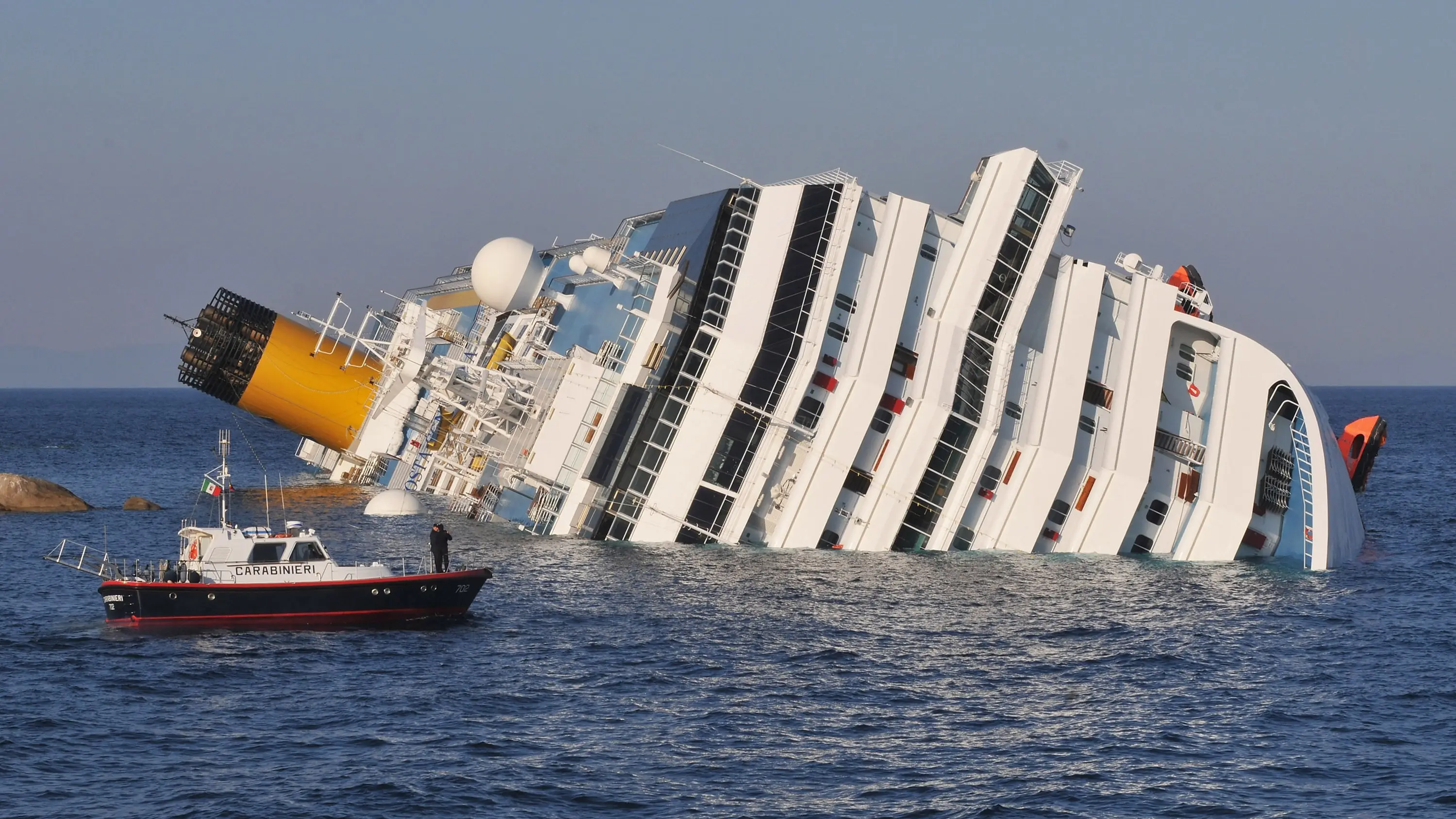
$2 billion operation that raised Costa Concordia cruise wreck from the rocks

An eye-wateringly expensive rescue operation succeeded in raising the cruise ship Costa Concordia from the sea floor.
Speaking about the 1980 film Raise the Titanic, producer Lew Grade famously remarked that 'it would be cheaper to lower the Atlantic', but just how much money does it actually cost to raise a stricken cruise liner?
Well, those responsible for the wreck of the Costa Concordia were faced with this exact question when they were tasked with salvaging and removing the enormous 33,000 ton ship from the Italian coast where it had become stranded.
The tragedy is back in the news following Netflix's Shipwrecked: Nightmare at Sea, a new documentary on the disaster which dropped last week.
Advert
Back in 2012, the salvage operation presented a mammoth challenge, including securing and stabilising the wreck, siphoning off fuel, and finally beginning operations to remove it from its resting place. It took two and a half years to refloat the ship.
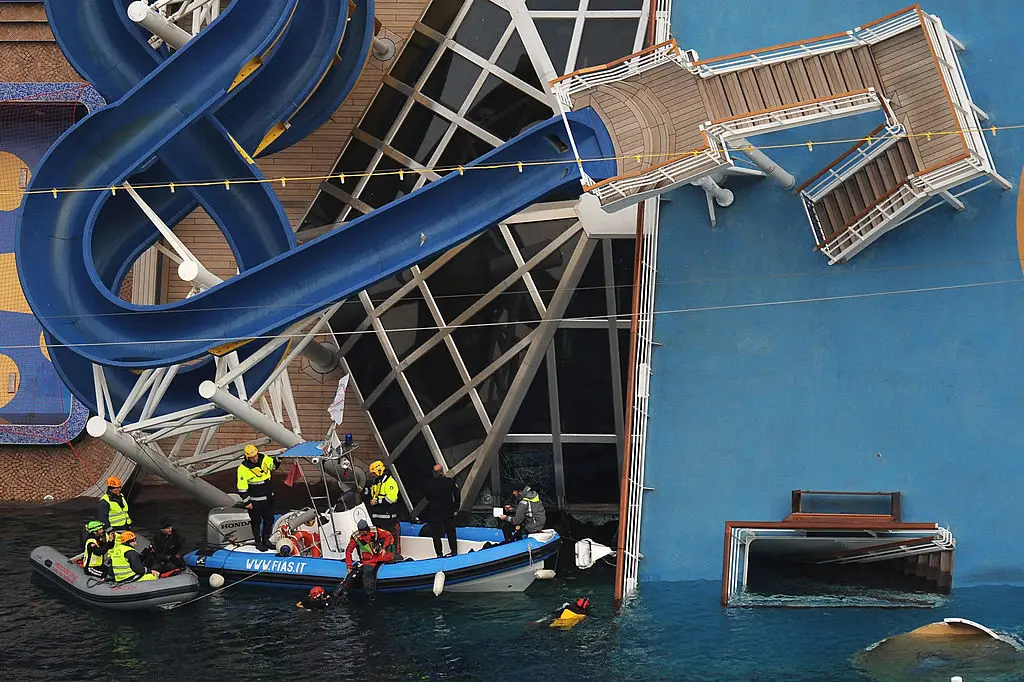
In 2012, the Costa Concordia had been diverted and struck a rock formation on the seabed, causing a 160ft gash to the hull.
This in turn led the ship to start listing, eventually coming to rest on the sea floor partially submerged.
A rescue operation was launched for the more than 4,200 people on board, including 3,206 passengers and 1,023 crew members.
Tragically, 33 people lost their lives in the disaster, including 27 crew members, five passengers, and one salvage diver.
Once the rescue operation was complete, the hulking wreck was left stranded on the coastline.
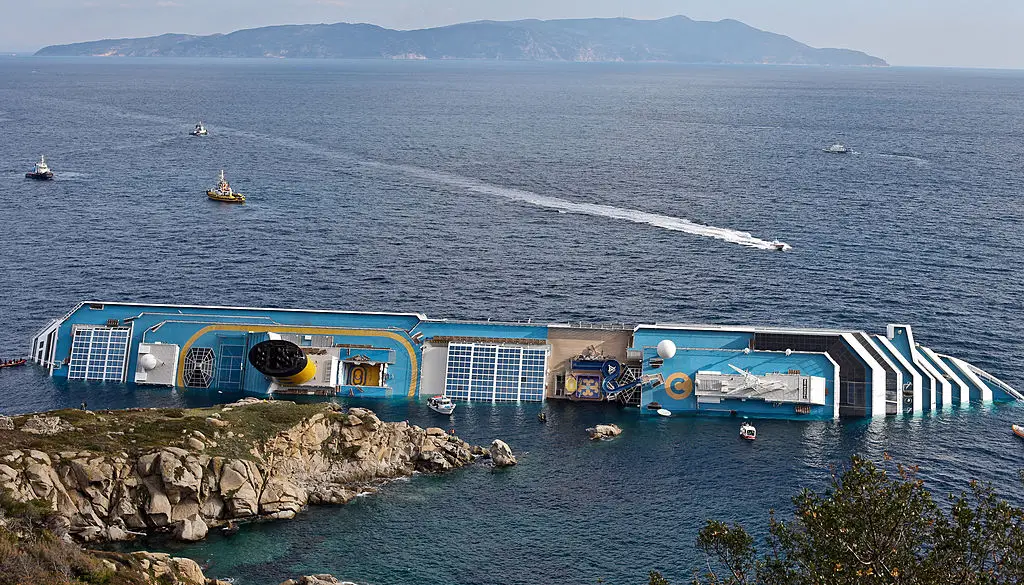
An exclusion zone was put in place around the wreck, and engineers set to work in all weathers on a way to move the ship.
Examining the hull confirmed that the wreck was being held in place in the 160ft gash in the hull. A big concern was stabilising the wreck so it wouldn't slide off where it was resting, especially in bad weather.
In fact, the ship did collapse seven feet during infamous 'Halloween storms' which hampered the removal.
Teams transported 'sponsons', enormous metal boxes weighing up to 800 tons and 11 storeys high, to the site off Giglio island where they were filled with water and attached to the vessel's sides to stabilise the wreck.
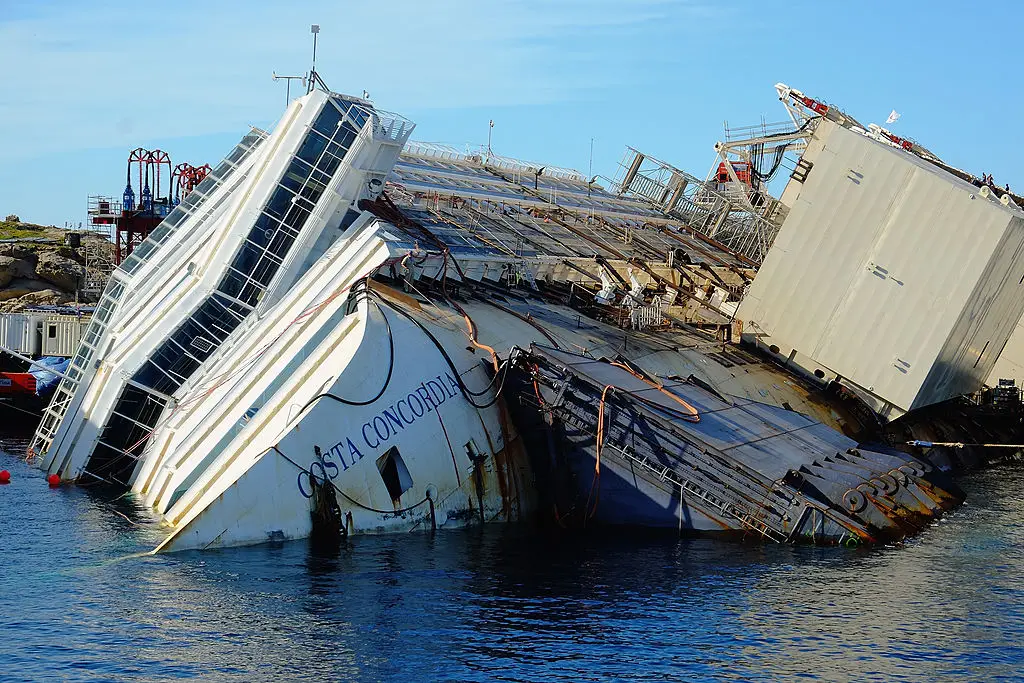
They then had to construct a false bottom for the ship, including a cushion on the sea floor for it to rotate onto without causing further damage.
The rotation itself was achieved by a technique called 'parbuckling', effectively rotating a ship so it's righted and can be refloated using enormously powerful hydraulic pistons.
Once the enormous vessel was again upright, albeit still largely submerged, teams added more sponsons onto the previously submerged starboard side.
In order to re-float the vessel the water was pumped out of the sponsons when it was upright, effectively turning them into enormous metal armbands that kept the ship afloat despite the hull breach.
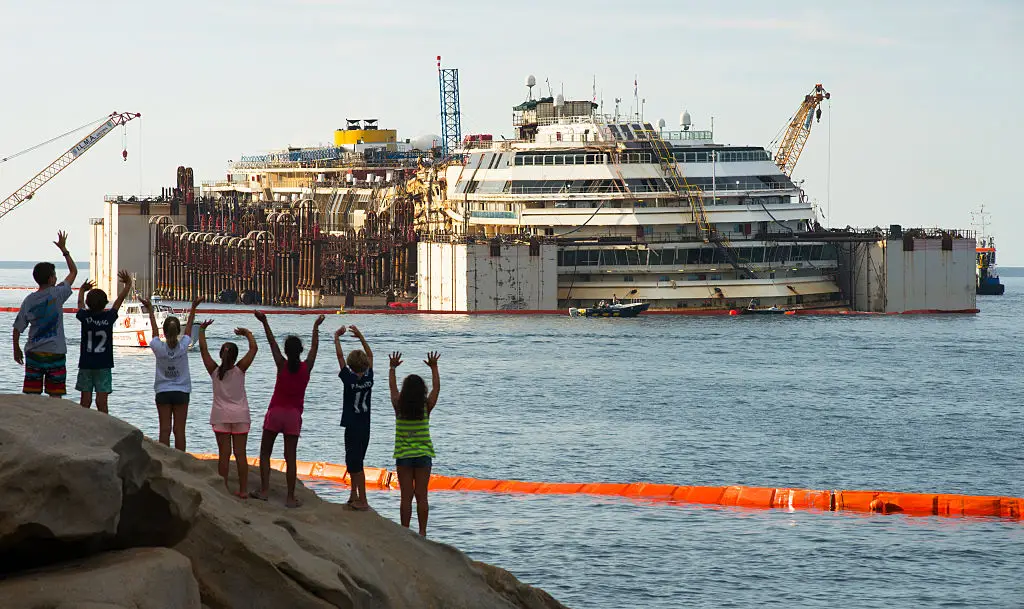
Once safely afloat again in July 2014, the ship was towed on its final voyage with over a dozen support vessels, travelling at a crawl of just two knots to Genoa.
There, work to break up and scrap the ship was completed in July 2017, some five years and $2 billion in salvage costs after first partially sinking.
Topics: Travel, World News, Cruise Ship
 Kit Roberts