
New evidence solves mystery of how Egypt's great pyramid was built

For centuries, the construction of Egypt's pyramids has been a huge source of fascination.
Historical and archaeological consensus suggests the pyramids were built between 2589 and 2504 BCE, and were used as a resting place for the Pharaohs of the Old and Middle Kingdoms.
However, this hasn't stopped the more creative-minded amongst us from coming up with alternate theories about how these complex constructions came to be, with conspiracies spanning from aliens, long-lost supercivilisations, and even shape-shifting lizards.
The main argument behind the idea of extraterrestrial forces or a technologically advanced civilisation being behind the pyramids often stems from the idea that it would've been hard for the workers to shift the many stones which make up the body of the pyramid without the help of at least one modern crane.
Advert

However, if you are a pyramid truther then I have some bad news for you, as a recent study has come up with a plausible idea as to how the structures came to be.
And spoiler alert, it wasn't aliens.
According to a recent study of the Pyramid of Khufu (aka, the Great Pyramid of Giza) published in NPJ Heritage Science, the structures were created using an Integrated Edge-Ramp (IER) built into the pyramid's structure, which allowed the workers to shift stones much more quickly.
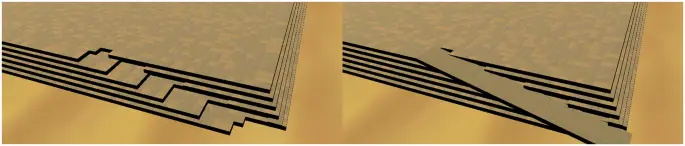
The theory was spearheaded by computer scientist Vicente Luis Rosell Roig, who tested his idea by creating a simulation of the ramp. Roig argues that a ramp was built into the pyramid's central structure, with workers leaving segments of the facade open to move the 15-tonne stones without too many obstacles.
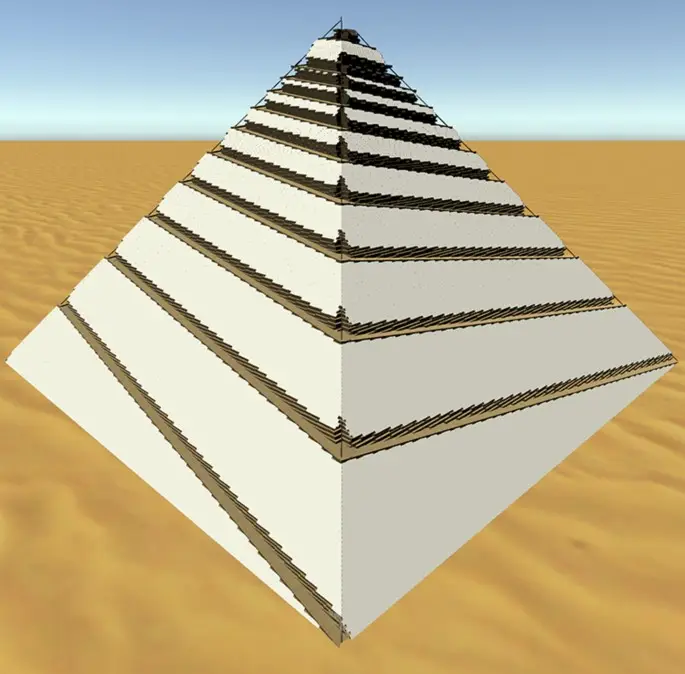
The ramp was then filled in retroactively as construction progressed, removing visible evidence of the ramp's existence.
"Old Kingdom technology precluded iron tools, wheeled heavy transport, and compound pulleys, but allowed copper chisels, water-lubricated sledges, ropes, levers, earthen works, and Nile barges," Roig explained in the study, published in March 2026.
"Accordingly, we bound ramp slope, lane width/clearance, and friction, and evaluate the dispatch headway (time between placing successive blocks) required to satisfy the 20–27-year window, encoding these constraints as model parameters."
Using this model, Roig's simulation suggested the 2.3 million stone Great Pyramid was constructed within a 20 to 27-year timeframe.
The research follows confirmation that it was not slaves but instead skilled workers who built the pyramids. According to BBC Science Focus, the people who worked on building the pyramids were labourers who lived in purpose-built villages, living conditions which wouldn't have been given to slaves or indentured servants at the time.
Topics: History, Conspiracy Theory
 Brenna Cooper