ladbible homepage
ladbible homepage
  • iconNews
  • videos
  • entertainment
  • Home
  • News
    • UK
    • US
    • World
    • Ireland
    • Australia
    • Science
    • Crime
    • Weather
  • Entertainment
    • Celebrity
    • TV
    • Film
    • Music
    • Gaming
    • Netflix
    • Disney
  • Sport
  • Technology
  • Travel
  • Lifestyle
  • Money
  • Originals
    • FFS PRODUCTIONS
    • Say Maaate to a Mate
    • Daily Ladness
    • UOKM8?
    • FreeToBe
    • Citizen Reef
  • Advertise
  • Terms
  • Privacy & Cookies
  • License Our Content
  • About Us & Contact
  • Jobs
  • Latest
  • Archive
  • Topics A-Z
  • Authors
Facebook
Instagram
X
Threads
Snapchat
TikTok
YouTube
Submit Your Content Here
  • SPORTbible
  • Tyla
  • GAMINGbible
  • LADbible Group
  • UNILAD
  • FOODbible
  • UNILAD Tech
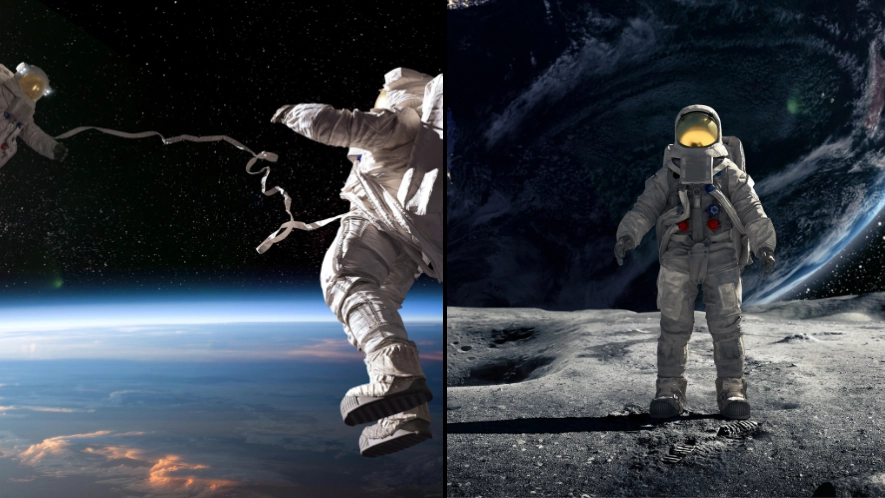
NASA astronaut protocol they have to follow if someone dies while in space

Home> Community

Published 20:17 7 Jan 2025 GMT

NASA astronaut protocol they have to follow if someone dies while in space

You know, just in case you were wondering what would happen

Jess Battison

Jess Battison

google discoverFollow us on Google Discover

Let’s be honest, every now and again we think about what will go down when we go down.

Perhaps you’ve imagined how your death will happen, when it will happen or what will happen afterwards.

But it’s likely none of those scenarios involve you being in space, and while it’s not exactly really something we need to consider, it is for NASA.

Because sure, it might not be a common thing but there’s always that tiny chance of someone passing away while they’re away from Earth.

Advert

So, the space agency does have a protocol for astronauts to follow in case someone does die in space.
It would be pretty inconvenient (Getty Stock)

Astronaut and former commander of the International Space Station (ISS), Chris Hadfield, explained NASA even runs ‘death simulations’ with astronauts to lay out the scenarios.

“If someone died while on an EVA [extravehicular activity] I would bring them inside the airlock first,” Hadfield said to Popular Science of his conclusion from one of these exercises.

“I would probably keep them inside their pressurised suit; bodies actually decompose faster in a spacesuit, and we don’t want the smell of rotting meat or off gassing, it’s not sanitary. So we would keep them in their suit and store it somewhere cold on the station.”

While onboard the ISS, this could all be dealt with swiftly with the body being temporarily stored in a cooler area before the ‘final disposition of remains’.

NASA’s guidance for ‘Mortality Related to Human Spaceflight’ explains the ISS Program responsible for ‘the final determination of remains disposition’.

It adds: “For a crew fatality occurring on the ISS, options would be limited to the return of remains, jettison to a disposal trajectory, or destructive re-entry."

The crew’s wishes would also be taken into account if a death was to go down.

Basically, just avoid it (Getty Stock)

You might think that you could just drop the body from the spacecraft into space and turn that astronaut into some space debris. However, this would go against a UN space mitigation agreement and that would cause a whole other headache.

With space cool enough for a human body to be stored in an appropriate way that’s safe for the other astronauts pretty limited, a research team at NASA suggested an alternative.

The corpse would be place in a bag, held on to the spaceship by a robotic arm. This would end up freezing solid before it then gets vibrated for 15 minutes to reduce the body to pieces.

But say you end up dying on the moon’s surface, you wouldn’t decompose like you would on Earth and contaminating other parts of the Solar System is a big no-no for NASA. The space agency would prefer for the body to be taken back to Earth.

Basically, it’s all a bit of a nightmare and would be a whole lot easier to save your death for home ground.

Featured Image Credit: Getty Stock Images

Topics: Space, NASA, Science, Technology

Jess Battison
Jess Battison

Jess is a Senior Journalist with a love of all things pop culture. Her main interests include asking everyone in the office what they're having for tea, waiting for a new series of The Traitors and losing her voice at a Beyoncé concert. She graduated with a first in Journalism from City, University of London in 2021.

X

@jessbattison_

Recommended reads

Chilling ‘Ghost Murmur’ device used for first time that can ‘find you if you have a heartbeat’Islamic Revolutionary Guard Corps/Anadolu via Getty ImagesAirports forced to change X-ray machines after reality of what security could see revealedXMinute-by-minute timeline of what would happen in first moments of nuclear bombGetty StockGilgo Beach serial killer shares horrific details of how he killed victims in front of their relativesJames Carbone - Pool/Getty Images

Advert

Choose your content:

2 days ago
3 days ago
  • SWNS
    2 days ago

    Woman who spent years believing she was a paedophile due to health condition issues positive update

    Molly Lambert was diagnosed last year after seeing a TikTok on P-OCD

    Community
  • Getty Stock Image
    2 days ago

    15 happy couples shared how often they really had sex together

    More than a dozen couples shared their bedroom stats - and their answers might surprise you

    Community
  • X/Bryan Johnson
    3 days ago

    Millionaire biohacker shares ironic update about ‘toxic’ item in his home

    Bryan Johnson revealed he is an 'idiot'

    Community
  • Getty Stock Images
    3 days ago

    Couples therapist says one question determines if a relationship is healthy

    Yasmine Mattar also explained 'one of the healthiest signs of love'

    Community
  • Why Artemis II crew are taking iPhones to space as they float around cockpit
  • People have huge question as NASA release 'spectacular' image of Earth from Artemis II crew
  • Artemis II has a lightning cloud problem as NASA outlines risk
  • People make ‘insane’ realisation about photos of Earth NASA shared