Identical twins look even more different in six-year follow-up after one used Botox for 20 years and other didn’t

Identical twins tend to work in tandem - but these sisters had a difference in opinion when it came to Botox.
Although they spent most of their lives looking like a mirror-image of one another, that all changed when they turned 25, as one of them began trying to banish their wrinkles.
Realising that this could be a great opportunity to measure how much the prescription drug botulinum toxin can impact a persons appearance, Dr William Binder decided to keep tabs on the two women.
Dr Binder, a Beverly Hills plastic surgeon, launched his scientific study back in 2006 in a bid to see how using Botox can help reduce the appearance of creases, furrows and puckers on your skin.
Advert
The neurotoxic protein temporarily paralyses muscles and blocks signals being sent from nerves to the muscles, so that they can no longer contract. This gives the appearance of smoother, more youthful-looking skin.
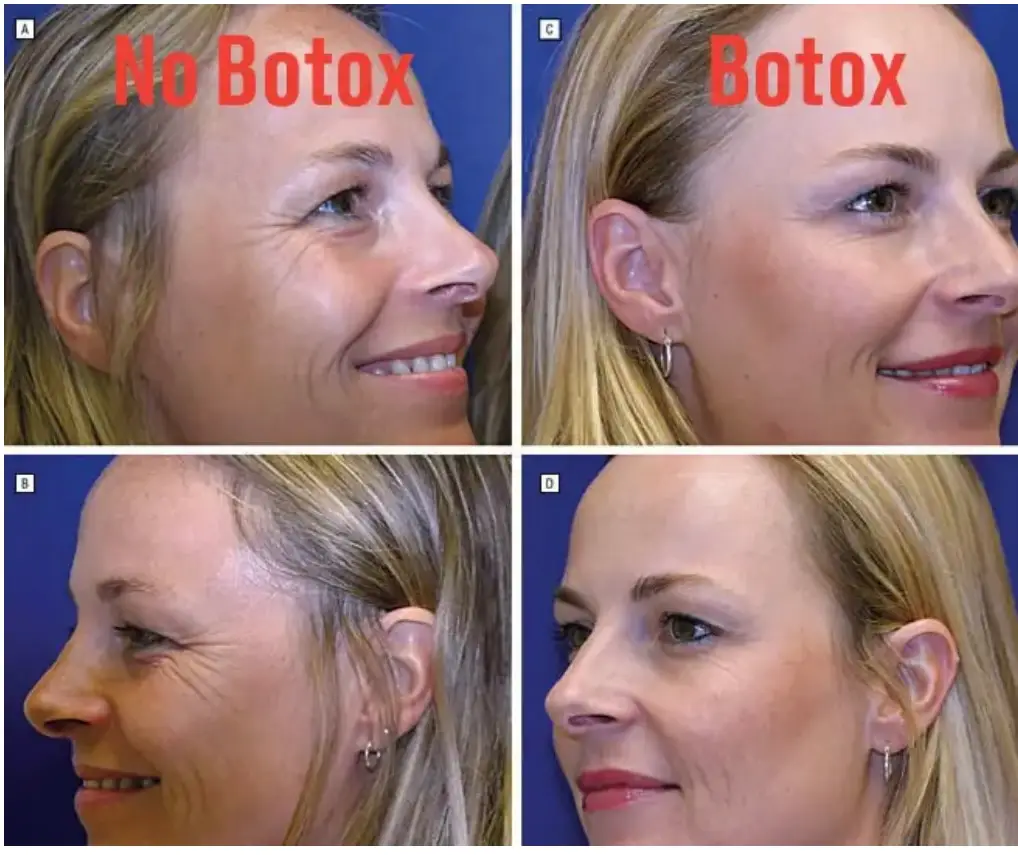
Two identical twins were Dr Binder's subjects and over a period of almost two decades, he monitored the differences in the appearances as they aged.
After turning 25, one of the sisters received Botox injections two to three times a year for 13 years.
She was jabbed in the forehead, between the eyebrows and in the crow's feet region, which are pretty popular places for the Botox babes out there.
The other had received Botox just twice several years prior and was injected in the forehead and between her eyebrows. In the first set of photos Dr Binder shared, they were both aged 38.
The difference was plain to see - as the twin who had regular Botox had smoother skin and fewer wrinkles, whereas her sibling sported more prominent crow's feet when she smiled - and the same went for her forehead lines.
Does the doctor believe that Botox works?
According to Dr Binder, the Botox-loving twin probably had better results because the injections work by 'not only by inhibiting the patient's ability to contract the target muscle but also perhaps through behavioural modification'.
"With long-term treatment, the patient may become used to having little, if any, need or ability to contract the target muscle and may eventually 'learn' to avoid even trying to contract it," he said.
It was the opposite for the untreated twin though, according to the medic, as the signs of her ageing hadn't been banished by Botox.
According to the study, areas of both the twins faces which had been untreated 'showed comparable ageing in both twins'.
All in all, the research concluded: "Long-term treatment with Botox can prevent the development of imprinted facial lines that are visible at rest. Botox treatment can also reduce crow's feet."
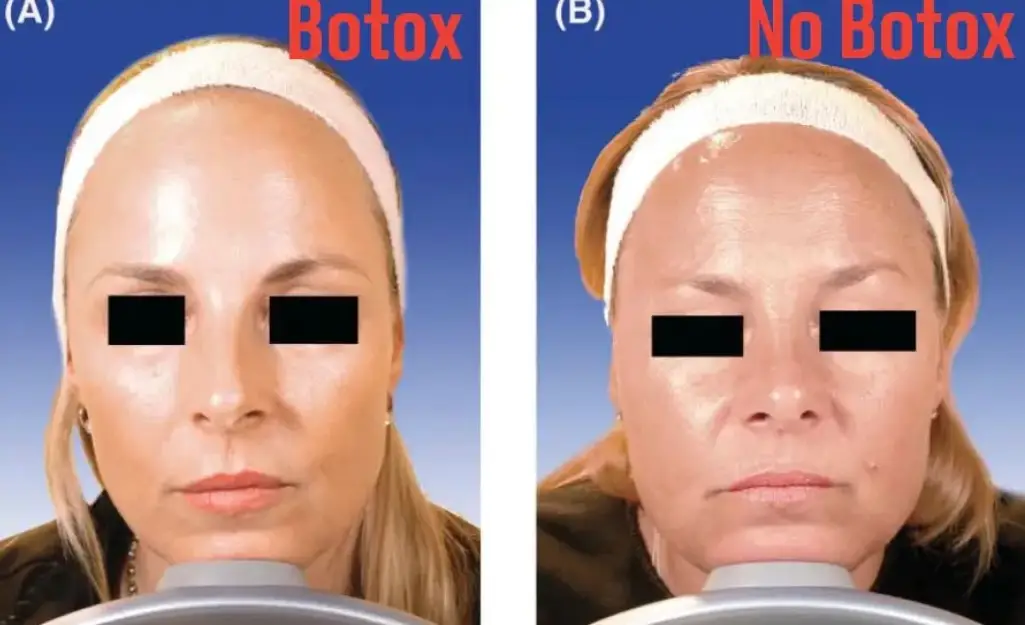
Dr Binder then checked in with the identical twins again six years later. By this point, they were aged 44.
The treated twin had continued to get regular injections every four to six months, although her dose had decreased over the last few years.
Meanwhile, her sister had undergone two more Botox treatments in the years between the original study and the follow-up.
The difference between the twins was more marked this time, with Dr Binder and co-author Dr Alexander Rivkin writing: "The skin texture of the treated twin looks smooth with small pores, whereas skin of the sporadically treated twin shows signs of ageing with a greater number of wrinkles and visible pores."
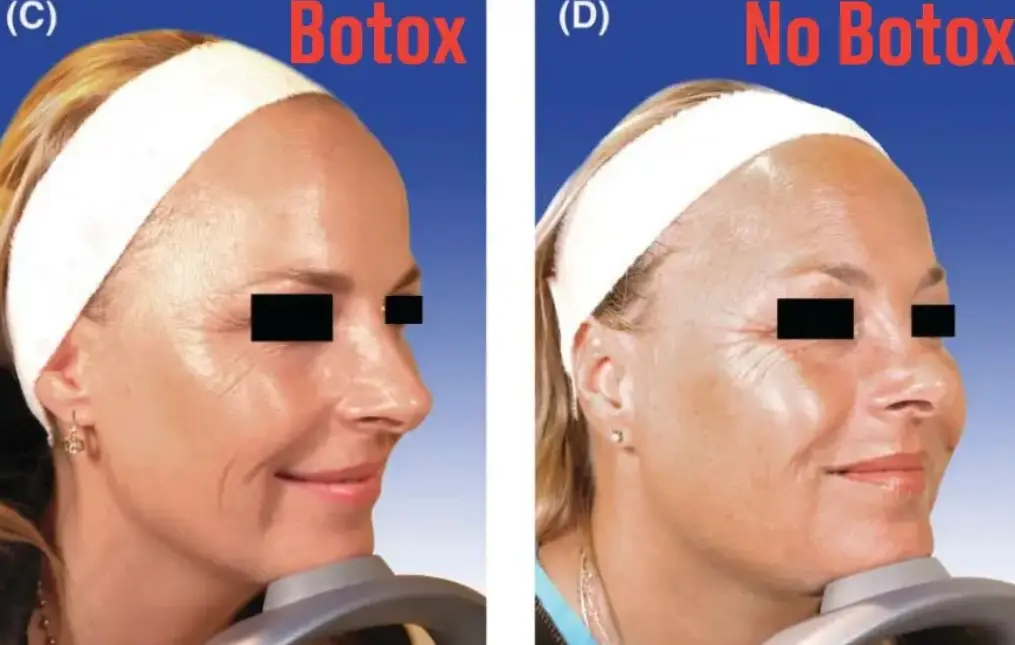
Both twins used factor 45 to factor 50 sunscreen on a daily basis, neither smoked, and both lived active lifestyles.
Though the twins lived in different countries, the twin that didn't have regular Botox lived in Munich, which has a lower UV index to Los Angeles, where the Botox twin lived.
Wrinkles are known to form when facial muscles contract, and as you age, the production of proteins such as collagen and elastin, which give your skin structure and elasticity, decreases.
All in all, Dr Binder reckons that the twins provided photographic evidence that proved 'repeated treatment continues to diminish the signs of facial ageing and delay the appearance of hyperfunctional facial lines'.
 Olivia Burke