Former airline captain reveals the 'most dangerous thing that could happen' on a flight

People with a fear of flying might feel slightly at ease after finding out that the ‘most dangerous thing that could happen’ on a flight isn’t when you’re in the air.
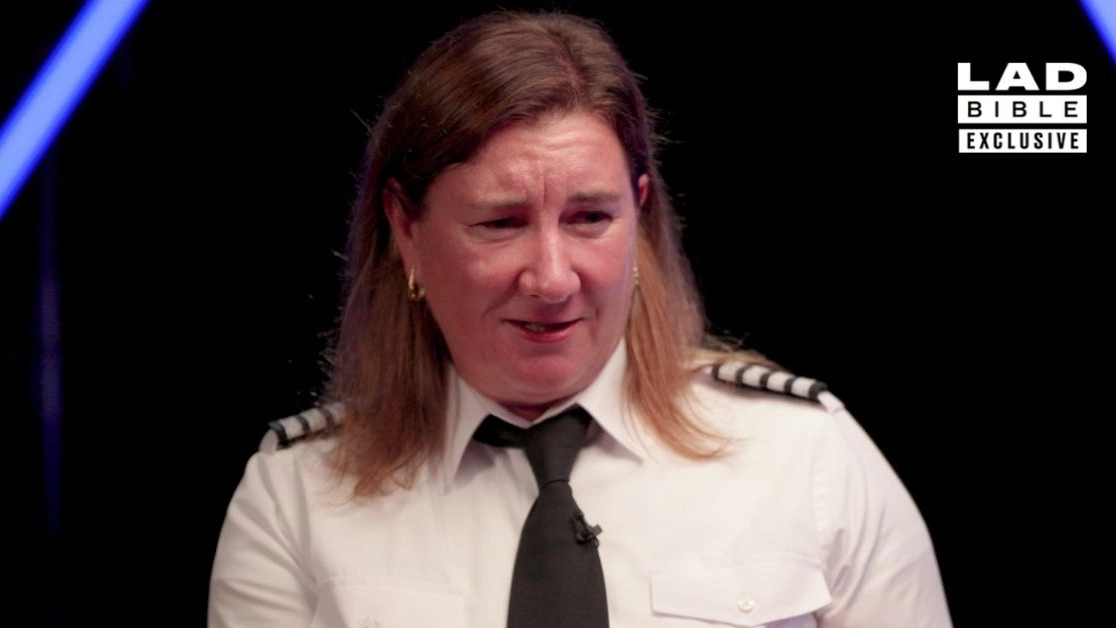
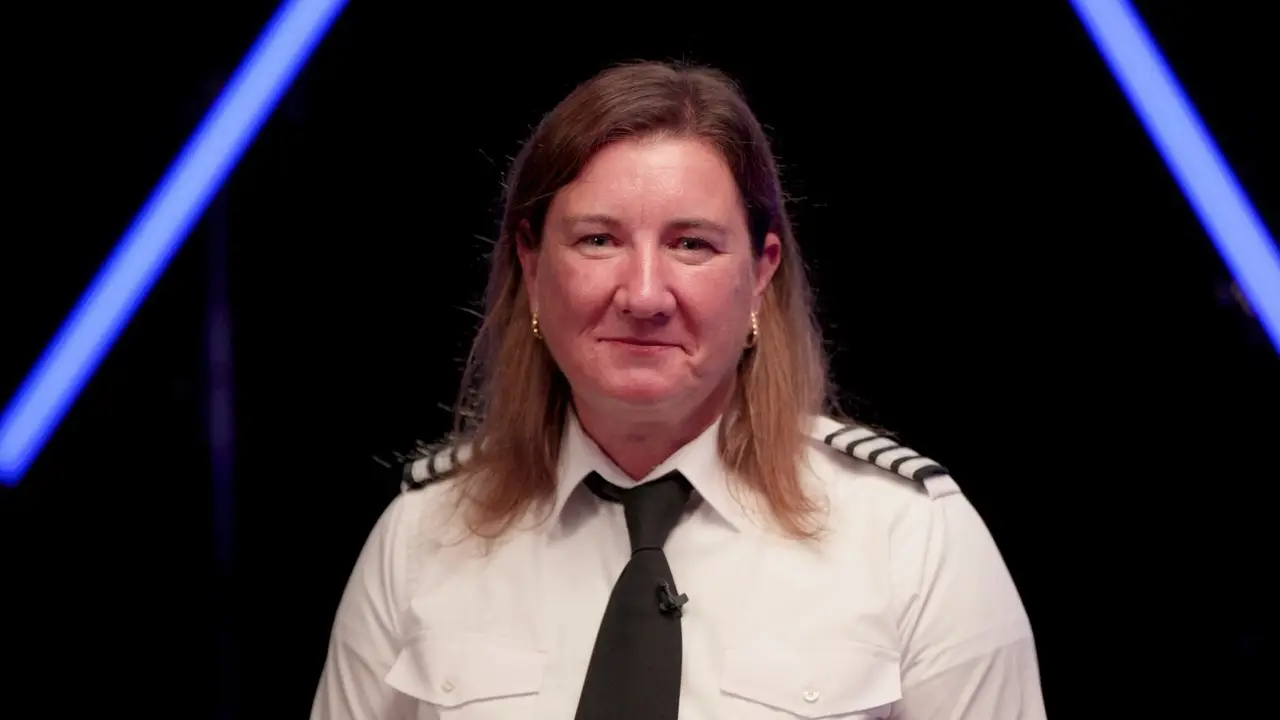
That’s according to former Captain Emma Henderson, who has accumulated around 8,500 flying hours over 30 years.
The public speaker and leading consultant explained that takeoff is generally the most dangerous stage of a journey, particularly if an engine fails at a critical moment.
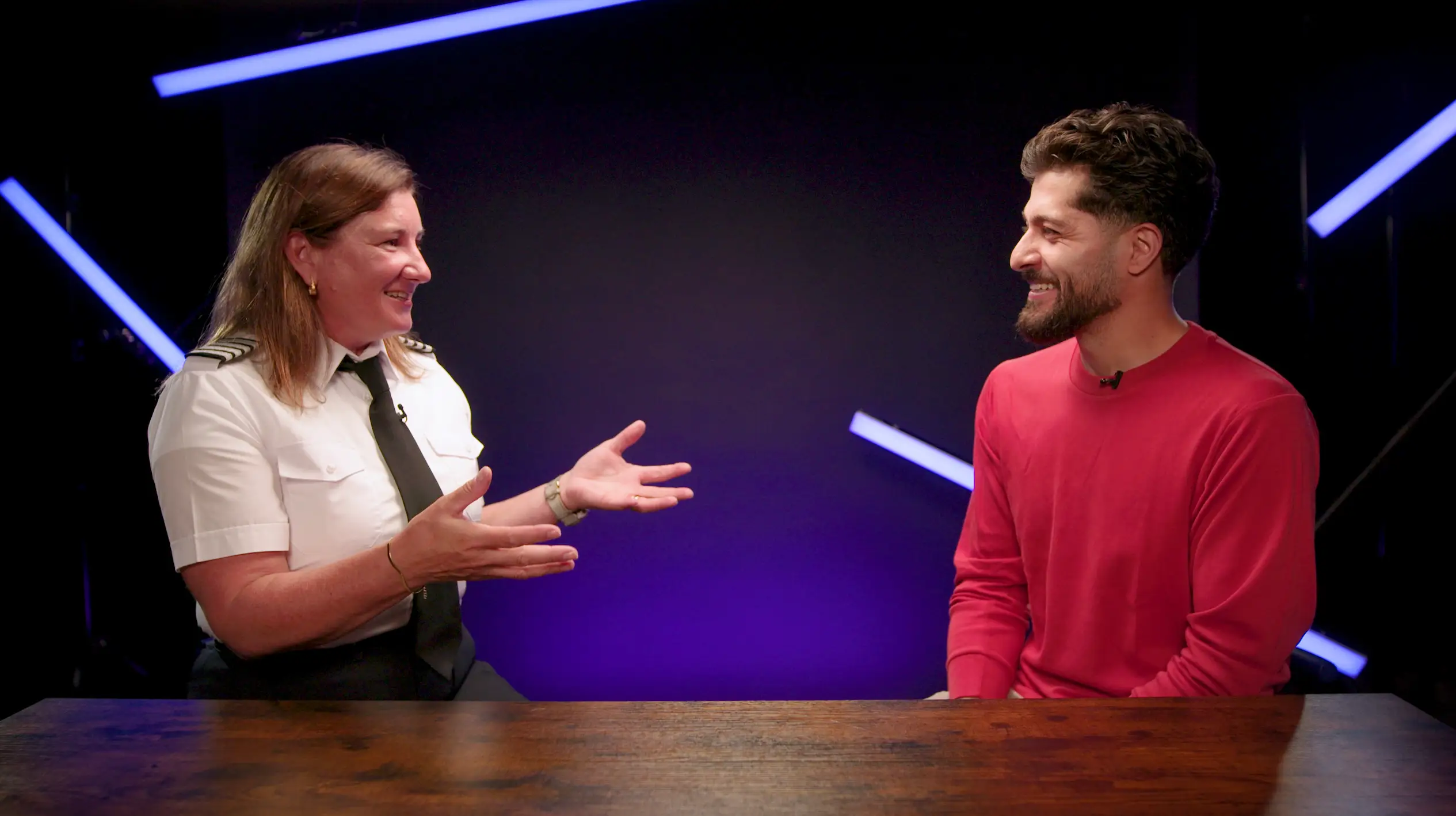
Speaking to nervous flyer Serge for LADbible Stories, Emma revealed that pilots regularly practise this worst-case scenario in flight simulators.
Advert
She explained: "So the most dangerous part of a flight is usually the takeoff because you are heavy and you've got a lot of fuel on board.
"So in a simulator, the kind of worst-case scenario would be an engine failure at the decision speed, but an engine failure at decision speed means you've got to take the aircraft into the air.
"You've now reached a point where if you stop the aircraft, you will run out of runway. So you have to get airborne and you've only got one engine and that's your worst-case scenario."
Despite the frightening prospect, Emma reassured passengers that pilots are extensively trained to handle such emergencies.
How pilots prepare for the worst-case scenario
She continued: "And we train for that and we train and train and train for it because it is kind of the most dangerous thing that could happen.
"And this has never happened to me in real life. It's only ever happened to me in the simulator. And we spend three days every six months in the simulator practising all this stuff because it never happens."
Emma explained that this repeated training helps pilots overcome the shock of unexpected emergencies during travel.
"So if it should happen, we would know what to do without being really startled. We're trying to get rid of the startle effect kind of thing," she added.
Why passengers shouldn't panic
The former captain also reassured Serge that many frightening experiences passengers encounter, including turbulence and unfamiliar noises, are normal parts of flying.
"So I really want to emphasise to you that although it feels, part of the reason it feels scary going flying and particularly with things like turbulence and just worrying that you're not going to get to the other end is because it's not a familiar environment for you," she said.
"It's not something you're used to doing. So every little thing that happens, every little noise, you're going to think, 'What was that? Is that normal?'"
Emma also stressed that aircraft undergo rigorous safety inspections, with engineers checking planes overnight and pilots conducting visual inspections before flights.
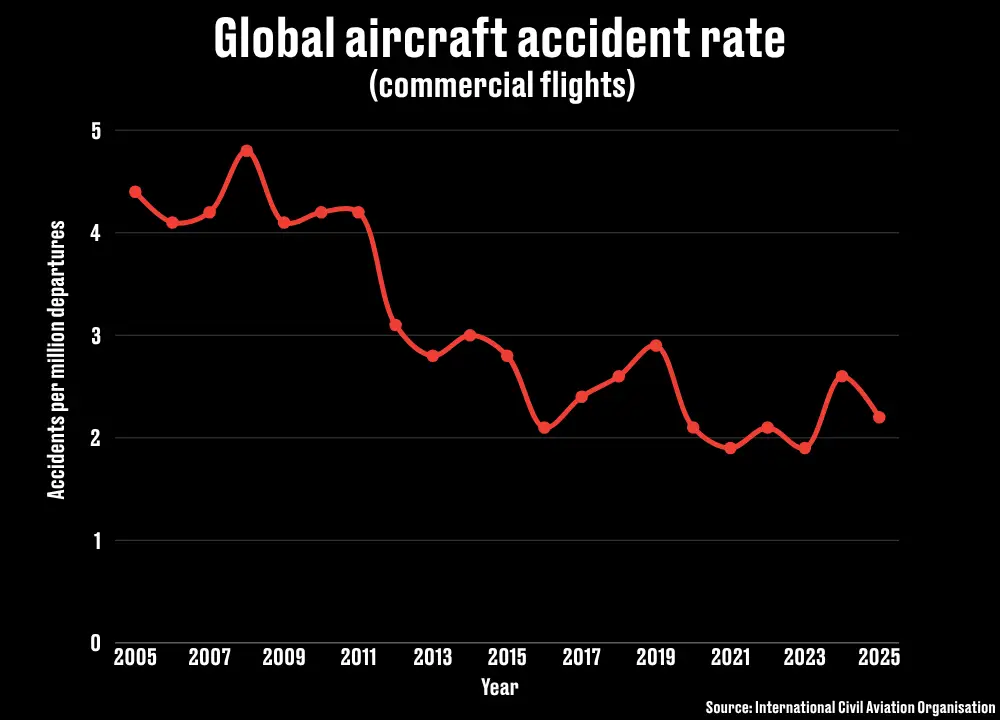
And despite discussing the worst possible emergencies, she maintained that flying remains significantly safer than driving.
Her explanations appeared to reassure Serge, who admitted: "You've made a nervous flyer want to get on a plane."
Emma debunks plane crash myth
"So planes don't normally crash. And the only reason that you hear about it when it happens is because it's so rare and it's really big news," she explained.
"There's usually two reasons why a plane might crash. And the first would be human error or human intervention.
"So in 2015, there was, very sadly, a murder-suicide on a European airline, which resulted in the death of 150 people, where a pilot deliberately disconnected the autopilot and flew the plane into the ground.
"And as a result of that, the aviation industry responded immediately and put in place lots of different things in terms of psychiatric assessments, but also put in place measures in the flight deck to make sure that nobody can lock somebody out of the cockpit.
"All of the measures that were put in place after that were to prevent something like that happening again."
She added: "The second reason that a plane might crash would be some sort of mechanical failure."
 Anish Vij