
ladbible homepage
ladbible homepage
  • iconNews
  • videos
  • entertainment
  • Home
  • News
    • UK
    • US
    • World
    • Ireland
    • Australia
    • Science
    • Crime
    • Weather
  • Entertainment
    • Celebrity
    • TV
    • Film
    • Music
    • Gaming
    • Netflix
    • Disney
  • Sport
  • Technology
  • Travel
  • Lifestyle
  • Money
  • Originals
    • FFS PRODUCTIONS
    • Say Maaate to a Mate
    • Daily Ladness
    • UOKM8?
    • FreeToBe
    • Citizen Reef
  • Advertise
  • Terms
  • Privacy & Cookies
  • License Our Content
  • About Us & Contact
  • Jobs
  • Latest
  • Archive
  • Topics A-Z
  • Authors
Facebook
Instagram
X
Threads
Snapchat
TikTok
YouTube
Submit Your Content Here
  • SPORTbible
  • Tyla
  • GAMINGbible
  • LADbible Group
  • UNILAD
  • FOODbible
  • UNILAD Tech
Why you get 'squiggly floaters' in your eyes as expert explains what to do if you see them
Home>Lifestyle
Published 15:39 10 May 2026 GMT+1

Why you get 'squiggly floaters' in your eyes as expert explains what to do if you see them

It can be harmless but in some cases, it can be a bad sign for your eye health

Jess Battison

Jess Battison

google discoverFollow us on Google Discover

Sometimes you might be looking off into the distance when you feel like you need to put the windscreen wipers on.

And I’m not talking about when you’re literally at the wheel of a car but rather the metaphorical wipers for your own eyes.

You know, when there’s those odd little squiggly lines floating in your vision?

It’s almost like there are smudges on your eyes but in reality, there’s nothing actually there. Instead, it’s ‘floaters’ and it can be worth knowing just why they’re there.

Advert

Sure, they might just be totally harmless and something to ignore when they appear or it could potentially be a bit of a concern for your health.

The NHS says it could be a process called posterior vitreous detachment (PVD) when the gel in your eye changes. And while that’s pretty much harmless it could also be caused by retinal detachment in more serious situations.

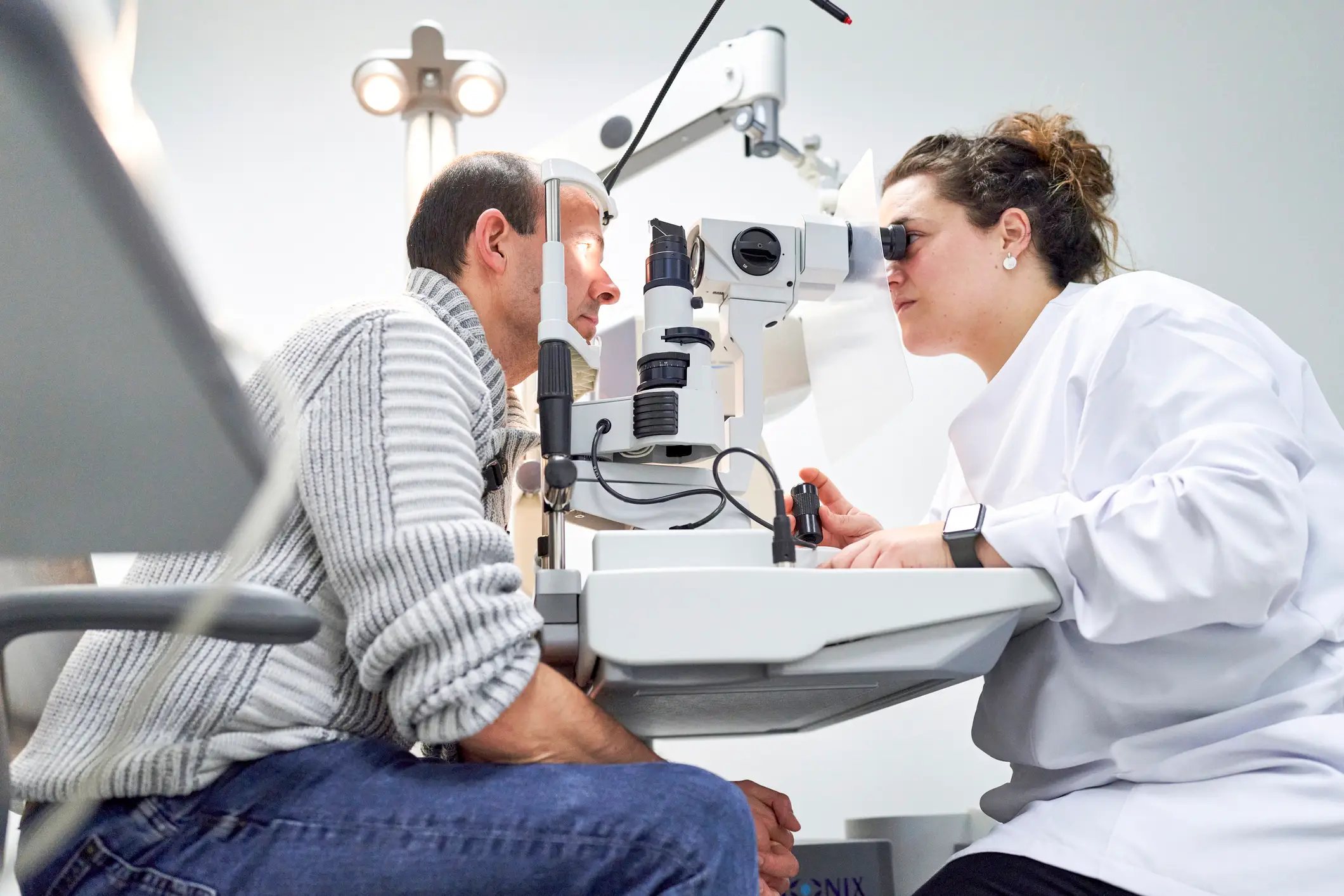
It's worth getting things checked if you become concerned. (Getty Stock)

When to see an expert

You may see them in your eyes from time to time, but the time to see an optician is when new ones show up.

Dr Daniel Polya from Royal Australian and New Zealand College of Ophthalmologists’ highlighted that it's ‘so important to see an optician when a floater first appears’.

The eye expert said that though we can learn to ignore them, we should start paying a bit more attention, adding: “Laser surgery can also be performed to break up big, problematic floaters, but it has risks associated.”

Why do floaters appear in my eyes in the first place?

Dr Polya explained the science behind it to Daily Mail Australia, saying that they are a result of vitreous fibres (which make up about 80 percent of the eye) clogging together.
He said: “It's the condensation of the collagen fibres. Large molecules of collagen clog together and cast shadows on your retina which you perceive as eye floaters.”

It turns out that these clogs then create the shapes of blobs or squiggly lines that pop up when we look at plain walls or lights.

It typically is harmless. (Getty Stock)

What do floaters really mean?

They can sometimes be a more serious problem as Dr Polya explained: “What's really disappointing is when someone will come in with retinal detachment from a posterior vitreous detachment that hasn’t been examined earlier.”

PVD is a harmless process, but what are the exact chances that it's a cause for concern?

Dr Polya said: “For those that get PVD, there's a five percent chance it's developing a tear in the retina, and if a tear does occur, there's a 50 percent chance of retinal detachment.”

Though laser surgery can treat a retinal tear, it is crucial to catch on to the issue early on to prevent further damage.

“PVD is common and not that disappointing to see, whereas retinal detachment is disappointing to see in a patient who could have had an earlier exam when they first got floaters,” the expert added.

Always seek out a healthcare professional for medical advice.

Featured Image Credit: Getty Stock

Topics: Health

Jess Battison
Jess Battison

Jess is a Senior Journalist with a love of all things pop culture. Her main interests include asking everyone in the office what they're having for tea, waiting for a new series of The Traitors and losing her voice at a Beyoncé concert. She graduated with a first in Journalism from City, University of London in 2021.

X

@jessbattison_

Recommended reads

Toxic Shock Syndrome explained as model wears golden prosthetics to Met Gala after losing both legsJamie McCarthy/Getty ImagesWoman shared reality of sleeping with man with micropenisGetty StockKylie Jenner under fire after what she did to go and see Timothée ChalametDustin Satloff/Getty ImagesSobering simulation shows what really happens to your body when you inhale from a vapeGetty Stock Images

Advert

Choose your content:

15 mins ago
an hour ago
3 hours ago
5 hours ago
  • Jamie McCarthy/Getty Images
    15 mins ago

    Toxic Shock Syndrome explained as model wears golden prosthetics to Met Gala after losing both legs

    Toxic Shock Syndrome can have a terrifying impact on the body

    Lifestyle
  • Getty Stock
    an hour ago

    Woman shared reality of sleeping with man with micropenis

    It's thought that approximately 0.6 percent of men around the world have a micropenis

    Lifestyle
  • Getty Stock
    3 hours ago

    Colon cancer sufferers share symptoms they noticed as cases rise in under 50s

    These are the key signs to keep an eye out for, as early diagnosis is crucial

    Lifestyle
  • X/Yurii Perepadia
    5 hours ago

    Designer of optical illusion explains worrying meaning depending on what you see

    Not everybody sees the same thing in this optical illusion

    Lifestyle
  • Expert explains how you can tell if someone is a narcissist just by looking at them
  • Surgeon explains why you should never hold your head back when you get a nosebleed
  • Designer of optical illusion explains worrying meaning depending on what you see
  • Psychologist explains how to tell if someone is a psychopath just by looking at them