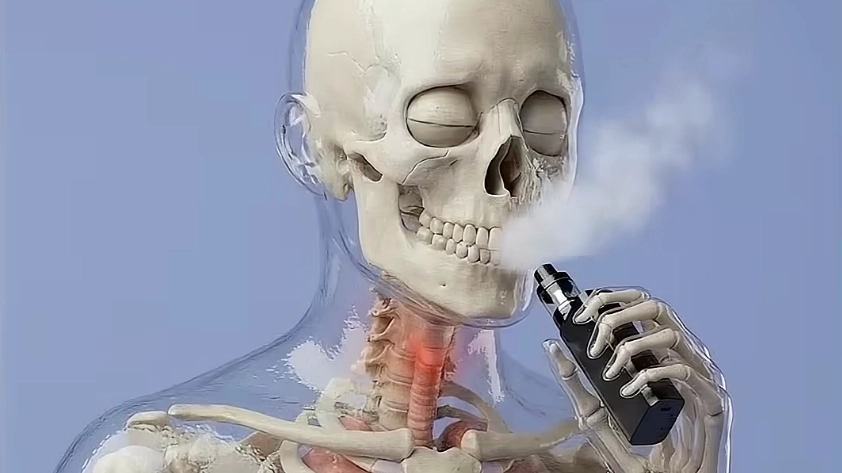
Impact smoking vs vaping has on your body is shown in worrying simulation

A simulation has revealed what happens to your lungs in the days, weeks and months after a person either smokes or vapes – and spoiler alert, it isn't pretty.
Whether it's puffing on your favourite flavoured vape or lighting up an old school cigarette, we're all well aware of the associated risks of smoking.
Despite this, statistics released by Action on Smoking and Health suggest that around 13 percent of British adults smoke cigarettes, while an estimated 10 percent use vapes.
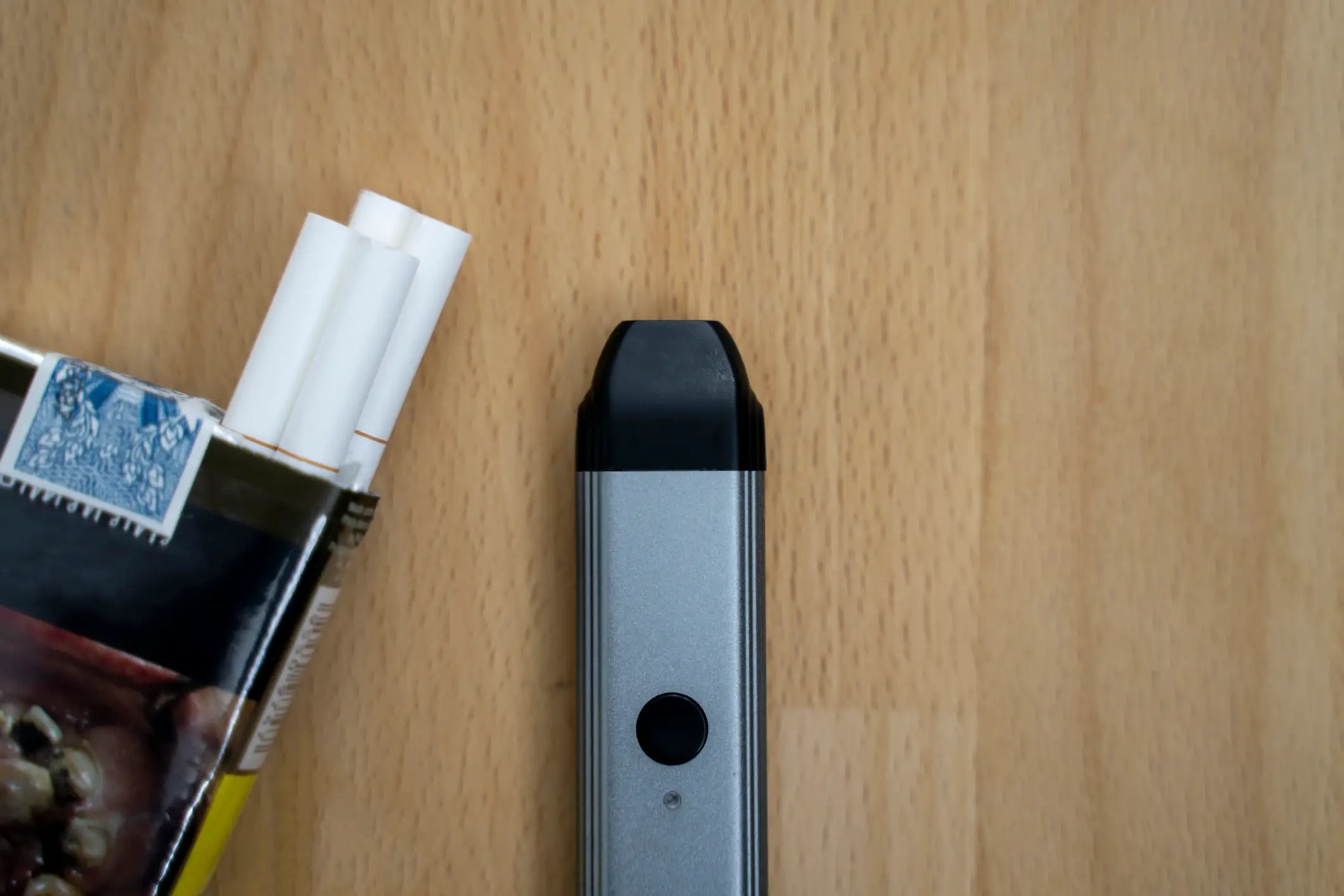
Side effects such as throat irritation, coughing and tightness in the chest are commonly experienced by smokers, while anyone who's purchased a packet of cigs will be more than familiar with the graphic health images and warnings splashed over the front of the packaging.
Advert
However, if you're still struggling to get a sense of what's going on inside your body each time you take a puff, then don't worry, as we've got the perfect visual aid for you.
Created by YouTuber X-Ray Buddy, it shows how both vaping and smoking impact your lungs.
When it comes to smoking, the initial impact is an increase in heart rate and a dryness of the airways.
Tar is also introduced to the respiratory system, which rapidly coats small, protective hairs, known as cilia, and air sacs, damaging your airways. This can impact the lungs for days and weeks after the first cigarette.
Meanwhile, puffing on a vape sends an aerosol, created from a mixture of nicotine, chemicals and ultrafine particles, into your lungs. This can lead to a stinging sensation in the throat and a slight tightness in the chest.
After a few weeks of either smoking or vaping, the effects become more noticeable.
With smoking, CO2 inhalation can lead to an 'oxygen debt' in the lungs, while vaping keeps the lining of the lungs 'inflamed', potentially causing a buildup of mucus.
As the weeks continue into years, side effects will continue as your lungs take a beating from inhaling toxic smoke.
With smoking cigarettes, your risk of lung disease, cardiovascular disease and some cancers increases.
Is vaping actually 'better' for you?
Most of us are pretty clued up when it comes to the fact that smoking is not good for our health.
But where does vaping fall in this debate – is it actually 'better' for a person to vape, or are both habits just as bad?
According to current scientific research, when put head-to-head, vaping is generally considered less harmful for current smokers. This is backed up by the NHS, with the health service citing a 2022 study which outlined that vaping poses a fraction of the risks caused by smoking in the 'short and medium-term'.
The study adds that people who switch from smoking to vaping have a reduced risk of exposure to toxins associated with increased risks of cancer, lung disease, heart disease and stroke.
However, this does not mean that vaping itself is healthy, as most e-cigarettes still contain nicotine.
Some vapes can also contain chemicals such as formaldehyde, a chemical which causes irritation as well as an increased risk of certain cancers; however, this is banned in regulated vapes sold in the UK.
 Brenna Cooper