Two major banks predict interest-rate rises - here's what it could mean for your mortgage

The Bank of England just this week held interest rates at 3.75 percent, but that's only in place until November when they've got a decision to make again which could impact your mortgage.
Explaining why they decided to keep things as they are for the time being the bank said that up to this point 'higher global energy costs have had a limited effect on price and wage setting in the UK'.
They added: "But the longer this volatility persists, the bigger the impact it will have on inflation, and the more likely it is we will need to raise Bank Rate to ensure that inflation falls back to our 2 percent target."
The vote was 6-3 in favour of keeping the rate at 3.75 percent, with the other three voting to raise it to four percent, and given the explanation from the Bank of England it's something to keep an eye on in the months to come.
Advert
It may explain why Reuters reports that Barclays and UBS are both predicting interest rates to rise perhaps as early as November, which could impact people's mortgages.
If you're on a fixed-rate mortgage then nothing will change for you, your rate is going to stay the same until your deal is up, at which point the impact you'll feel is on what other rates are available when yours expires.
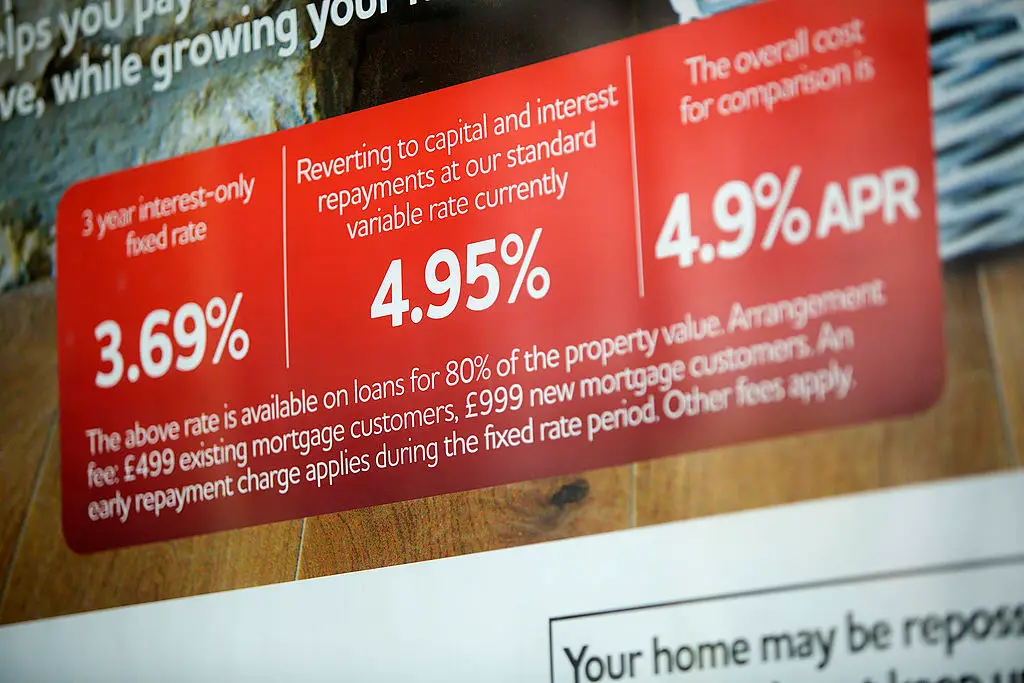
Those on variable rates and tracker mortgages will want to keep their eyes on matters more closely, as they'll often follow the Bank Rate up and down which means in the event of a rise you'll end up paying more on a monthly basis.
It will depend on your bank but many of them will be affected if the Bank Rate goes up.
Say, for example, you had a £200,000 mortgage that ran for 25 years and you were on a 3.75 percent interest rate, you're forking over £1,029 a month for that.
If the interest rate shifts up by just a quarter of a percent that monthly payment increases to £1,055, which would cost you more than £300 a year.
When the Bank of England kept rates at the same rate, Lee Trett, director and co-founder of Money Helpdesk told LADbible that anyone anticipating a rate change shouldn't panic or rush into a deal.
Instead, he suggested people on fixed-rates should hold onto them and for those who might be affected to do 'damage control'.
This is a prediction rather than a guarantee, but they think interest rates will increase this November and next February before cutting them at the end of 2027 and aiming to bring interest rates down to 3.25 percent in 2028.
Chronologically and financially that's a long way off so a lot could happen between now and then to throw off predictions made in this moment.
You never know if World War Three is going to come, which would be a bit of a pain for the predictors, but for now if the wind is blowing in the direction of an eventual interest rate increase it's worth being prepared.
What the Bank of England actually does is set something called the Bank Rate, which is the interest they pay in their dealings, which has a knock-on effect on the rest of the market.
When the interest rate goes up it typically means people will pay more on their mortgages, and when it goes down you pay less, but it depends what kind of mortgage you have.
 Joe Harker