
'Biggest ever great white shark' spotted close to shore at popular tourist destination

Having been tracked since the start of 2025, the biggest great white shark ever recorded has travelled over 1,000 miles.
And he’s now getting pretty close to the coast of a popular tourist destination.
Contender measures in at 14 feet with a weight of a whopping 1,700 pounds and was tagged by researchers at OCEARCH on 17 January last year. His tracking story has been described as one of the organisation’s ‘most fascinating’, going from the Florida-Georgia coast into Canada.
The scientists previously described him as ‘one of the furthest northern pinging sharks that we've had', having pinged close to Quebec in September.
Advert
But now he’s made his way back down to the US and has found himself in Florida. Contender returned to shore on 12 March, at peak breeding season.
He’s particularly of interest to science as the team reckon the whopper could hold the key to one of the many mysteries of the ocean: where great whites mate.
Researchers are now watching his every move, and those visiting the spot in Florida may also be thinking about doing the same.
His most recent ‘ping’ on the tracker last week put him about six miles off St Augustine, the ‘oldest city’ in the country found on the state’s northeast coast, known for its sandy beaches.
This location is rather significant to research both because of his proximity to shore and the timing of his return to Florida waters as he comes much closer to the coastline than his previous positions further north.
Just last month, Contender was off Cape Fear, North Carolina.
“Contender has become a pretty famous shark, in part because he's the largest mature male that OCEARCH has ever tagged," said John P. Tyminski, senior data scientist at OCEARCH.
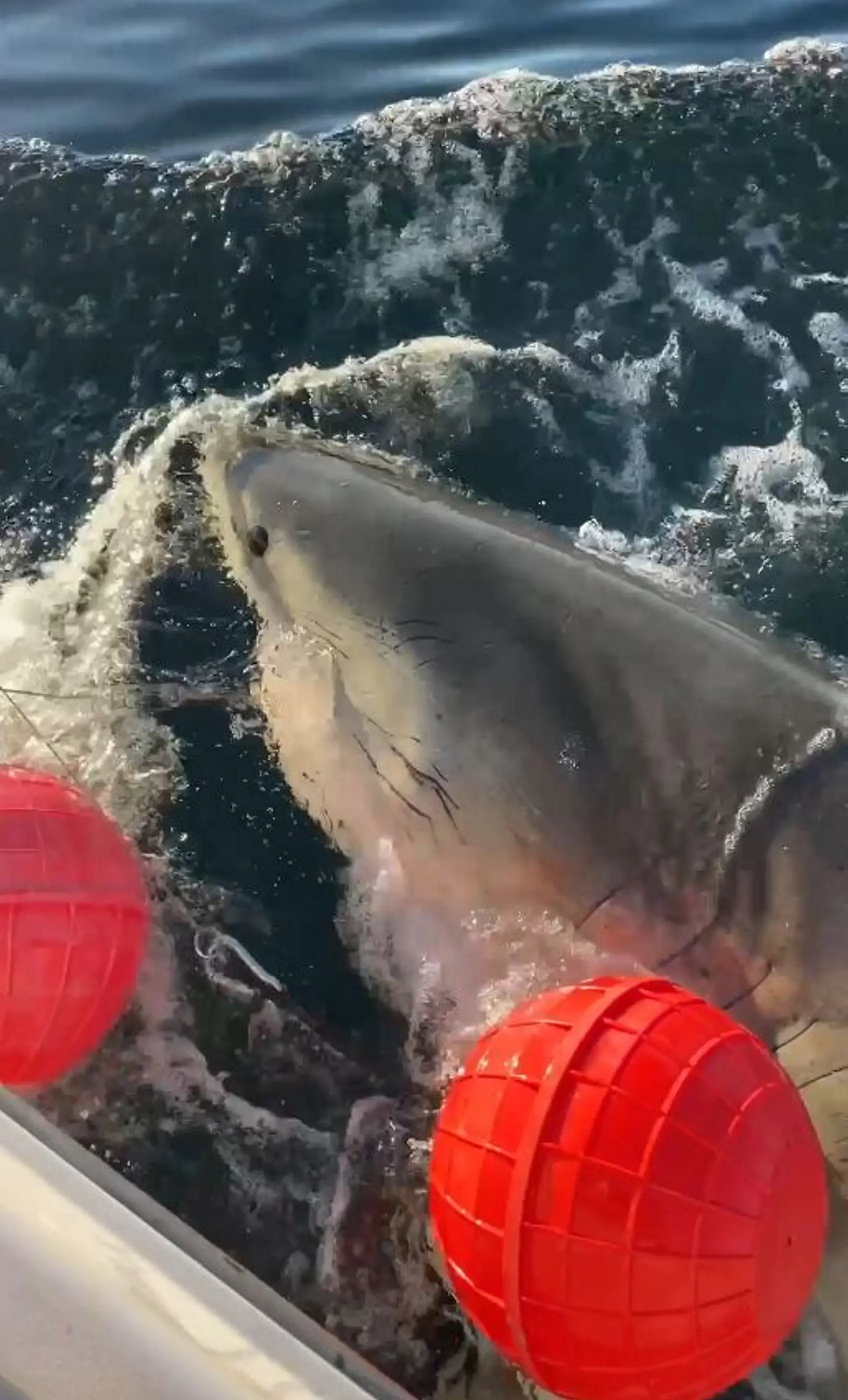
“He's shown very interesting movements – gone all the way up into the Gulf of St. Lawrence during the summer and has come all the way back down,"
Contender is described as ‘sexually mature’, meaning his movement patterns could provide crucial insights into the reproductive biology of great white sharks.
Scientists reckon this late winter and early spring period may be critical for mating among these creatures.
"Keeping an eye on white sharks like Contender can give us some indirect clues as to where mating may be occurring," Tyminski said.
"It is definitely one of the questions that we still really want to try to answer to help protect and conserve white sharks."
Well, maybe this spot not far from the popular tourist destination is where Contender ends up providing those answers.
 Jess Battison