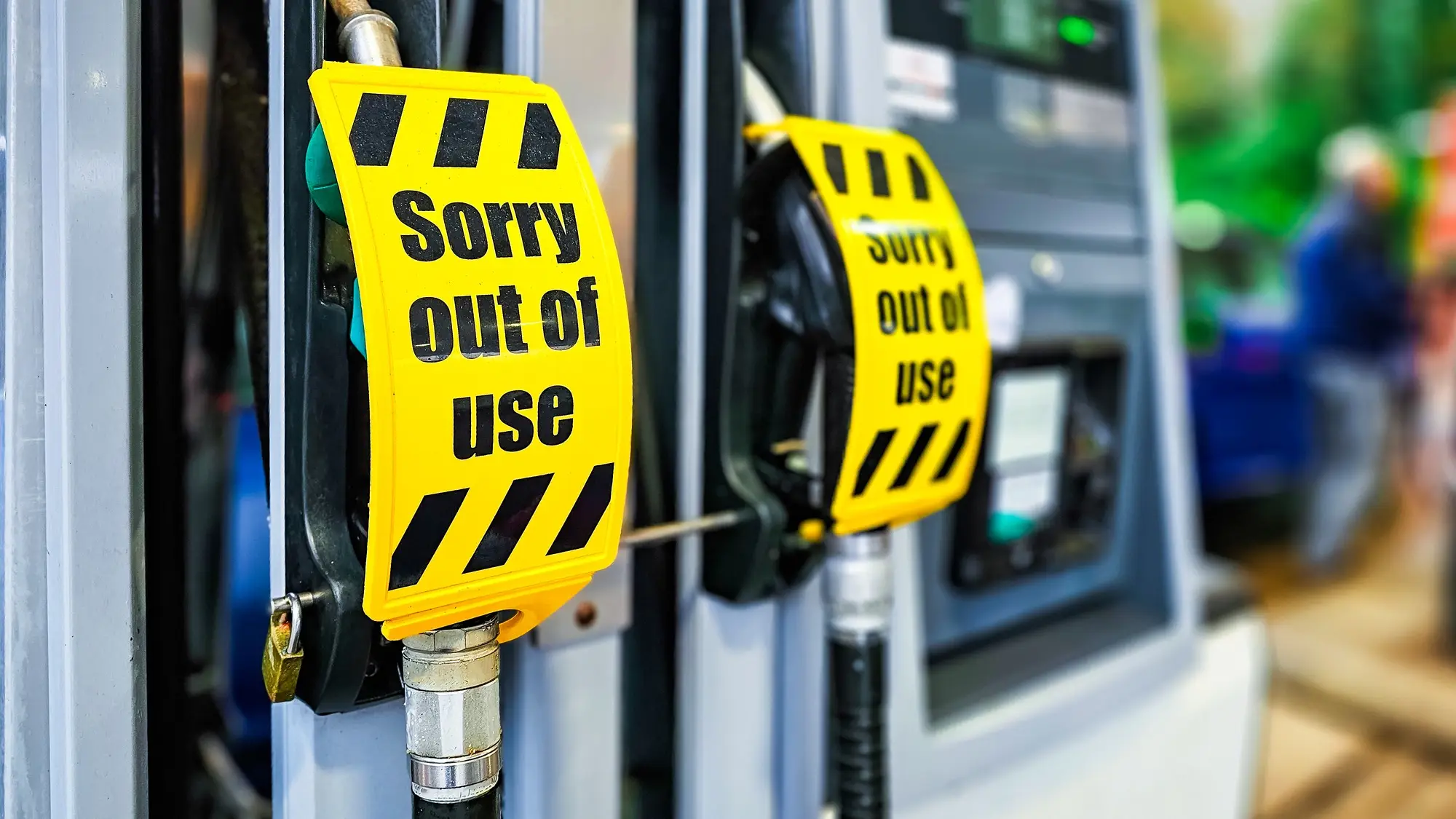
Government confirms who gets first priority on fuel as rationing and 50mph speed limit proposed

The UK has proposed who could be up for getting what’s left of its 42 days of diesel supplies left, as it ranks the lowest of all developed countries, except Australia, according to reports.
Contingency plans are being talked about as the issue at the Strait of Hormuz takes a toll on the nation’s petrol and diesel rationing thanks to supply pressures and price increases.
According to reports from Sky, the 42 days' worth of diesel is behind everyone else.
Reports say US has 677 days, Canada has 1,382, Japan has 1,025, and so on.
Advert
However, Australia comes in with 31, at the lowest amount of all.
Because the prices have jumped up to the highest levels this weekend past, with the RAC predicting that everything would happen amid the conflict between the US and Iran.

With fuel costing a whopping 99.05p per litre for diesel and 174.04p for petrol, per the company, things aren’t looking good.
So, the UK government has proposed a solution to extend the amount of fuel we have left by imposing a ranking system of priority.
The Department for Energy Security & Net Zero's National Emergency Plan for Fuel shows priority filling for emergency services and public transport would come first, as well as the implementation of a temporary speed limit reduction to 50mph.
The National Emergency Plan for Fuel says: “The majority of potential fuel supply disruptions can be addressed by measures to help industry maintain fuel supply; these would be deployed by DESNZ in co-ordination with industry and other government departments.
"However, the government does have emergency powers under the Energy Act 1976, which it can use to control supply and demand of petroleum products. It should be noted that use of these emergency powers is reserved for the most severe of disruptions.”
But it said 'these measures would only be activated in the event of a severe national fuel supply shortage’.
This includes the arrival of a Designated Filling Station scheme that would see ‘emergency and critical service vehicles’ given priority access to road fuel from named filling stations.
From there, ‘oil companies and fuel distributors’ will ‘prioritise the delivery of bulk petroleum products to critical services such as emergency services, utilities and public transport.’
It should also prioritise ‘road diesel to the commercial vehicles sector to support the operation of key supply chains, such as food and health’, per the plan.

It adds: “This restricts the sale of road fuels at retail filling stations to the public to a maximum amount per visit to ensure that all motorists have access to some fuel. The scheme can also limit the hours in which road fuels can be sold.”
There is also a Crude Oil and Imported Product Allocation Scheme proposed, where the ‘government can formally allocate crude oil and other imported oil products within the UK.’
"Only when an incident has the potential to cause significant and widespread disruption to oil supply will government consider activating measures within the NEP-F,” it states.
“The decision to activate the measures in the NEP-F can only be taken at a national level and would be led by DESNZ, as the government department responsible for energy resilience.
"Local Resilience Fora and relevant organisations providing essential services are expected to have robust business continuity plans in place that take into account of their own local and organisational context. Business continuity plans should align in principle to the NEP-F but not rely on early activation of the NEP-F measures."
 Britt Jones