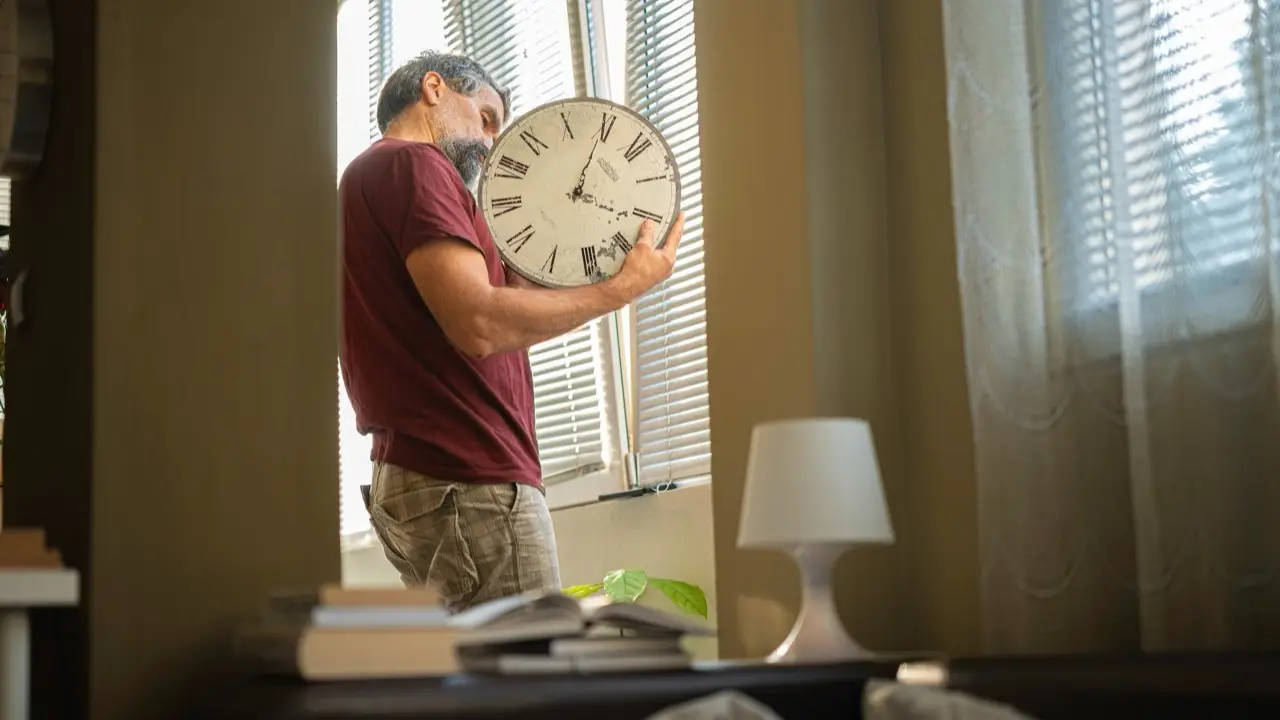
Thousands sign petition to stop clocks changing after health warning

A petition is calling for the UK to stop changing the clocks twice a year.
Graham Beatty's petition to 'keep the UK on Greenwich Mean Time (GMT)' actually started five years ago.
Recently though, it's been getting more and more votes, and is up to 2,032 signatures at the time of writing.
Supporters are saying that changing clocks twice a year between Greenwich Mean Time (GMT) and British Summer Time (BST) doesn't actually do a lot of good.
Advert
Beatty writes that the clock changes disrupt sleep patterns: “Many parents of younger children and babies struggle with the changes to the clocks… disturbed sleep for the children inevitably causes disturbed sleep patterns for their parents.”

The petition also claims that businesses and public services face extra costs: “These issues alone cost the country huge amounts of money, when you consider NHS hospital staff, Coastguard, Police, Fire and Ambulance Services who all work shifts.”
It then highlights that the time change causes 'unnecessary confusion', and that 'working hours are lost when staff forget to change their alarm clocks'.
"Workers have also been known to come into work two hours early because they put clocks forwards when they should have been put back," Beatty adds.
"Other research has shown that some people do feel a mental lift in Spring at about the time the clocks go forward.
"This could be linked in small part to the time change, but in fact is mostly the result of a natural increase in ambient light intensity and duration associated with the time of year.
"The longer, lighter days happen naturally and are not the result of changing the clocks."

Benefits of the current system
In case you're wondering, the UK changes clocks twice a year to make better use of daylight.
Clocks move forward in spring and back in autumn so evenings stay lighter in summer. The system was introduced during World War I to save energy by reducing artificial lighting use.
Despite calls for change, experts say it 'benefits us from a sleep, mood, and behavioral standpoint'.
Wellness coach Erin Clifford told Tom's Guide: "Getting more sunlight is crucial for strengthening your internal clock, boosting daytime alertness, and improving nighttime sleep quality."
When the clocks move forward, clinical psychologist Dr Liz Ross said: "Light is the most powerful regulator of our circadian rhythm. Longer daylight hours can boost mood, energy, and physical activity, which indirectly support sleep quality.
"In short, springing forward can eventually support sleep if people lean into consistent schedules and morning light exposure."
This is even though 'the immediate effect is usually mild sleep deprivation and temporary circadian disruption'.
 Anish Vij