
Doctor issues severe warning about 'toasted skin syndrome' you can get from using a laptop

The term 'toasted' should only be used when referring to marshmallows, bread and other edible objects - and definitely not your skin.
However, the word does perfectly describe what people are doing to the protective outer layer which covers their skeletons, when directly exposing it to a source of heat.
Those who snuggle up with a hot water bottle in the evening, fire up the heated seats in the car, or simply rest their laptop on their legs could end up with 'toasted skin syndrome', if they aren't careful.
As far as health condition's go, this one sounds quite cosy... but don't be fooled by it's name.
Advert
Dr Joe Whittington has shared a warning with people online, explaining they are essentially 'slow roasting' themselves by using low-grade heat sources or infrared radiation to try to stay warm.
In a video previously shared to TikTok, the health expert - who is better known as Dr Joe, M.D. online - explained what this condition actually is.
In the medical sphere, toasted skin syndrome is referred to as 'erythema ab igne', (EAI), which is Latin for 'redness from fire'.
"This happens when your skin gets a little too cozy with constant sources of heat - like a heating pad or a space heater," Dr Joe told his 2.2million followers.
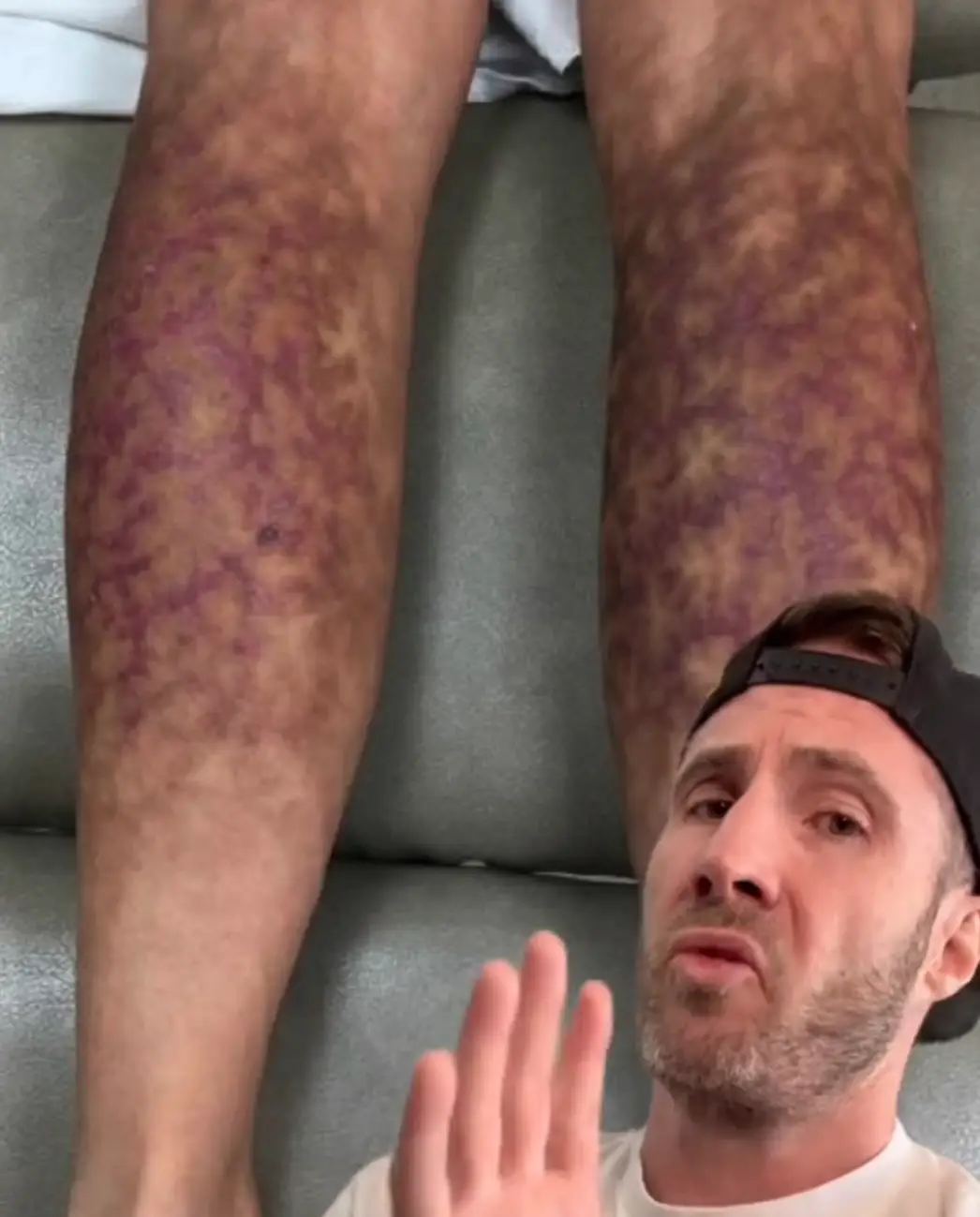
According to the social media medic, it causes a 'reddish-brown discolouration on the skin', which forms in a 'net-like' fashion on the surface.
He said: "Basically your skin is yelling, 'Hold up, I am not a waffle iron'. Usually, if you stop exposing yourself to the heat, the rash will slowly fade away.
"But if you keep slow roasting yourself, it can actually cause damage to your skin and blood vessels and make that rash permanent. And in some cases, its even been linked to skin cancer."
A lot of people presume they'd be left with a burn rather than a rash covering their skin if exposed to a direct source of heat, but that isn't the case with toasted skin syndrome.
Dr Toni Golen, an associate professor at Harvard Medical School, explained why in an article for Harvard Health.
"The level of heat that triggers the rash isn’t high enough to burn you, but it can dilate superficial blood vessels under the skin," she said. That’s what causes the skin to discolour over time."
For those who might have been left with the strange rash after taking their hot water bottle sessions a bit too far this winter, Dr Golen suggested cooling it for a bit.

"Lower the setting of your electric blanket or heating pad, or limit how long you use it," the doctor said. "If your laptop is the problem, place a lap desk or other buffer between it and your skin.
"The rash should fade over weeks. If it doesn’t, see your doctor."
As Dr Golen mentioned, it really is important to check in with your GP if this rash doesn't disappear - as it might have triggered something more sinister.
Experts at Healthline have warned that exposing your skin to a heat source for long periods can sometimes 'cause more dramatic changes in your skin cells that can develop into other conditions, including cancer'.
It states: "The types of cancer that are associated with toasted skin syndrome include: squamous cell carcinoma, Merkel cell carcinoma and cutaneous lymphoma
"While cancer isn’t a common complication of toasted skin syndrome, it’s important to talk to your healthcare provider about any skin changes you notice."
But if you want to avoid putting yourself at risk of toasted skin syndrome altogether, it sounds like simply sticking another layer on to stay warm might be your best bet.
Topics: Health, TikTok, UK News, Technology, Social Media, NHS
 Olivia Burke