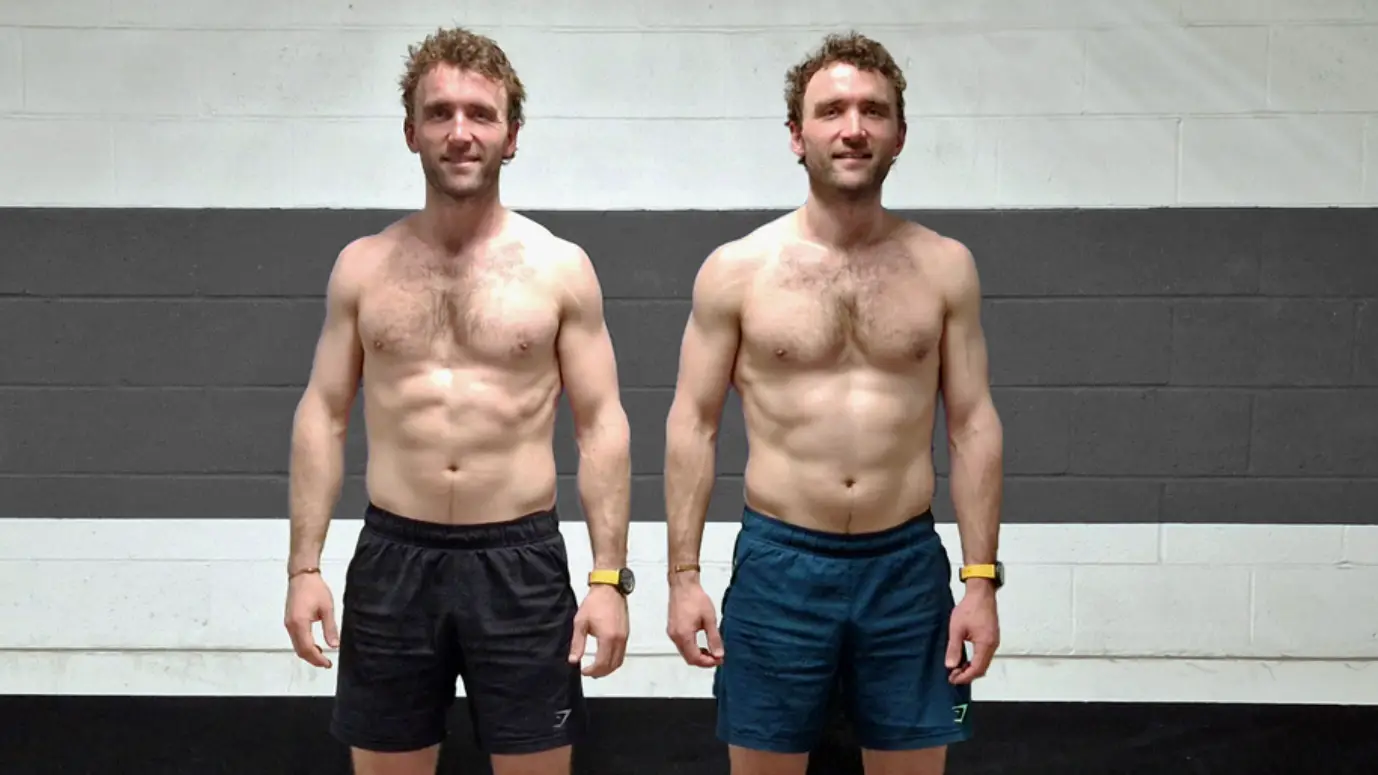
Identical twins show insane difference after one spent 20 minutes longer in gym for months

We've all spent time in the gym wishing that we were somewhere else and thanks to the power of identical twins, we now know if those extra 20 minutes are actually worth it.
For some reason, society seems slightly obsessed with the concept of identical twins and The Turner Twins have cashed in over the years, launching a series of scientific experiments that put their near-identical DNA to the test.
Environmental and external factors mean that we will never be able to prove if your vegan mate is actually better off than the ones who eat bacon sandwiches, but the twins showed off their results after eating protein and vegan-based diets, with surprising results.
They also tested out high-fat vs high-carb diets and found that neither is all that good for the body, with the advice you get from health professionals to eat a balanced diet nearly always the best guidance you can receive, especially compared to influencers who wax lyrical about eating nothing but meat or eggs.
Advert
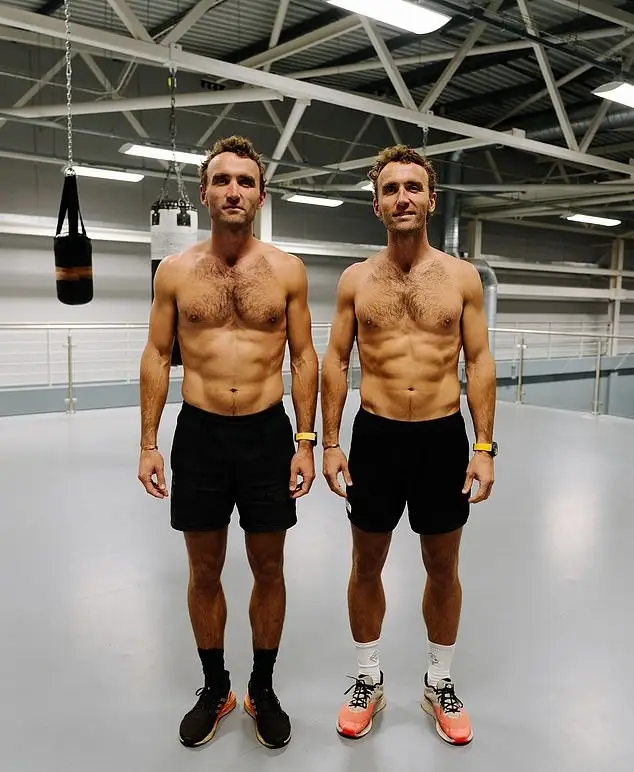
After their food challenges, Ross and Hugo decided to tackle a more exercise-based programme, which saw Hugo work out in 20-minute sessions over a 12-week period, while his identical twin Ross did double that. Sounds like he drew the short straw on that occasion.
The brothers told Men's Health: "Outside of our expeditions, we are very curious to understand what works best in the gym.
"Because we're twins we can directly compare one fitness regime to another or one diet versus another.
"We wanted to identify whether doing double 20 minutes is more efficient - would you see double the gains?
"Interestingly, through our gym programme, we found out some epically-curious results that I think will cause a lot of people to question what they're doing in the gym."
Now, with nearly everything in life, more is more, and you'd naturally expect someone who works out twice as much as someone else to be significantly stronger and fitter.
However, the twins came up with some very interesting results after their 12 weeks were over.
Hugo said: "The results show that there's less than a five percent uplift for the 40 minutes. You'd think double the work would see more than a five percent uplift, but it didn't. It's just not worth it.
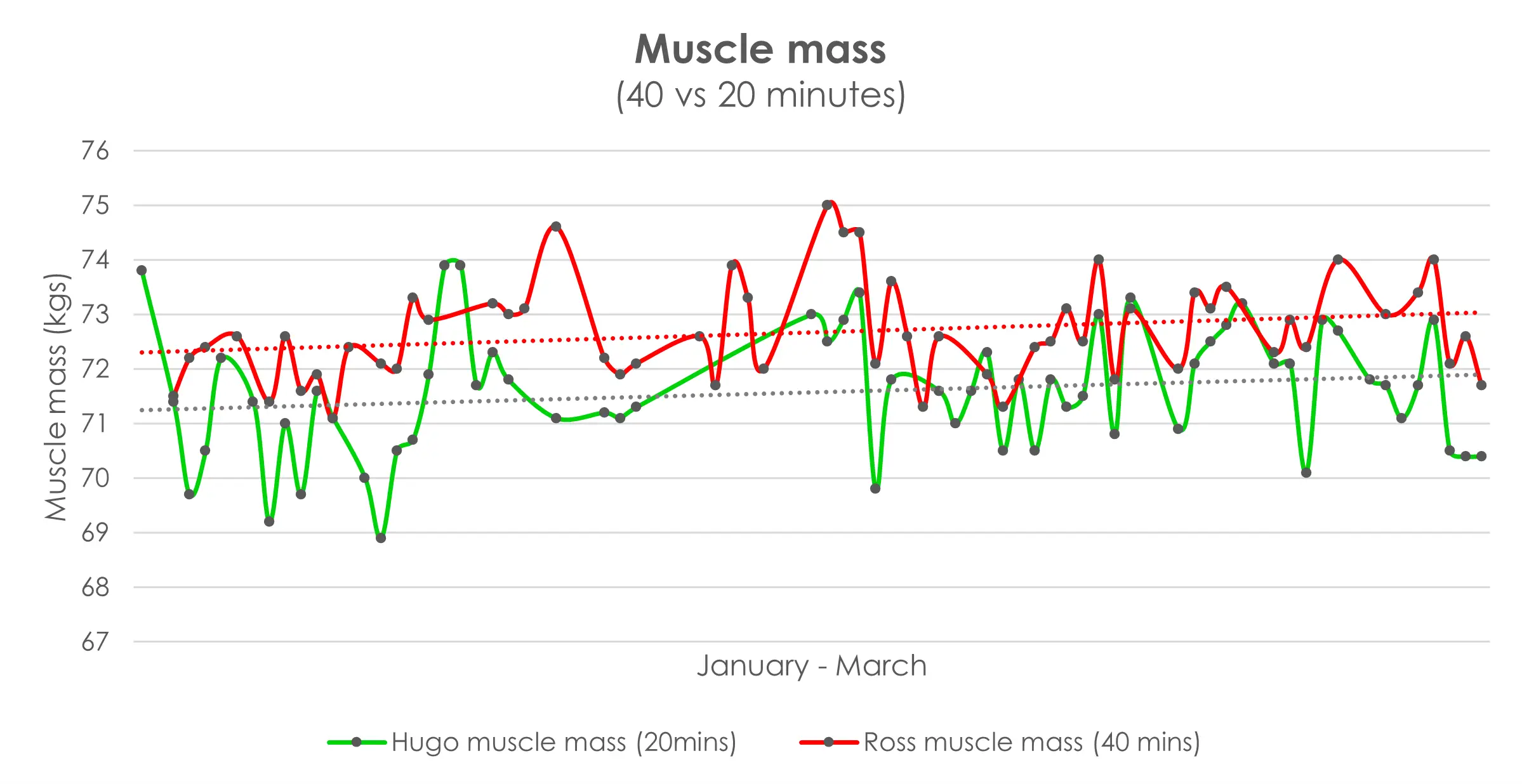
"At the start, Ross started around a kilo heavier than me and throughout the whole twelve weeks we tracked and trended exactly the same, so there was no massive difference in our weight, either an increase or decrease."
Ross added: "Body fat for this 12-week study was slightly better on the 20 minutes. Muscle mass stayed the same, and that was probably due to us eating fairly similar diet.
"We weren't eating a huge amount of calories, which is always efficient for us because the one thing we don't want to do is go off on an expedition and drastically cut our calorie intake."
One of the biggest lessons from the experiment was about giving your body time to recover and not pushing yourself too hard, as while Hugo 'always felt motivated physically' and wanted to do more, Ross was feeling far more 'spent' and struggled with the motivation to keep going after his brother had finished.
Hugo added: "20 minutes is far easier to execute everyday if you want to find that consistency and motivation. 40 minutes you definitely found it a lot harder to motivate yourself and do that consistently."
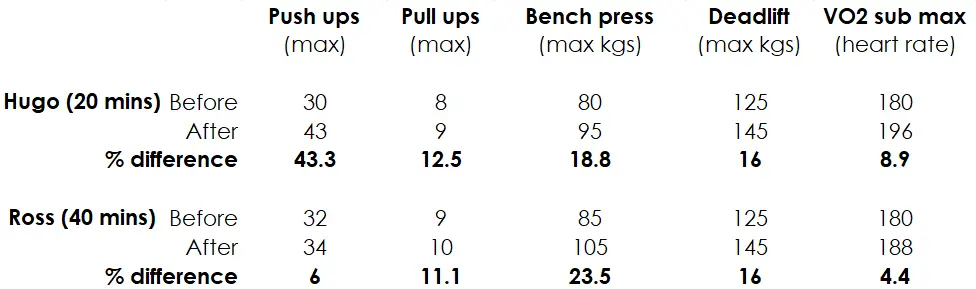
Ross chimed in: "For me, knowing that I was working twice as hard and putting in twice as much effort and yet the results weren't there was a little deflating. I think now we've done the 12-week programme and we've seen the results, I'm going to struggle to do 40 minutes because I know there's no point in doing it."
The results also revealed that their body weights followed a very similar trajectory during the 12 weeks. Hugo's body fat started at around 11 percent and finished at around 17 percent, while Ross started at 15 percent and finished at around 17 percent.
So the next time you're in the gym and fancy going home for a cuppa and a biscuit after 20 minutes of work, perhaps do it, as there's always going to be times where the body simply isn't motivated to keep going.
And 20 minutes of hard work is always better than 40 minutes of half-hearted work.
 James Moorhouse