ladbible homepage
ladbible homepage
  • Home
  • News
    • UK
    • US
    • World
    • Ireland
    • Australia
    • Science
    • Crime
    • Weather
  • Entertainment
    • Celebrity
    • TV
    • Film
    • Music
    • Gaming
    • Netflix
    • Disney
  • Sport
  • Technology
  • Travel
  • Lifestyle
  • Money
  • Originals
    • FFS PRODUCTIONS
    • Say Maaate to a Mate
    • Daily Ladness
    • UOKM8?
    • FreeToBe
    • Citizen Reef
  • Videos
  • Advertise
  • Terms
  • Privacy & Cookies
  • License Our Content
  • About Us & Contact
  • Jobs
  • Latest
  • Archive
  • Topics A-Z
  • Authors
Facebook
Instagram
X
Threads
Snapchat
TikTok
YouTube
Submit Your Content Here
  • GAMINGbible
  • LADbible Group
  • UNILAD
  • SPORTbible
  • Tyla
  • FOODbible
  • UNILAD Tech
Study Suggests Cannabis Makes People More Kind And Empathetic
Home>News
Published 04:04 14 Jun 2022 GMT+1

Study Suggests Cannabis Makes People More Kind And Empathetic

Each participant underwent a series of psychological assessments and questionnaires as scientists analysed their ‘moral foundations’.

Charisa Bossinakis

Charisa Bossinakis

google discoverFollow us on Google Discover

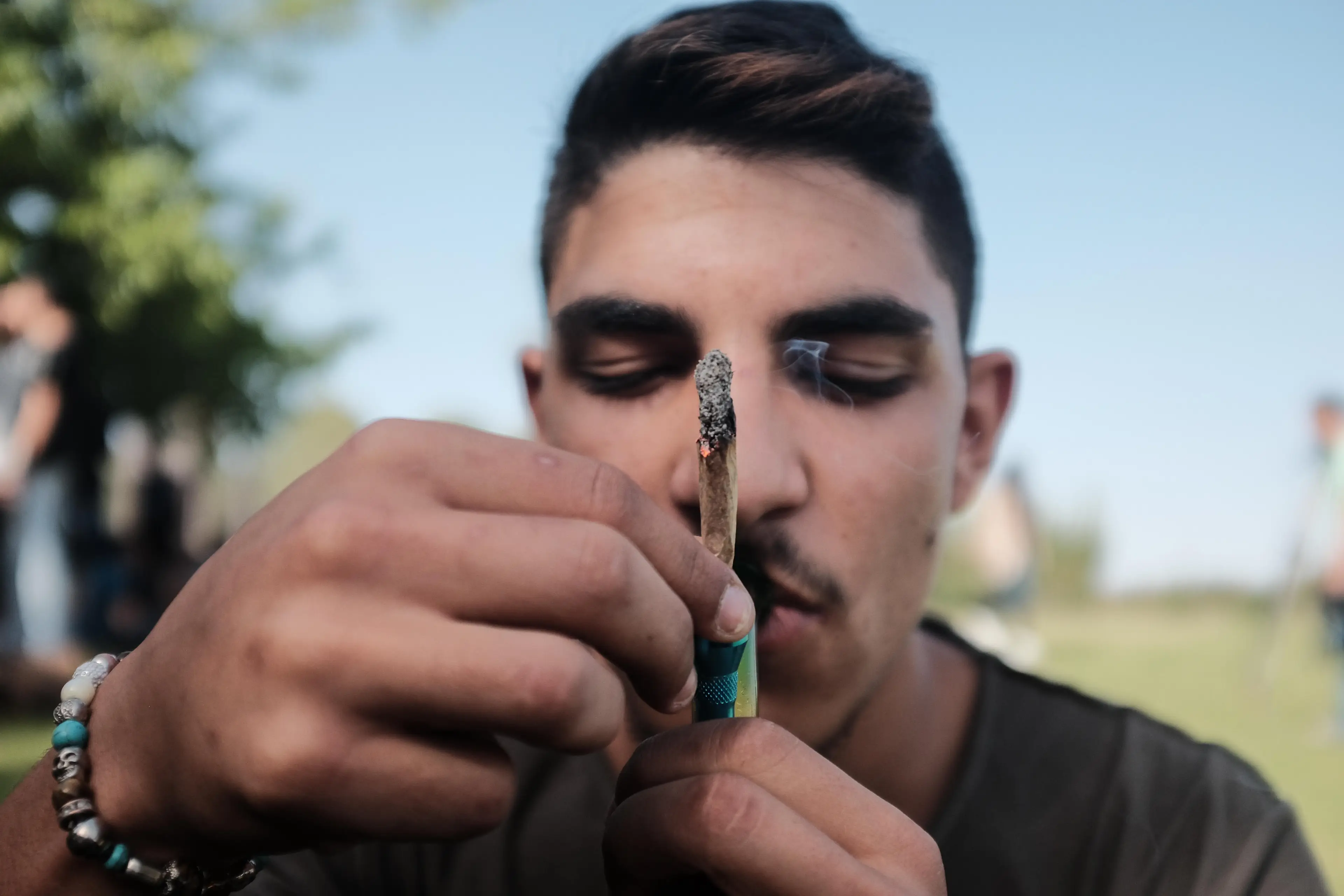
New research has suggested that cannabis makes people less greedy and more empathetic.

According to a study published in Scientific Reports, a team of researchers at the University of New Mexico observed 146 healthy university students between the ages of 18 to 25.

Each young adult underwent a series of psychological assessments and questionnaires as scientists analysed their ‘moral foundations’.

It was found that those consuming cannabis showed better scores in pro-social behaviours, including empathy and moral decision-making relating to fairness and harmlessness, compared to non-users.  

Advert
Nir Alon/Alamy Live News

Lead author of the scientific paper Jacob Vigil spoke of the findings to news outlet The Paper, saying: “It seemed as though cannabis tends to result in a psychological shift from externally pressured goals.”

He added: "To me, my observation is that cannabis tends to result from that kind of egocentric or perhaps, externally pressurised trajectory towards one that is more primal and one that is more concerned with humanity in a broader collective context.”

Virgil hopes the study will encourage more cannabis use for treating medical issues instead of opioids, which are known to cause negative changes in emotions while enabling antisocial behaviours.

He said: “The relationship turns from one of the individual with other human beings to one of the individual with that opiate that their addiction to that opiate and cannabis, even though it is addicting. 

“Obviously, most people that use cannabis tend to do it again, because they'd like the effects. It also tends to promote sociality.”
Alamy

UNM economics professor and researcher on the study, Sarah Stitch, also hopes the study acts as a gateway for more research on the drug and its effects.

She said: "I think that the biggest impact I hope to see is that other researchers, and ourselves as well, will continue to research into this area and explore it with greater depth and bigger data sets.”

The findings also support another study that revealed how cannabis can help improve sociability. 

A paper published in Neuropsychopharmacology found that those under the influence of CBD (the chemical in cannabis that doesn't get you high) reported lower levels of anxiety, discomfort, and cognitive impairment while completing a public speaking task.

Another study published in Science Daily also revealed a correlation between smoking weed and being less motivated to work for money.

Virgil spoke of this research: “Cannabis users’ brains are less likely to light up when they are shown a depiction of dollar sign compared to non-users.

"People that don’t use cannabis get more excited when they see a dollar sign, and that has been interpreted by addiction researchers as a negative thing.”

He added: "What my research is suggesting that they care about human beings in a benign way that, presumably, is a tremendous benefit to society."

Featured Image Credit: Alamy.

Topics: News, Science, Health, Mental Health, Drugs

Charisa Bossinakis
Charisa Bossinakis

Charisa Bossinakis is an Associative Journalist at LADbible. Charisa has worked across various media platforms including, print, digital, radio and podcasting while maintaining the highest regard for quality work and integrity. She also covered everything from breaking news, to pop culture, entertainment and politics and is part of the editorial team for LADbible.

X

@CBossinakis

Recommended reads

Jeremy Clarkson issues cancer update as he makes plea to everyone after sharing diagnosisInstagram/@jeremyclarksonHolly Ramsay and swimmer Adam Peaty announce baby news six months after their high-profile wedding Max Mumby/Indigo/Getty ImagesJamie Lynn Spears reveals why she left Hollywood for 'the middle of nowhere'Frazer Harrison/ACMA2014/Getty Images for ACMKaty Perry savagely calls out her famous exes live on stage during performanceAlvaro Ballesteros/Europa Press via Getty Images

Advert

Choose your content:

17 hours ago
18 hours ago
  • (Supplied/Emily Richardson)
    17 hours ago

    Woman says she's a 'real-life vampire' due to rare condition that leaves her hospitalised after minutes in the sun

    She needs to wear full UV protection whenever she leaves her home

    News
  • Mark Smith/ISI Photos/ISI Photos via Getty Images
    17 hours ago

    Norway's football team ship traditional food to its US World Cup training base to avoid eating American food

    Anything to keep Haaland happy

    News
  • Aphantasia is thought to impact 10% of the global population. (Jacob Wackerhausen/Getty Images)
    18 hours ago

    Millions of people have 'mind blindness' and don't realise it

    There a people out their who live with a condition called Aphantasia, which affects them on a daily basis and they don't even know it.

    News
  • Some people don't think in words. (Daniel Lozzano Gonzalez/Getty Images)
    18 hours ago

    This is how people with no internal monologue really think

    Cognitive scientist Johanne Nedergård has explained how minds without an inner monologue work.

    News
  • Study shows true reality of what smoking weed as a teenager really does to your brain
  • Smoking cannabis just once a month can have harrowing effect on teenagers, experts warn
  • Former addict shares what changed when he stopped smoking weed as study shows impact on brain
  • Natasha Lyonne makes heartbreaking statement as she admits she's relapsed after years of sobriety