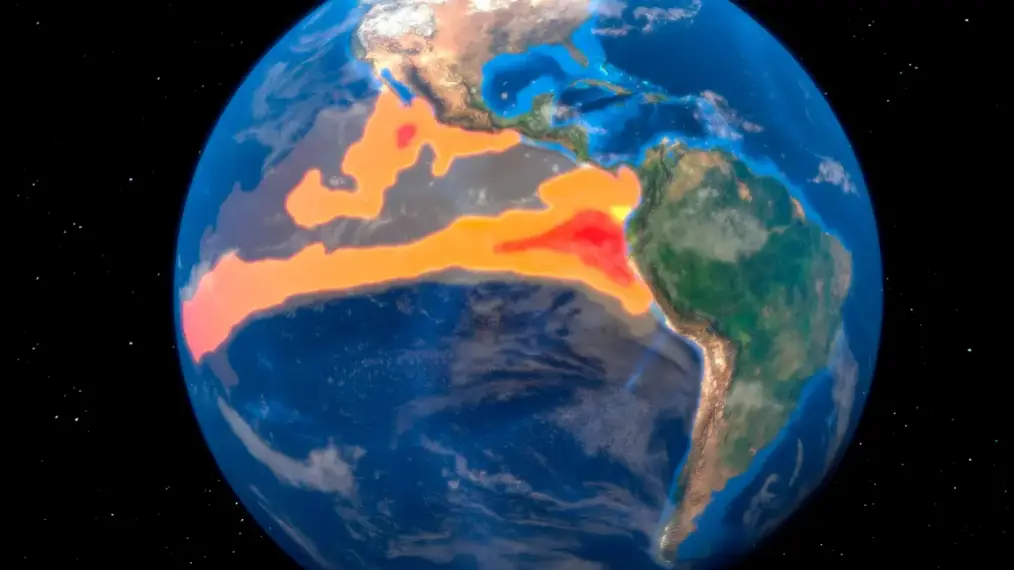
Maps show how 'Super El Niño' that will have catastrophic global consequences will impact US

The National Weather Service has warned that a 'Super El Niño' could have a major impact on the US after the Climate Prediction Center said there was an 82 percent chance of the weather phenomenon occurring between May and July.
Plenty of countries would be affected by a Super El Niño, the really beefed up version of there being a sustained period where ocean water temperature is warmer than average.
You might think a bit of a warm water can't do all that much harm, but it certainly can cause massive damage across the world and Newsweek asked meteorologist Chad Merrill to explain what it'd mean for the US.
He warned it'd mean more flooding in some parts of the country, while in others it'd lead to hotter temperatures, droughts and wildfires in other locations.
Advert
"For the summer, a consequence of El Niño will be a hotter and drier pattern in the Northwest US that can lead to large wildfires," Merrill explained of what the US could expect if there was a Super El Niño this summer.
"Additionally, severe drought can expand across more of the Northwest into the northern part of the Rockies during El Niño summers that transition to a strong to very strong El Niño by the fall to early winter."
He said it could lead to thunderstorms on the US west coast, while over in the east there could be dry conditions that last a week before heavy rainfall and the dry weather could lead to 'prolonged moderate to severe drought'.
Lots of rain in a short time wouldn't do much for farms, which means there might not be as many crops collected due to the intense swings in the weather having an impact on the soil.
How does an El Niño year happen?
Strap in, folks. It’s time for some science.
It all starts with something called trade winds, which are permanent winds around the equator which usually blow from east to west. So in the equatorial Pacific, they blow from the Americas towards Australia and New Zealand.
As the wind blows the water east, it is warmed by the sun, so by the time it gets to the other side of the Pacific, the warm water causes hot air to rise, leading to warm, wet and unsettled weather. Meanwhile, colder water from deeper in the ocean rises in the east to replace the water blown west.
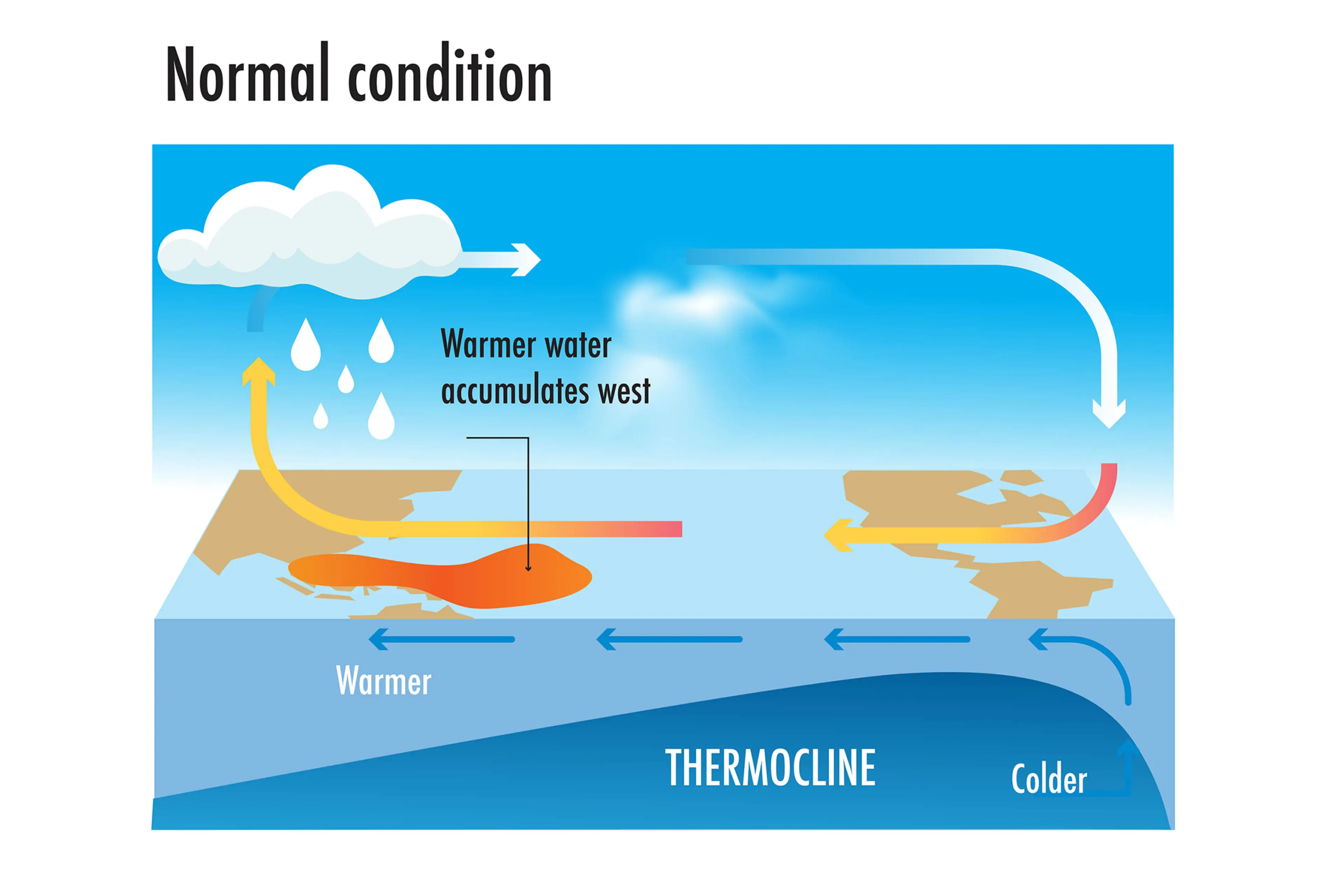
But during El Niño years, this gets disrupted.
When trade winds are weakened or even reversed, the temperature difference between the east and west is cancelled out, and usually cold parts of the ocean warm up.
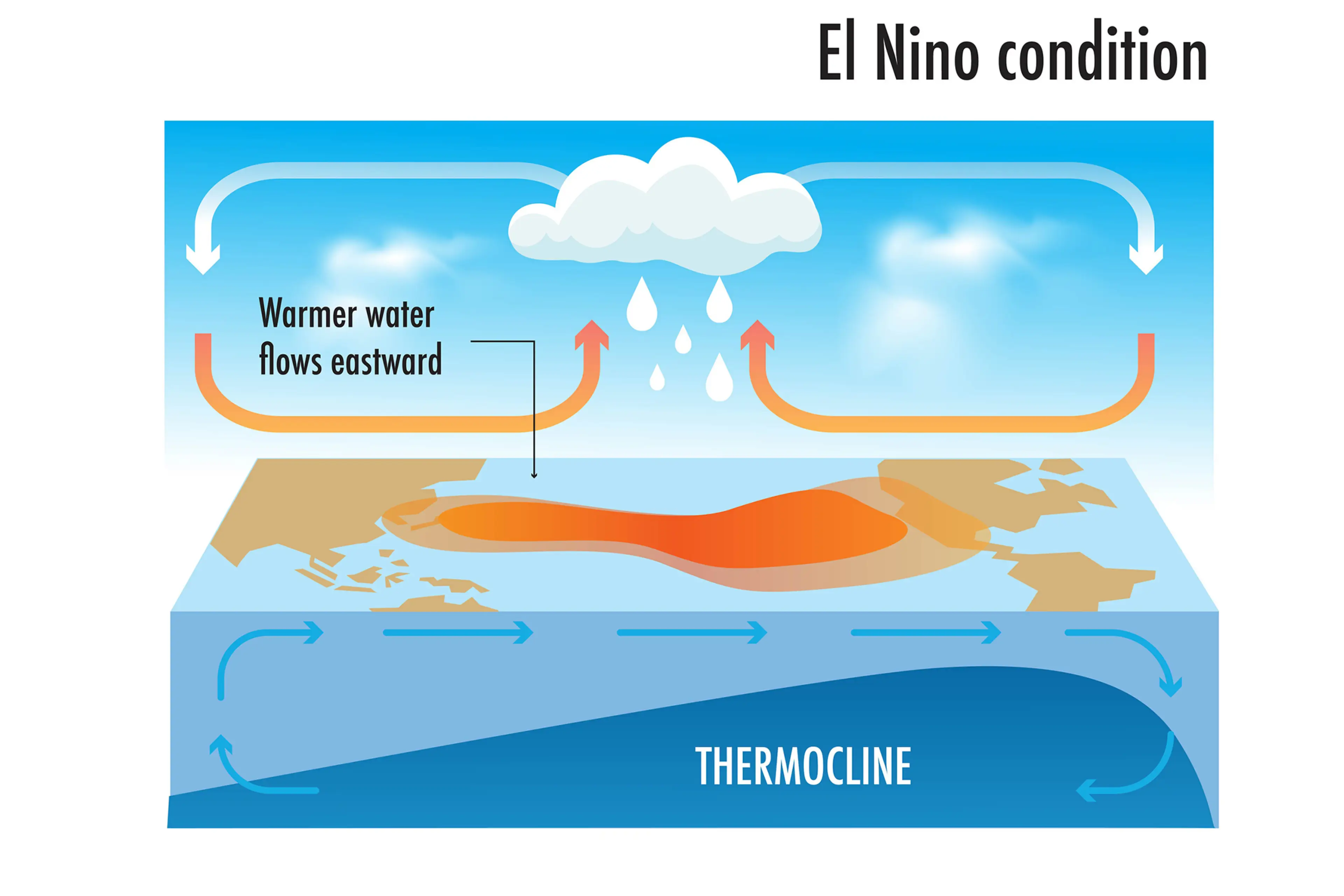
Rainfall and wind patterns change across the equatorial Pacific, which has a knock-on effect around the world.
What does a Super El Niño do?

"A Super El Niño is not an official scientific category, but it is a term sometimes used in the media to describe a particularly strong El Niño event," Met Office spokesperson Nicky Maxey told LADbible.
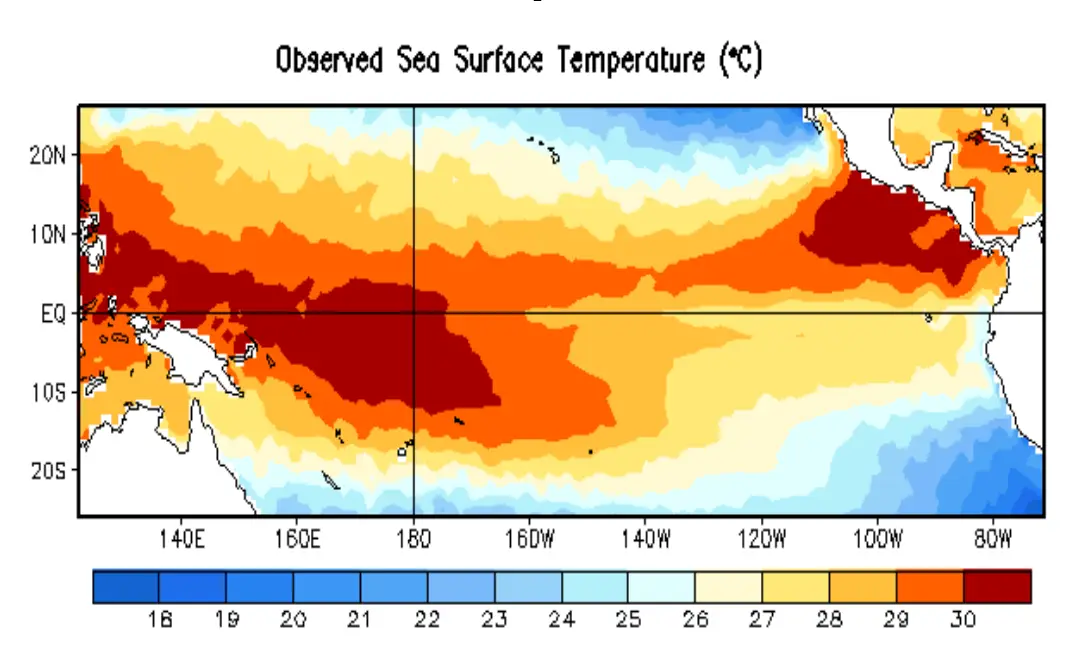
"There are increasing signals that El Niño is developing in the tropical Pacific. The tropical Pacific El Niño region is predicted to warm faster this year than any time so far this century, with sea‑surface temperature anomalies exceeding 2C in the central and eastern tropical Pacific, which would be notable by historical standards.
"While there is the potential for it to become a stronger event, it is still too early to determine exactly how strong it will be or what the precise impacts might be."
Experts say super El Niño events can trigger:
- Extreme global heat
- Flooding in some regions
- Droughts and wildfires in others
- Crop failures and food shortages
- Coral bleaching and damage to fisheries
How to prepare for a Super El Niño

Meteorlogy Professor Emily Black, a professor of terrestrial processes and climate, research division lead for Earth Observation and Space told LADbible that 'the impacts of El Niño are generally not strong enough to require a specific response'.
"However, as in any winter, it is sensible to remain prepared for storms, flooding and occasional cold snaps," Professor Black added.
"In tropical regions, preparedness depends much more directly on the expected regional impacts of El Niño.
"For example, where El Niño is associated with drought, farmers may consider using more drought-tolerant or faster-maturing crop varieties, and may need to delay planting slightly if the rains are slow to become established."
Additional words by Anish Vij
Topics: Weather, Global Warming, Environment, US News
 Joe Harker